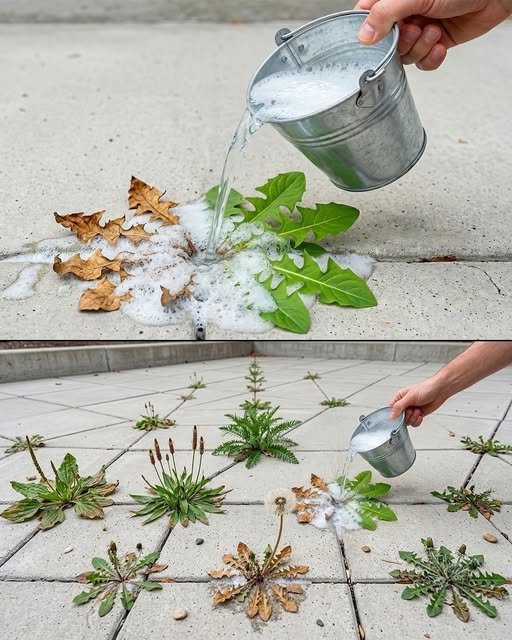
Discover a simple homemade weed-control method using common household ingredients, plus safe application tips to help remove unwanted weeds without harming nearby plants.
Natural and Powerful Homemade Weed Control
Unwanted weeds can quickly take over garden paths, cracks in patios, driveways, and other areas around the home. While commercial weed killers are available, many gardeners prefer simpler homemade approaches using ingredients they already have.
One commonly used option is a mixture containing white vinegar and dish soap. It can be effective against young weeds, particularly those growing in cracks or areas where you don’t want vegetation.
However, natural doesn’t automatically mean harmless. Vinegar can damage desirable plants, and repeated use can affect soil health. Use homemade weed treatments carefully.
What You’ll Need
A simple spot-treatment mixture can include:
- White vinegar
- A small amount of liquid dish soap
- A spray bottle
Avoid adding bleach, ammonia, or other household chemicals to the mixture.
How to Make the Weed Spray
Fill a clean spray bottle with white vinegar and add a small amount of liquid dish soap.
The vinegar acts primarily by damaging the foliage it contacts, while the soap can help the solution spread across the waxy surface of the leaves.
Shake gently before use.
How to Apply It
Choose a dry, sunny day when rain isn’t expected immediately.
Spray the mixture directly onto the leaves of the unwanted weeds, taking care to avoid grass, flowers, vegetables, shrubs, and other plants you want to keep.
For best results, target the leaves rather than soaking the surrounding soil.
Young, small weeds are generally easier to control than large, established plants.
Why Vinegar Can Work
Household vinegar contains acetic acid, which can damage plant tissue when it comes into contact with the leaves.
This means it can produce visible results relatively quickly, but it doesn’t necessarily kill the entire root system of every weed.
Perennial weeds may grow back and require repeated control or physical removal.
Be Careful Around Your Garden
This is one of the most important points.
Vinegar is not selective. It can damage almost any green plant it contacts.
Avoid spraying it:
- Near flowers
- Directly around vegetable plants
- On lawns
- On young trees or shrubs
- In areas where desirable plants may be splashed
For weeds growing directly among wanted plants, hand-pulling or careful digging is often safer.
Don’t Pour Vinegar Everywhere
Using large amounts of vinegar repeatedly on garden soil isn’t a good idea.
Although vinegar breaks down over time, concentrated or repeated applications can temporarily alter soil conditions and potentially harm beneficial organisms and nearby vegetation.
Use spot treatments rather than blanket-spraying an entire garden.
A Safer Option: Pull the Weed by the Roots
For a small number of weeds, manual removal can be surprisingly effective.
Moisten the soil first, loosen it around the plant, and pull slowly so you remove as much of the root as possible.
Adding mulch afterward can also help prevent new weeds from receiving enough light to establish.
What About Salt?
You may see homemade weed-killer recipes that recommend adding salt.
It’s generally better to avoid using salt in garden beds or other areas where you want plants to grow later. Salt can accumulate in soil and make it difficult for desirable plants to grow.
If you’re treating a completely non-growing surface such as a crack in paving, physical removal is still preferable when practical.
Will This Work on Every Weed?
No.
Homemade vinegar sprays are generally better suited to small, young weeds. Large perennial weeds with extensive root systems may survive and return.
For persistent weeds, combining physical removal, mulching, and appropriate gardening practices can provide better long-term control.
Final Thoughts
A homemade vinegar-and-dish-soap spray can be a convenient way to spot-treat unwanted weeds around hard surfaces, but it isn’t a universal or completely risk-free weed killer.
Use it carefully, avoid desirable plants, don’t saturate garden soil, and consider hand-pulling or mulching when weeds are growing close to plants you want to protect.