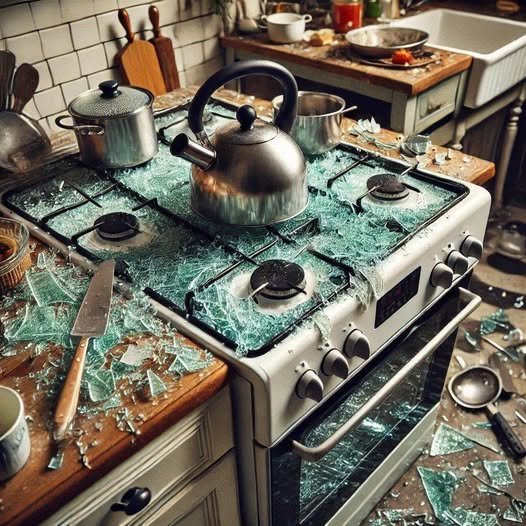
The good news is that most problems are easy to prevent. By changing a few cooking and cleaning habits, you can help keep your glass stovetop safe and in good condition for years.
Here are 9 dangerous glass stovetop habits you should avoid.
1. Sliding Heavy Pots Across the Surface
One of the easiest ways to scratch a glass stovetop is dragging heavy cookware across it.
Cast-iron pans, Dutch ovens, and other heavy pots can contain rough spots on their bottoms. When you slide them instead of lifting them, those rough areas can scrape the glass.
Even tiny scratches can become more noticeable over time.
What to do instead:
Always lift heavy cookware when moving it. If a pan is too heavy to lift safely, avoid dragging it and consider using lighter cookware when possible.
2. Placing a Hot Lid Directly on the Glass
After cooking, you may naturally want to put the hot lid next to the pan. But placing extremely hot cookware or a hot lid directly on a cooler glass surface can create a sudden temperature difference.
Rapid temperature changes can place stress on the glass and, depending on the stovetop and circumstances, may contribute to cracking.
Safer habit:
Place hot lids on a heat-resistant trivet, wooden board, or another suitable heat-safe surface.
3. Using a Cracked or Damaged Pan
Cookware with a rough, warped, or damaged bottom can be problematic on a glass stovetop.
A rough pan bottom may scratch the surface, while a severely warped pan may heat unevenly. Damaged cookware can also become unstable and increase the chance of spills.
Before placing a pan on the stovetop, check the bottom for rough edges, debris, or damage.
4. Dropping Cookware on the Stovetop
Glass stovetops are designed to withstand normal cooking, but they aren’t indestructible.
Dropping a heavy pan, glass container, or other hard object onto the surface can cause chips, cracks, or even breakage.
Be particularly careful when handling cast iron and other heavy cookware.
Remember: Don’t slam cookware onto the stovetop. Lower it gently onto the cooking zone.
5. Using the Stovetop as a Countertop
A glass stovetop may look like convenient extra counter space when it isn’t being used, but it shouldn’t become a storage area.
Placing appliances, cans, utensils, cutting boards, or heavy containers on the surface can scratch or damage it. An object could also fall and hit the glass.
Keep the stovetop clear whenever you aren’t cooking.
6. Cleaning It With Abrasive Materials
Scrubbing a glass stovetop aggressively may seem like the best way to remove burned-on food, but harsh abrasive cleaners and rough scouring pads can leave scratches.
Steel wool and abrasive powders can be particularly damaging.
Instead, use a cleaner specifically designed for glass or ceramic cooktops and a soft cleaning pad recommended by the manufacturer.
For stubborn residue, allow the surface to cool and follow the appliance manufacturer’s cleaning instructions rather than scraping aggressively.
7. Cooking With a Dirty Pan Bottom
Food particles, grease, salt, or other debris stuck to the bottom of cookware can become trapped between the pan and the stovetop.
When heated, these particles may burn onto the surface and become difficult to remove. Gritty debris can also scratch the glass when the pan moves.
Before cooking, quickly inspect the bottom of your pan and wipe it clean if necessary.
8. Pouring Cold Water Onto a Hot Stovetop
Never deliberately splash cold water over a hot glass stovetop to cool it down or clean it immediately.
A sudden temperature change can put thermal stress on the glass. Water can also spread grease and food residue around the surface, making cleanup more difficult.
Better approach:
Turn the cooktop off and allow it to cool according to the manufacturer’s instructions. Once it is at a safe temperature, clean it using the recommended method.
9. Continuing to Use a Cracked Glass Stovetop
This is one of the most important habits to avoid.
If your glass stovetop develops a crack, chip, or significant fracture, don’t simply ignore it and continue cooking as normal. A damaged surface can create a safety hazard, particularly if liquids reach areas they shouldn’t.
Turn off the appliance and follow the manufacturer’s guidance. If necessary, have the cooktop inspected or repaired by a qualified technician.
Do not attempt an improvised repair with household glue or similar products.
How to Protect Your Glass Stovetop
A few simple habits can make a major difference:
- Lift cookware instead of sliding it.
- Keep pan bottoms clean and smooth.
- Avoid dropping heavy objects on the surface.
- Don’t use the cooktop as a storage counter.
- Use cleaning products recommended for your specific cooktop.
- Avoid abrasive scrubbers.
- Keep hot cookware away from sudden temperature changes.
- Inspect the surface regularly for cracks or chips.
- Follow the manufacturer’s instructions for cookware and cleaning.
What Type of Cookware Is Best?
Many glass stovetops work well with cookware that has a flat, smooth bottom. Flat cookware generally makes better contact with the cooking surface and is less likely to wobble.
However, cookware compatibility varies by appliance. Always check your stovetop’s owner’s manual before using cast iron, stoneware, or other heavy cookware.
If your manufacturer provides specific recommendations, those instructions should take priority.
Final Thoughts
A glass stovetop can remain attractive and functional for many years when treated properly. The biggest problems often come from simple habits—dragging heavy pans, using abrasive cleaners, dropping cookware, or exposing the surface to sudden temperature changes.
The safest approach is simple: treat the glass surface gently, keep cookware clean and smooth, and follow the manufacturer’s care instructions.
A few seconds of extra care can help prevent expensive damage and keep your kitchen safer.