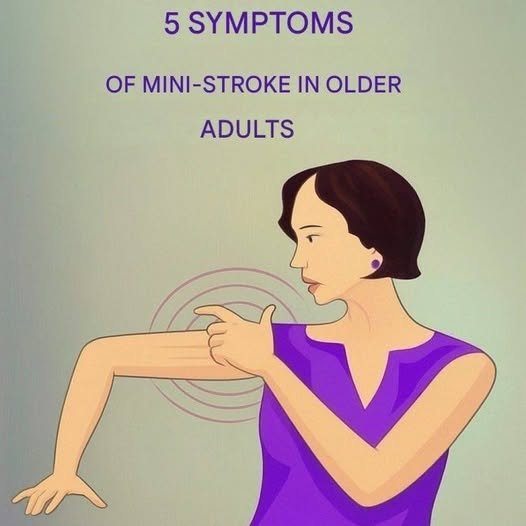
Learn the 5 warning signs of a mini-stroke (TIA) in seniors, why symptoms may disappear quickly, and when to seek emergency medical care.
A mini-stroke, medically known as a transient ischemic attack (TIA), happens when blood flow to part of the brain is temporarily blocked. Unlike a major stroke, the symptoms may disappear within minutes or hours, but that does not mean the event is harmless.
A TIA can be an important warning that a major stroke could occur in the future. If an older adult suddenly develops stroke-like symptoms, do not wait to see whether they go away.
1. Sudden Weakness or Numbness
One of the most recognizable warning signs is sudden weakness, numbness, or loss of sensation.
It may affect:
- The face
- One arm
- One leg
- One side of the body
For example, an older adult may suddenly find that one arm feels weak or that one side of the face appears to droop.
Sudden one-sided weakness should be treated as an emergency.
2. Sudden Trouble Speaking or Understanding
A TIA can affect the areas of the brain responsible for language.
Someone may suddenly:
- Slur their speech
- Struggle to find words
- Speak strangely or incoherently
- Have difficulty understanding what others are saying
Even if normal speech returns after a few minutes, the episode should not be ignored.
3. Sudden Vision Problems
Temporary changes in vision can also occur.
A person may suddenly experience:
- Blurred vision
- Double vision
- Loss of vision in one eye
- Loss of part of their visual field
Sudden vision loss or a major change in vision can have several causes, including TIA or stroke, and requires urgent medical assessment.
4. Sudden Difficulty Walking or Loss of Balance
A person may suddenly become unsteady or have difficulty walking.
They might experience:
- Unexpected dizziness
- Loss of coordination
- Trouble maintaining balance
- Difficulty walking normally
Sudden balance problems are particularly important in older adults because they can easily be mistaken for ordinary weakness or aging.
5. Sudden Severe Headache or Confusion
A sudden, unusual headache can sometimes accompany a stroke or another serious neurological problem.
Sudden confusion, difficulty understanding surroundings, or a dramatic change in mental function can also be a warning sign.
A severe or unusual headache—especially when it appears suddenly or occurs together with weakness, speech problems, vision changes, or confusion—requires urgent medical attention.
Remember FAST
A simple way to recognize common stroke warning signs is FAST:
F — Face: Is one side of the face drooping?
A — Arms: Is one arm weak or numb?
S — Speech: Is speech slurred, strange, or difficult?
T — Time: Call emergency medical services immediately.
Don’t wait for symptoms to disappear.
Why a “Mini-Stroke” Is Still an Emergency
The word “mini” can make a TIA sound harmless, but it isn’t.
The symptoms may disappear because the temporary blockage resolves, but the underlying cause may still be present. A TIA can signal an increased risk of a future stroke.
Doctors may need to determine whether the episode was caused by a blood clot, narrowing of an artery, an abnormal heart rhythm, or another condition.
What Should You Do If Symptoms Disappear?
Still seek emergency medical care.
Do not assume that an older adult is fine simply because they can speak normally or walk normally again.
If someone suddenly develops possible stroke symptoms, note when the symptoms began and seek emergency medical assistance. Do not drive the person yourself if emergency medical services are available.
Final Takeaway
Sudden weakness or numbness, speech difficulties, vision changes, balance problems, and unusual confusion or headache can be warning signs of a TIA or stroke.