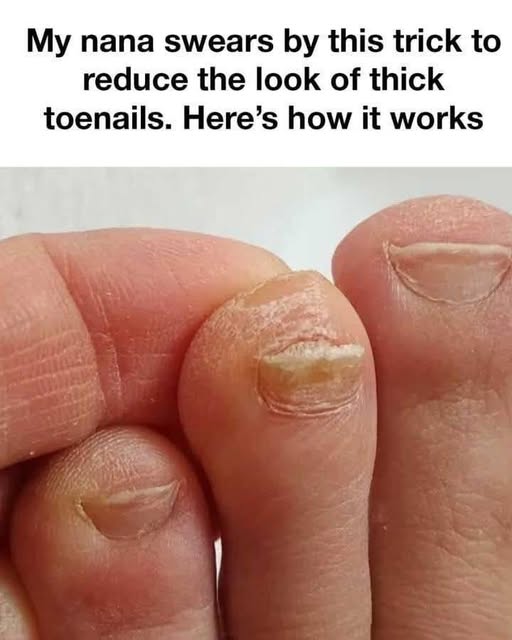
Thick toenails can have several causes, including fungal infections, repeated trauma, psoriasis, or aging. Learn safe ways to improve their appearance and when to see a doctor.
My Nana Swears by This Trick to Reduce the Look of Thick Toenails—Here’s What You Should Know
Thick, yellowish, rough, or difficult-to-trim toenails are common, especially as people get older. The nails shown in the image appear thickened and somewhat discolored, but a photo alone cannot determine the cause.
One important point: there isn’t a proven household “trick” that permanently makes thick toenails thin. The right approach depends on why the nail became thick in the first place.
Why do toenails become thick?
Common causes include:
- Toenail fungus (onychomycosis) — often causes thickening, yellow or white discoloration, crumbling, or debris beneath the nail.
- Repeated pressure or injury — tight shoes or repeated trauma can permanently change the nail’s appearance.
- Aging — toenails can naturally become thicker and harder with age.
- Psoriasis or other skin conditions — these can affect the nails as well.
- Poor circulation or certain medical conditions — sometimes nail changes are associated with underlying health problems.
What can safely improve their appearance?
1. Keep nails trimmed carefully.
After bathing, when the nail is softer, trim straight across using clean nail clippers. Don’t cut deeply into the corners.
2. Don’t aggressively scrape or file the nail.
Trying to make a very thick nail thin quickly can injure the nail bed or surrounding skin.
3. Wear shoes with enough room.
Pressure from narrow footwear can worsen thickened nails and contribute to repeated trauma.
4. Keep feet clean and dry.
Change socks regularly and dry carefully between the toes. If fungal infection is suspected, avoid sharing nail clippers, towels, or footwear.
5. Consider medical treatment if fungus is suspected.
Fungal nail infections generally require treatment directed at the infection itself. Over-the-counter products don’t work equally well for every case, and severe infections may require prescription treatment.
⚠️ Don’t simply cover up the problem
If a toenail becomes suddenly thick, painful, very dark, separates from the nail bed, bleeds, or develops a new dark streak, it should be examined by a healthcare professional.
People with diabetes, poor circulation, or reduced sensation in their feet should be especially cautious about cutting or treating abnormal toenails themselves.
Bottom line: A home routine may make thick nails look and feel better, but it shouldn’t be presented as a cure. Finding the underlying cause is the best way to improve the nail safely.