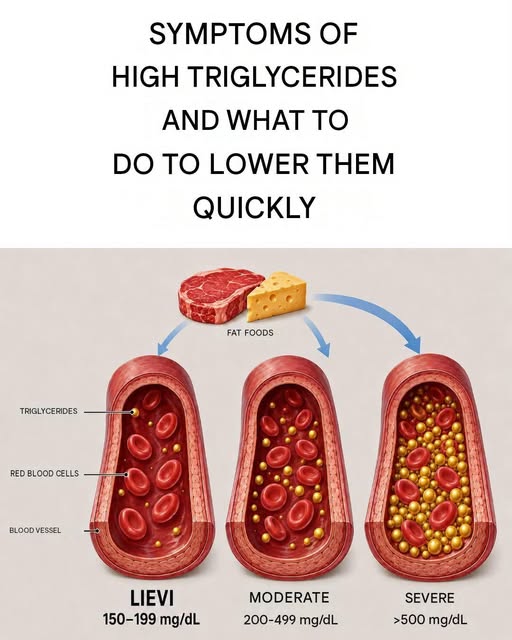
High triglycerides often cause no symptoms but can increase cardiovascular risk. Learn common causes, when levels become concerning, and practical ways to lower triglycerides safely.
High triglycerides are a common type of blood-fat abnormality. Unlike some health problems, high triglycerides usually don’t cause noticeable symptoms, so many people discover they have them only after a blood test.
Triglycerides are a form of fat your body uses for energy. After you eat, your body converts calories it doesn’t immediately need into triglycerides and stores them in fat cells.
What Causes High Triglycerides?
Several factors can raise triglyceride levels, including:
- Eating a lot of added sugar and refined carbohydrates
- Excess alcohol consumption
- Being overweight or physically inactive
- Diabetes or poorly controlled blood sugar
- Certain thyroid, kidney, or liver conditions
- Some medications
- Genetic factors
- Eating more calories than your body needs
Sometimes several of these factors occur together.
What Are the Symptoms?
For most people, there are no obvious symptoms. That’s why regular blood testing is important, particularly if you have risk factors for high cholesterol or triglycerides.
Very high triglyceride levels can become more serious. When levels are extremely elevated, the risk of acute pancreatitis increases. Severe upper-abdominal pain, especially when accompanied by vomiting, requires urgent medical evaluation.
How Can You Lower Triglycerides Quickly?
There isn’t a reliable overnight cure, but making several changes at the same time can help bring levels down.
1. Cut Back on Added Sugar
Reduce sugary drinks, sweets, desserts, and other foods with large amounts of added sugar. Also pay attention to refined carbohydrates such as highly processed breads and pastries.
2. Limit Alcohol
Alcohol can substantially increase triglycerides in some people. If your triglycerides are very high, your healthcare professional may recommend avoiding alcohol altogether.
3. Choose Healthier Fats
Replace foods high in saturated and trans fats with healthier unsaturated fats. Fish, nuts, seeds, and plant-based oils can be useful choices when incorporated into an overall balanced diet.
4. Eat More Fiber-Rich Foods
Vegetables, beans, whole grains, and other fiber-rich foods can support a heart-healthy eating pattern.
5. Get Regular Physical Activity
Regular exercise can improve triglyceride levels and overall cardiovascular health. Even brisk walking can be a useful starting point if you’re currently inactive.
6. Work Toward a Healthy Weight
If you have excess weight, even a modest reduction can improve triglycerides and other metabolic markers.
When Are Triglycerides Too High?
A fasting triglyceride result is generally categorized as:
- Normal: below 150 mg/dL
- Borderline high: 150–199 mg/dL
- High: 200–499 mg/dL
- Very high: 500 mg/dL or higher
Very high results deserve particular attention because of the increased risk of pancreatitis.
Don’t Rely on Symptoms Alone
Because high triglycerides are usually silent, feeling perfectly healthy doesn’t necessarily mean your levels are normal. A lipid panel can measure triglycerides along with cholesterol and other blood-fat markers.
If your triglycerides are very high, don’t attempt to manage them solely with home remedies. Your doctor may need to investigate an underlying cause and determine whether medication is appropriate.
Bottom Line
The fastest safe approach is usually not a single food or supplement. It’s a combination of reducing added sugar and alcohol, improving your diet, becoming more physically active, managing weight, and addressing underlying medical conditions.
If you already have a triglyceride result, share the number and whether the test was fasting, and I can explain what that result generally means.