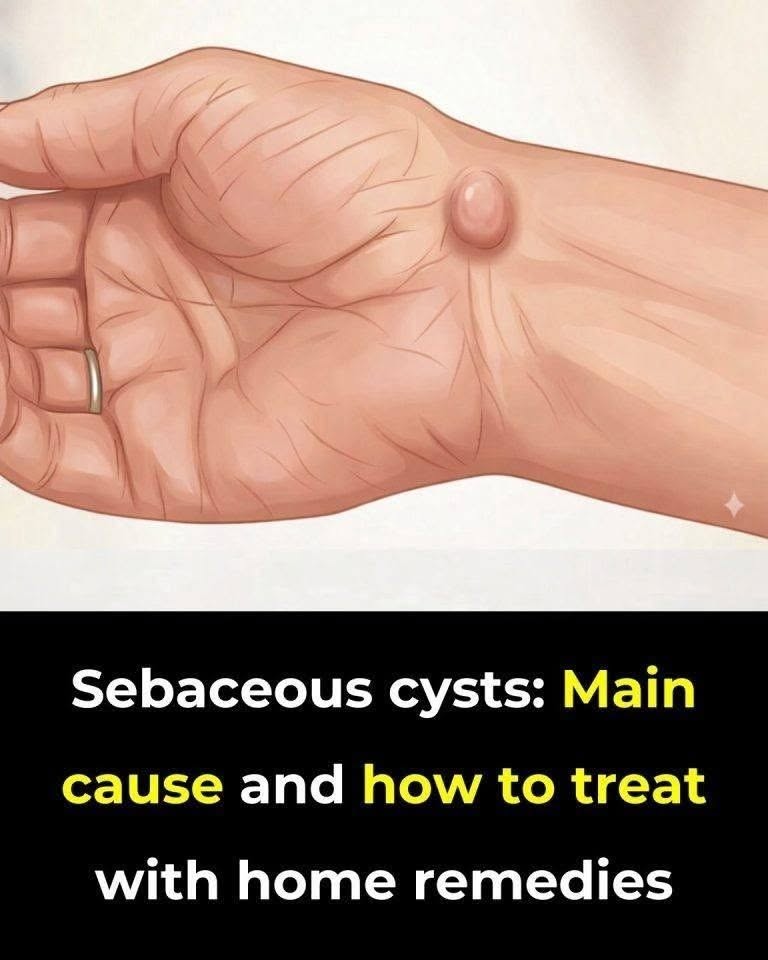
Learn what sebaceous cysts are, what causes them, how to care for them safely at home, and when a painful, infected, or persistent cyst needs medical treatment.
A small, round lump under the skin can be alarming, especially when it appears on the face, neck, back or other parts of the body. One possible cause is an epidermoid cyst, which is often mistakenly called a “sebaceous cyst.”
Sebaceous Cysts Explained: Main Causes and Safe Home-Care Solutions
What Is a Sebaceous Cyst?
The term sebaceous cyst is commonly used for several different types of skin cysts. In many cases, the lump people call a sebaceous cyst is actually an epidermoid cyst.
An epidermoid cyst is a closed sac beneath the skin filled with keratin, a protein found in skin cells.
These cysts are usually:
- Round and smooth
- Slow-growing
- Located just beneath the skin
- Painless when not inflamed
- Sometimes associated with a small opening or dark spot on the skin
A healthcare professional can determine what type of cyst you actually have.
What Causes These Cysts?
Epidermoid cysts can develop when skin cells that should normally shed become trapped beneath the skin and continue producing keratin.
Possible contributing factors include:
Blocked or damaged hair follicles
A damaged follicle can sometimes lead to cyst formation.
Skin injuries
Trauma or irritation can occasionally contribute to an epidermoid cyst.
Acne and other skin conditions
Some people develop cysts in areas prone to acne or blocked follicles.
Genetic conditions
Certain inherited conditions can make a person more likely to develop multiple cysts, although this is uncommon.
Importantly, cysts are not necessarily caused by poor hygiene.
Can You Treat a Cyst at Home?
If the lump is small, painless and has already been diagnosed as a benign cyst, simple care may help with comfort.
However, home remedies generally cannot permanently remove the cyst wall. Even if the contents drain, the cyst can return if the sac remains beneath the skin.
1. Apply a Warm Compress
A clean, warm—not hot—compress can be placed over the area for around 10–15 minutes at a time.
This may provide comfort and, in some cases, encourage a superficial cyst to drain naturally.
Do not use extremely hot water, which can burn the skin.
2. Keep the Area Clean
Gently wash the surrounding skin and avoid excessive scrubbing.
If the cyst has opened, keep the area clean and covered with a clean dressing when appropriate.
3. Don’t Squeeze or Pierce It
This is one of the most important precautions.
Trying to pop, puncture or cut a cyst yourself can:
- Introduce bacteria
- Increase inflammation
- Cause bleeding
- Damage surrounding tissue
- Increase the risk of scarring
- Leave the cyst wall behind, allowing it to return
What About Natural Remedies?
Be cautious with online remedies involving essential oils, vinegar, garlic, toothpaste or other concentrated substances.
These products can irritate or burn the skin and do not reliably remove the cyst capsule.
There is no proven household remedy that can safely dissolve an established epidermoid cyst.
When Does a Cyst Need Medical Treatment?
See a healthcare professional if the lump:
- Becomes painful
- Turns red or increasingly swollen
- Feels hot
- Starts draining pus or foul-smelling material
- Grows rapidly
- Keeps coming back
- Interferes with movement or daily activities
- Is located in an area where you are unsure what the lump is
A painful, red, swollen lump may be inflamed or infected and should be evaluated.
How Are Cysts Removed?
If a cyst is bothersome, recurrent or cosmetically concerning, a healthcare professional may recommend removal.
Complete surgical removal
The cyst and its surrounding capsule can be removed through a minor procedure. Removing the entire cyst wall reduces the likelihood of recurrence.
Drainage
An inflamed cyst may sometimes be opened and drained to relieve pressure.
However, drainage alone may not permanently remove the cyst because the capsule can remain.
The appropriate treatment depends on whether the cyst is inflamed, infected and where it is located.
Is a Sebaceous Cyst Cancer?
Most epidermoid cysts are benign and not cancerous.
Nevertheless, an unexplained lump that changes rapidly, becomes unusually firm or has other concerning features should be examined rather than assumed to be a cyst.
The Bottom Line
Most cysts commonly called “sebaceous cysts” are harmless epidermoid cysts. They can develop when skin cells become trapped beneath the surface and continue producing keratin.
A warm compress may provide comfort, but there is no reliable home remedy that permanently removes an established cyst.
Most importantly, don’t squeeze, cut or puncture the lump yourself. If it becomes painful, red, swollen, infected, rapidly enlarges or keeps returning, have it examined by a healthcare professional.
This article is for general educational purposes and does not diagnose skin lumps. Any new, changing or unexplained lump should be assessed by an appropriate healthcare professional.