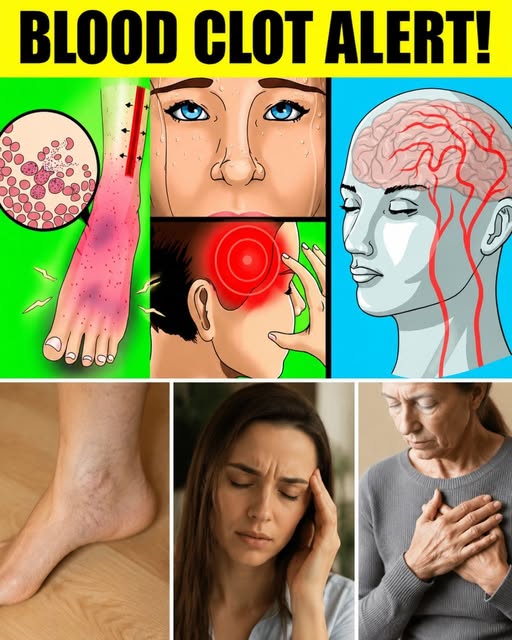
Learn seven possible warning signs of blood clots, including subtle DVT symptoms and dangerous signs of pulmonary embolism, plus important risk factors and when to seek urgent medical care.
7 Silent Symptoms of Blood Clots You Should Never Ignore
Blood clots can be difficult to recognize because some people have few or no obvious symptoms, particularly when a clot develops deep inside a vein. A deep vein thrombosis (DVT) most commonly develops in the leg, but clots can also occur in other areas. If part of a clot travels to the lungs, it can cause a potentially life-threatening pulmonary embolism (PE).
Knowing the possible warning signs can help you seek medical attention before a clot becomes a serious emergency.
1. Unexplained Swelling in One Leg
One-sided swelling—particularly in the calf, ankle, or thigh—is an important possible sign of DVT.
The swelling may develop without an obvious injury and may be accompanied by discomfort or tenderness.
Swelling in both legs is more often associated with other conditions, so sudden swelling affecting primarily one limb deserves medical attention.
2. Pain or Tenderness Without an Obvious Injury
A blood clot can cause pain, aching, cramping, or tenderness in an affected limb.
Some people describe the sensation as a persistent ache in the calf or thigh. It may become more noticeable when walking or standing.
Because leg pain has many possible causes, this symptom alone does not prove that a clot is present. However, unexplained pain combined with swelling or skin changes is more concerning.
3. Warm or Discolored Skin
The skin over a DVT may become warmer, redder, or darker than the surrounding skin.
These changes may occur along with swelling and tenderness.
If these symptoms appear suddenly in one leg, particularly when there is no obvious injury, prompt medical assessment is appropriate.
4. Sudden Shortness of Breath
Sudden unexplained difficulty breathing is one of the most important warning signs of a possible pulmonary embolism.
A PE can occur when a clot travels to the lungs and blocks a blood vessel. This can become life-threatening and requires urgent medical attention.
Do not wait for the symptom to disappear if sudden breathlessness develops.
5. Chest Pain That Gets Worse With Breathing
Chest pain associated with a pulmonary embolism may become worse when taking a deep breath or coughing.
It can sometimes feel sharp or uncomfortable and may be accompanied by shortness of breath or a rapid heartbeat.
Because chest pain can also indicate other medical emergencies, sudden or unexplained chest pain should be treated seriously.
6. Rapid Heartbeat, Lightheadedness, or Fainting
A pulmonary embolism can cause a faster-than-normal heartbeat, dizziness, lightheadedness, or fainting, particularly when the clot significantly affects blood flow through the lungs.
These symptoms require urgent assessment, especially when they occur together with chest pain or breathing difficulty.
7. Coughing Up Blood
Coughing up blood is an important warning sign that can occur with pulmonary embolism.
It may appear alongside sudden breathlessness, chest pain, or a rapid heartbeat.
This is not a symptom to monitor at home. Seek emergency medical care.
Who Has a Higher Risk of Blood Clots?
Although blood clots can happen to anyone, certain circumstances increase the risk.
Risk factors include:
- Recent surgery or hospitalization
- Long periods of immobility or bed rest
- Long-distance travel
- Previous blood clots
- A family history of blood clots
- Certain cancers
- Pregnancy and the period shortly after pregnancy
- Estrogen-containing medicines, including some forms of hormonal contraception
- Significant injury or trauma
- Smoking
- Being overweight or obese
Having a risk factor does not mean that a person has a blood clot. It simply means that awareness of symptoms is particularly important.
When Is a Blood Clot an Emergency?
The most dangerous symptoms are those suggesting that a clot may have traveled to the lungs.
Seek emergency medical attention immediately for:
- Sudden severe difficulty breathing
- Chest or upper-back pain
- Coughing up blood
- Fainting or collapse
- Severe lightheadedness
- A very fast heartbeat accompanied by other concerning symptoms
Do not drive yourself if you are experiencing severe symptoms. Emergency medical services can provide appropriate assistance.
Can Blood Clots Be Prevented?
Risk cannot always be eliminated, but movement is important.
During long periods of sitting, regularly move your legs and, when possible, get up and walk around. Staying active, avoiding smoking, and following your healthcare professional’s recommendations after surgery or hospitalization can also help reduce risk.
For people with specific medical risk factors, a doctor may recommend additional preventive measures.
Don’t Try to Diagnose a Blood Clot at Home
A swollen or painful leg can have many causes, and symptoms alone cannot confirm a DVT.
Healthcare professionals may use tests such as ultrasound to evaluate a suspected DVT and imaging such as CT-based testing when pulmonary embolism is suspected.
That is why unexplained symptoms should be medically evaluated rather than treated with home remedies.
Final Thoughts
Blood clots can sometimes be silent, but symptoms such as one-sided leg swelling, unexplained leg pain, warmth or discoloration, sudden breathlessness, chest pain, rapid heartbeat, fainting, or coughing up blood should never be ignored.
Most importantly, sudden breathing difficulty, chest pain, coughing up blood, or collapse can indicate a pulmonary embolism and require emergency medical attention.
Recognizing the warning signs does not mean assuming the worst. It means knowing when a symptom deserves prompt medical attention—and potentially getting treatment before a dangerous complication develops.