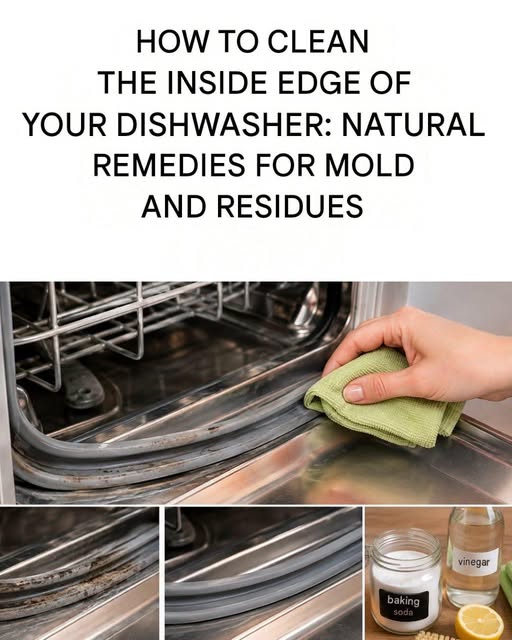
Learn how to naturally clean the inside edge of your dishwasher, including the gasket, corners, and door channel, using simple household ingredients to remove food residue, grease, grime, and unpleasant odors.
How to Clean the Inside Edge of Your Dishwasher: Natural Remedies for Food Residue, Grease, Dirt, and Odors
The dishwasher cleans your plates every day, but there is one area that often gets overlooked: the inside edge of the dishwasher door, especially around the rubber gasket and corners.
Food crumbs, grease, detergent residue, and moisture can collect in these hidden areas. Over time, the buildup may create a musty smell or leave the dishwasher looking dirty even when the rest of the interior appears clean. Whirlpool and KitchenAid both recommend paying particular attention to the door edges, gasket, filter, and other areas where residue can accumulate.
The good news is that you don’t need complicated equipment to clean these areas. A few simple supplies and some careful wiping can make a big difference.
What You’ll Need
- Warm water
- Mild dish soap
- Microfiber cloth or soft sponge
- Old soft toothbrush
- Cotton swabs for narrow corners
- White vinegar, if appropriate for your dishwasher
- Baking soda
- Clean, dry towel
Before using vinegar or any other cleaning solution, check your dishwasher’s care instructions because manufacturers can have different recommendations for specific materials and models.
Step 1: Empty the Dishwasher
Remove all dishes, racks, and utensil holders if they are easily removable.
Inspect the bottom of the dishwasher for loose food particles. Also check the filter, because trapped food debris can contribute to unpleasant odors. Manufacturers commonly recommend cleaning the filter regularly.
Step 2: Start With the Gasket
The rubber gasket around the dishwasher door can trap moisture, grease, and tiny food particles inside its folds.
Mix warm water with a small amount of mild dish soap. Dip a soft cloth or sponge into the solution and gently wipe the entire gasket.
For narrow grooves and corners, use a soft toothbrush. Work gently rather than pulling or stretching the rubber.
Whirlpool specifically recommends warm, soapy water for wiping dishwasher gasket seals and drying them afterward.
Step 3: Clean the Inside Door Edge
Open the dishwasher door completely.
Look closely along the bottom edge, side edges, hinges, and the channel where the door meets the tub. This area can collect greasy residue and crumbs that aren’t reached by the normal washing spray.
Use your damp microfiber cloth to wipe the area.
For stubborn spots, let the warm soapy water sit on the residue for a few minutes before gently scrubbing with the soft toothbrush.
Avoid metal scrapers, knives, or sharp objects, which can damage the gasket or finish.
Step 4: Don’t Forget the Bottom Corners
The lower corners of the dishwasher door are particularly easy to overlook.
Use a damp cotton swab or the corner of a microfiber cloth to reach into small spaces.
If you find thick food residue, remove the larger pieces first with the cloth rather than pushing them farther into the gasket or drain area.
Step 5: Use Vinegar Carefully for Odors
White vinegar can be useful for certain dishwasher-cleaning tasks, but it should be used appropriately.
For a deeper interior cleaning, Whirlpool recommends placing 2 cups (500 mL) of white vinegar in a dishwasher-safe container and running a normal cycle without detergent, using an appropriate drying setting according to the model. Whirlpool also warns that vinegar is acidic and that frequent use may damage the dishwasher.
For the gasket itself, start with warm soapy water rather than vinegar. If your manufacturer’s instructions allow vinegar and a light mineral film or odor remains, a small amount of diluted vinegar on a cloth can be used cautiously.
Never mix vinegar with bleach or bleach-containing cleaners.
Step 6: Use Baking Soda for Lingering Odors
Baking soda can help freshen the dishwasher and deal with lingering odors.
For an empty dishwasher, some manufacturers recommend sprinkling approximately 1 cup of baking soda on the bottom and running a short hot-water cycle.
If you’re using both vinegar and baking soda for a deep clean, use them in separate cycles rather than mixing them together. Mixing them directly largely neutralizes their individual cleaning properties.
Step 7: Wipe Everything Dry
After cleaning the gasket and door edges, use a clean, dry towel to remove moisture.
This step is easy to skip, but keeping the gasket and corners dry can help reduce the damp environment that contributes to musty odors.
Leaving the dishwasher door slightly open after a cycle can also allow moisture to escape.
What If There’s Black or Slimy Buildup?
Dark or slimy material around the gasket may consist of accumulated food residue, grease, detergent film, and moisture-related buildup.
Start with warm soapy water and gentle brushing. Don’t immediately reach for harsh chemicals, especially on rubber seals.
If the gasket is cracked, torn, hardened, loose, or no longer sealing correctly, cleaning may not solve the problem. A damaged gasket may need replacement.
Don’t Forget the Filter
Cleaning only the door gasket won’t necessarily solve a persistent dishwasher smell.
The filter can collect food particles and grease, making it an important part of routine maintenance. Whirlpool recommends checking and cleaning the filter, while LG recommends regular filter and gasket cleaning as part of dishwasher maintenance.
If your model has a removable filter, remove and rinse it according to the manufacturer’s instructions.
How Often Should You Clean These Areas?
A quick wipe of the gasket and door edge can be done weekly or whenever you notice visible residue.
A more thorough dishwasher cleaning is commonly recommended about once a month, although frequency depends on how often you use the machine and how much food residue it handles.
Simple Prevention Tips
You can reduce buildup by following a few simple habits:
- Scrape large food particles from dishes before loading.
- Check the gasket regularly.
- Wipe the bottom door edge when you notice crumbs or grease.
- Clean the dishwasher filter regularly.
- Don’t overload the dishwasher.
- Keep the gasket dry after cleaning.
- Leave the door slightly open when appropriate to allow the interior to air out.
- Follow your dishwasher manufacturer’s cleaning instructions.
Final Thoughts
The inside edge of the dishwasher door may be one of the dirtiest hidden areas in the appliance because it can collect food particles, grease, moisture, and detergent residue while remaining outside the main spray pattern.
Fortunately, regular cleaning doesn’t have to be difficult.
Start with warm water, mild dish soap, a soft cloth, and a toothbrush. Clean the gasket folds, lower corners, door channel, and edges carefully. For deeper interior odors, vinegar or baking soda may be useful when permitted by your dishwasher’s care instructions.
A few minutes of maintenance can help keep your dishwasher cleaner, fresher, and working properly—and it can prevent those unpleasant smells from coming back.