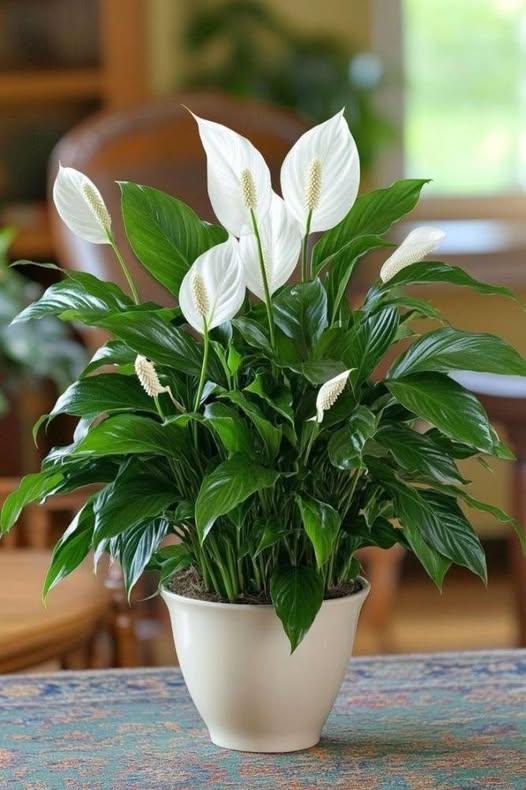
Discover a simple homemade fertilizer that may encourage peace lilies to produce healthier leaves and flowers. Learn how to prepare it, how often to use it, and common mistakes to avoid.
Peace lilies are one of the easiest houseplants to grow, but getting them to bloom can sometimes feel impossible. You may have a plant with beautiful green leaves that refuses to produce a single flower—or one that looks tired, sparse, and unhappy.
The good news is that you don’t necessarily need an expensive commercial fertilizer. A simple homemade plant feed, used correctly alongside proper light and watering, can give your peace lily the nutrients it needs to grow more vigorously and potentially encourage flowering.
🌿 The “1-Cup” Homemade Feed
One gentle option is diluted banana-peel water. Banana peels contain small amounts of minerals such as potassium, although homemade banana water should not be considered a complete fertilizer.
What You’ll Need
- 1 ripe banana peel
- About 2 cups of water
- A clean jar or container
- A strainer
How to Make It
- Cut the banana peel into small pieces.
- Place the pieces in a jar.
- Add about 2 cups of water.
- Cover loosely and let it sit for several hours or overnight.
- Strain out the peel.
- Dilute the liquid with an equal amount of fresh water before using it on your plant.
Use approximately 1 cup of the diluted mixture around the soil of a medium-sized peace lily.
Don’t pour it directly over the leaves or flowers.
🌸 Will It Really Make a Peace Lily “Bloom Like Crazy”?
There is no homemade liquid that can guarantee abundant flowers overnight.
Peace lilies need the right combination of light, water, temperature, nutrition, and healthy roots. Fertilizer can help when a plant is lacking nutrients, but insufficient light is one of the most common reasons a healthy-looking peace lily fails to flower.
For better flowering, place your peace lily somewhere with bright, indirect light. Avoid harsh direct midday sunlight, which can scorch its leaves.
💧 Don’t Overwater It
One of the biggest mistakes peace-lily owners make is watering too frequently.
Wait until the upper portion of the soil has started to dry before watering thoroughly. The pot should have drainage holes so excess water can escape.
Constantly wet soil can contribute to root problems, which can make a plant look worse rather than better.
🌱 What About an “Ugly” Peace Lily?
If your peace lily has yellowing leaves, brown tips, drooping foliage, or very few leaves, don’t immediately assume it needs more fertilizer.
First check:
- Is it receiving enough indirect light?
- Is the soil staying wet for days?
- Does the pot have drainage holes?
- Are the roots crowded or damaged?
- Is the air extremely dry?
- Has the plant been recently repotted or moved?
Fixing the underlying problem is usually more important than adding another homemade fertilizer.
⚠️ A Little Is Better Than a Lot
Homemade fertilizers can become problematic when used too often or too strongly. Excess nutrients can accumulate in the soil and damage roots.
For a peace lily, occasional feeding during active growth is generally safer than repeatedly pouring nutrient-rich liquids into the pot.
If you’re looking for predictable nutrition, a balanced, water-soluble houseplant fertilizer used according to its label is a more reliable option.
✨ The Real Secret to More Peace Lily Flowers
Think of the “one cup” as a supporting step—not a magic cure.
For the best chance of flowering:
Bright indirect light + appropriate watering + good drainage + occasional balanced fertilizer + patience = a happier peace lily.
And if your peace lily is currently looking rough, don’t give up on it. Remove badly damaged leaves with clean scissors, correct its watering and lighting conditions, and give the plant time to recover.
With consistent care, even a struggling peace lily can develop fresh foliage and, when conditions are right, beautiful white blooms.