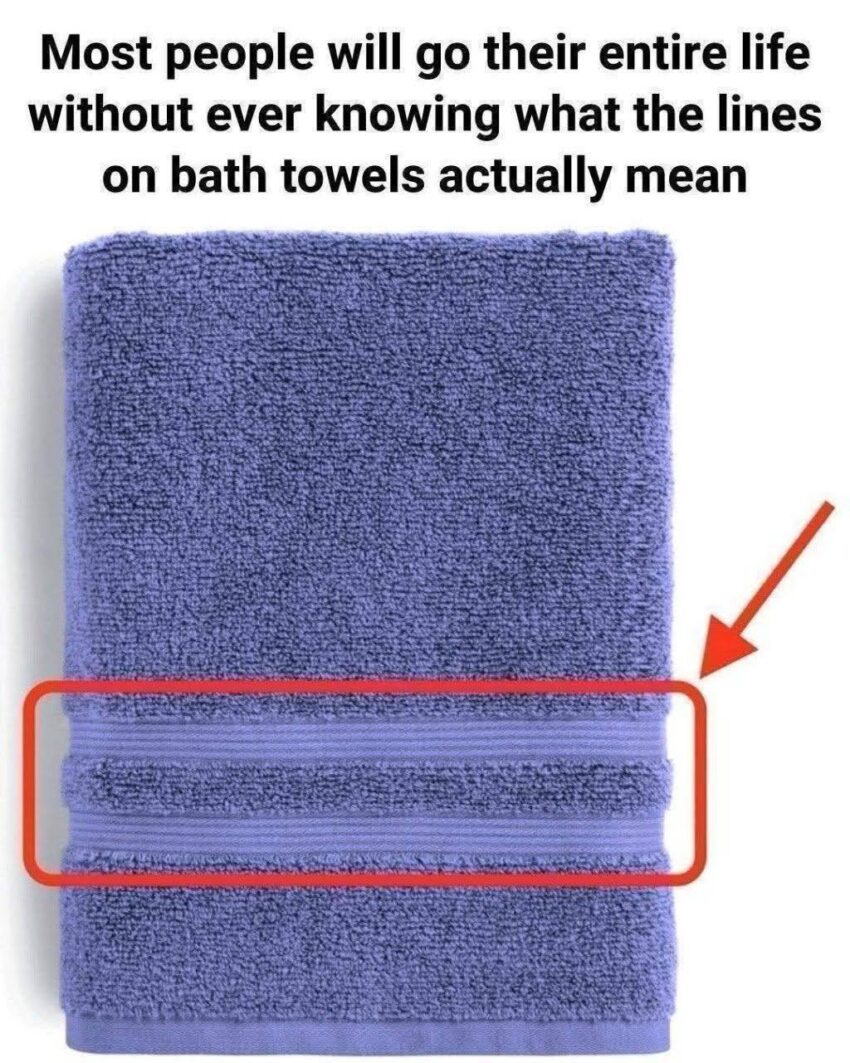
Have you ever wondered why most bath towels have those distinctive horizontal lines, bands, or patterned strips near the ends? At first glance, they may look like nothing more than a decorative detail. But those lines actually have a practical purpose—and they are part of the way towels are designed and woven.
Whether you use a thick hotel-style towel, a lightweight everyday towel, or a luxurious cotton bath sheet, you will probably notice a woven band near one or both ends. This small design feature is often overlooked, but it plays an important role in the towel’s construction, appearance, and durability.
What Are the Lines on a Bath Towel Called?
The patterned strips found near the ends of many towels are commonly called dobby borders, dobby stripes, or woven borders.
Unlike a design printed onto the towel, these patterns are created directly during the weaving process. Different weaving techniques and structures are used to produce the stripes, geometric shapes, or textured bands you see.
The main towel body is typically made with absorbent loops, known as terry loops. The border, however, often uses a flatter and more tightly woven structure.
This creates a visible transition between the highly absorbent terry section and the smoother border.
The Main Reason: Better Towel Construction
One of the biggest practical reasons for these lines is structural stability.
A bath towel is repeatedly:
- Washed
- Dried
- Folded
- Pulled
- Twisted
- Used while wet
- Exposed to heat and moisture
The terry loops that make a towel soft and absorbent are relatively loose compared with a flat woven fabric. If the entire towel were made only from loose terry loops, the edges could be more vulnerable to stretching, distortion, and unraveling.
The woven border provides a more stable section near the ends of the towel.
In simple terms, the border helps give the towel a firm, finished area that can withstand repeated handling.
The Lines Also Help Prevent Excessive Stretching
Terry fabric is designed to be soft and flexible. That’s great when you’re drying your body, but too much flexibility can make the fabric lose its shape over time.
The tighter woven bands near the ends help create a transition zone between the main terry fabric and the finished edge.
This can help the towel maintain its shape and reduce some of the distortion that may occur after repeated washing and drying.
It doesn’t mean the border alone prevents a towel from stretching, but it is part of the overall construction that helps the towel remain stable.
Why Are the Lines Usually Near the Ends?
You may notice that the decorative bands are rarely placed randomly in the middle of a standard bath towel. They are usually positioned a few inches from the short ends.
That’s because the ends are where the towel needs a clean, stable transition.
The border also gives manufacturers a practical way to finish the towel while creating a visually appealing design.
The result is a towel that has:
Absorbent terry fabric → woven transition → finished edge
This combination balances softness, absorbency, durability, and appearance.
Are the Lines Just Decorative?
Not entirely—but they can certainly be decorative too.
Manufacturers use dobby borders to give towels a more finished and attractive appearance. The patterns can range from simple horizontal stripes to elaborate geometric designs.
This is especially useful for:
- Hotel towels
- Spa towels
- Luxury bathroom collections
- Decorative guest towels
- Premium home textiles
The border gives the towel a recognizable style without requiring printed graphics or additional materials.
So, while the lines have a practical role, their appearance is also an important part of the design.
The Border Is Different From the Main Towel Fabric
To understand why the lines look different, it helps to understand how a terry towel is made.
The main body of a typical towel contains thousands of tiny loops of yarn. These loops increase the surface area of the fabric, allowing the towel to absorb water effectively.
The border usually has a flatter weave.
Because the yarn is arranged differently, the border feels smoother and often looks more compact than the fluffy center of the towel.
This difference in texture is why you can often run your fingers across a towel and immediately notice where the patterned band begins.
Do the Lines Make the Towel More Absorbent?
Generally, no.
The fluffy terry portion is primarily responsible for absorbing water. The woven border is usually less absorbent because it has fewer exposed loops.
In fact, if you compare the two areas, you’ll often find that the center of the towel absorbs moisture more readily than the flat decorative band.
That’s not a flaw. The towel is intentionally constructed this way.
The main body is optimized for absorption, while the border helps with structure, finishing, and visual design.
Why Do Some Towels Have More Lines Than Others?
Towel construction varies from manufacturer to manufacturer.
Some towels have a single narrow band. Others have multiple stripes or a wide geometric border.
The differences can come from:
- Weaving techniques
- Towel size
- Intended use
- Brand design
- Fabric weight
- Manufacturing costs
- Desired appearance
Luxury towels may use elaborate woven borders, while basic towels may have very simple bands.
You may also find towels without a visible decorative band at all. Their edges can still be reinforced and finished using other construction methods.
What Happens If a Towel Doesn’t Have These Lines?
Nothing is necessarily wrong with it.
Not every towel needs a traditional dobby border. Modern towel designs can use different finishing techniques, including minimalist borders or completely uniform terry construction.
A towel without a visible line can still be:
- Durable
- Absorbent
- High quality
- Comfortable
- Properly finished
The presence or absence of lines isn’t, by itself, a reliable indicator of towel quality.
Why Do Hotel Towels Often Have These Bands?
If you’ve stayed in a hotel, you’ve probably noticed the familiar striped or patterned bands on the towels.
Hotels tend to favor this design for several reasons.
First, the border gives the towel a clean, professional appearance. Second, it provides a recognizable visual structure that makes towels look neat when folded.
The bands can also make it easier to identify the towel’s orientation and create a consistent appearance across a hotel’s linen collection.
Most importantly, commercial towels need to withstand frequent washing and drying, so practical construction is particularly important.
Do the Lines Make Towels Easier to Fold?
This is a common observation, and the answer is a little more nuanced.
The woven band creates a noticeable change in texture and structure, which can make the towel easier to visually divide into sections when folding.
However, the lines weren’t necessarily invented specifically as a folding guide.
Their primary purpose is related to weaving, finishing, stability, and design.
The fact that they can also help you line up a towel when folding is more of a useful side benefit.
Why Do Some Towels Have Lines Across the Entire Width?
The bands typically run horizontally from one side of the towel to the other because of how the fabric is woven.
The towel’s construction is based on the arrangement of warp and weft yarns. By changing the weave in a particular section, manufacturers can create a band that looks and feels different from the surrounding terry loops.
This allows the manufacturer to create patterns without applying a separate printed layer.
Are the Lines Sewn Onto the Towel?
Usually, the traditional decorative border is woven into the towel itself, rather than simply sewn on afterward.
That’s an important distinction.
A printed design can fade or wear away. A woven design is part of the fabric’s structure.
The exact manufacturing method can vary, but a genuine dobby-style border is produced through controlled weaving patterns.
Why Do the Borders Sometimes Become Worn?
If you’ve owned towels for several years, you may have noticed that the decorative bands can become stiff, frayed, or damaged before the rest of the towel.
There are several possible reasons.
The border has a different weave from the terry body, so it reacts differently to washing and drying. Frequent exposure to high heat, aggressive detergents, fabric softeners, and mechanical wear can gradually affect the fibers.
The terry loops can also become less fluffy over time, making the contrast between the center and border more noticeable.
How to Keep Your Towels Looking Good
A few simple habits can extend the life of your towels.
1. Avoid Excessive Heat
Very high dryer temperatures can put unnecessary stress on cotton fibers. Use a moderate drying temperature when possible.
2. Don’t Overload the Washing Machine
Towels need room to move around in the washer. An overloaded machine can prevent effective cleaning and rinsing.
3. Use the Right Amount of Detergent
More detergent doesn’t necessarily mean cleaner towels. Excess detergent can accumulate in the fibers and reduce softness and absorbency.
4. Be Careful With Fabric Softener
Fabric softeners can coat towel fibers and reduce their ability to absorb water effectively. If maximum absorbency is important to you, use fabric softener sparingly.
5. Don’t Pull Loose Threads
If you see a loose thread on the decorative border, avoid pulling it. Cutting the loose thread carefully is generally better than tugging on it, which can cause additional unraveling.
Are These Lines a Sign of an Expensive Towel?
Not necessarily.
A beautiful woven border can make a towel look luxurious, but the quality of a towel depends on much more than its decorative lines.
When choosing a towel, consider factors such as:
- Fiber quality
- Cotton type
- GSM (grams per square meter)
- Stitching quality
- Overall construction
- Absorbency
- Durability
- Personal preference for softness and weight
A simple-looking towel can be excellent quality, while an expensive towel with an elaborate border isn’t automatically better.
The Interesting History Behind Towel Borders
Decorative woven borders are part of a much broader tradition in textile manufacturing.
For centuries, textile makers have used changes in weave, texture, and pattern to create both functional and decorative sections within fabrics.
Modern towels inherited many of these principles.
Today’s machines allow manufacturers to create highly detailed patterns efficiently, but the basic concept remains familiar: change the weave to create a stronger, visually distinct section of fabric.
So, What’s the Real Purpose of Those Lines?
The answer is a combination of function and design.
The lines or bands on many bath towels:
- Create a structured transition between the terry body and the finished edge.
- Help stabilize the fabric near the ends.
- Provide a clean finishing area for the towel.
- Add visual appeal through woven patterns.
- Make the towel look neat when folded.
- Differentiate the towel’s construction without adding a separate printed design.
So the next time you grab a towel after a shower, take a closer look at those little lines. They’re not simply there to make the towel look fancy. They are a small example of how textile engineering combines practicality with design.
Frequently Asked Questions
Why do towels have stripes near the ends?
The stripes are commonly part of a woven dobby border. They provide a structured transition near the towel’s edges while also serving a decorative purpose.
Are towel stripes necessary?
No. Towels can be made without a visible decorative stripe or dobby border. Manufacturers can use other edge-finishing and construction techniques.
Are the stripes more absorbent than the rest of the towel?
Usually not. The terry-loop portion of the towel is designed primarily for water absorption, while the flatter border is generally less absorbent.
What are the lines on towels called?
They are often referred to as dobby borders, dobby stripes, woven borders, or decorative bands.
Why do hotel towels have stripes?
The bands provide a clean, professional appearance and are also part of the towel’s woven construction. Commercial towels are designed to withstand frequent laundering and use.
Can I cut off the decorative strip?
It’s generally not recommended. Cutting into the woven border can compromise the towel’s construction and may cause unraveling.
Final Thoughts
The humble bath towel is more thoughtfully designed than it may appear. From the absorbent terry loops to the reinforced edges and woven bands, different parts of the towel serve different purposes.
Those familiar lines near the ends aren’t just decoration. They are a practical detail created through the weaving process to help give the towel structure, a finished appearance, and a distinctive design.
So the next time you see those lines on your bath towel, you’ll know there’s more to them than meets the eye.
Meta Description
Ever wondered why bath towels have lines near the ends? Discover the practical purpose of towel stripes, dobby borders, and woven bands—and why they’re more than decoration.
Suggested SEO Keywords
- why do bath towels have lines
- why towels have stripes
- towel lines meaning
- bath towel design
- dobby border towels
- why do hotel towels have stripes
- towel woven border
- purpose of towel stripes
- how bath towels are made
- terry towel construction