Age spots—also called sun spots or liver spots—often develop after years of sun exposure. Because they’re harmless in most cases, many people look for inexpensive home remedies to make them less noticeable.
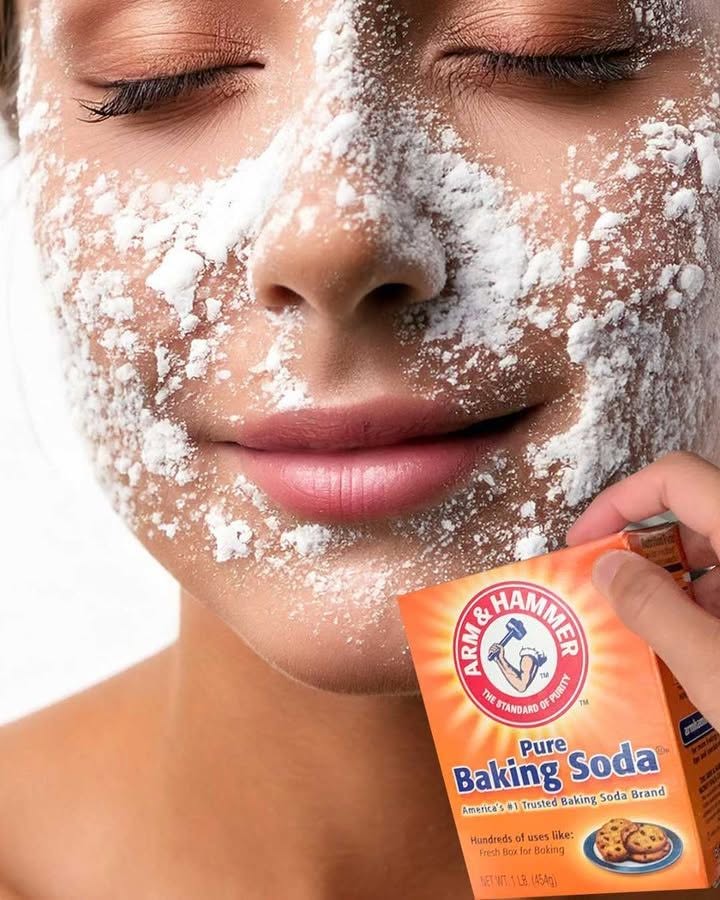
Baking soda is sometimes promoted online as a natural way to “erase” age spots. However, there isn’t good clinical evidence that baking soda removes pigmentation, and applying it directly to your face can actually irritate the skin.
🧴 Why Baking Soda Can Be a Problem
Baking soda is alkaline, while healthy skin has a naturally acidic surface barrier. Applying a concentrated baking-soda paste may cause:
- Dryness and tightness
- Burning or stinging
- Redness and irritation
- Damage to the skin barrier
- Increased sensitivity
Scrubbing pigmentation with baking soda can also create irritation that makes dark marks appear worse.
🌿 A Safer Natural Approach
If your goal is to make age spots less noticeable, focus first on sun protection.
Use a broad-spectrum SPF 30 or higher sunscreen every day, especially when spending time outdoors. A hat and protective clothing can provide additional protection.
For mild pigmentation, products containing ingredients such as niacinamide or vitamin C may help gradually improve uneven skin tone. Results generally take time, and consistency matters more than aggressive treatments.
🚨 Don’t Ignore a Changing Dark Spot
Not every dark spot is an age spot. A spot that is new, rapidly changing, asymmetrical, has irregular borders, multiple colors, bleeds, crusts, or doesn’t heal should be checked by a dermatologist.
Bottom Line
Baking soda isn’t a proven treatment for age spots, and using it directly on the skin may do more harm than good. Gentle skincare and daily sun protection are much safer choices if you want a more even-looking complexion.
Meta Description: Can baking soda really erase age spots? Learn what science says about this popular home remedy, why it may irritate your skin, and safer ways to reduce the appearance of sun-related pigmentation.