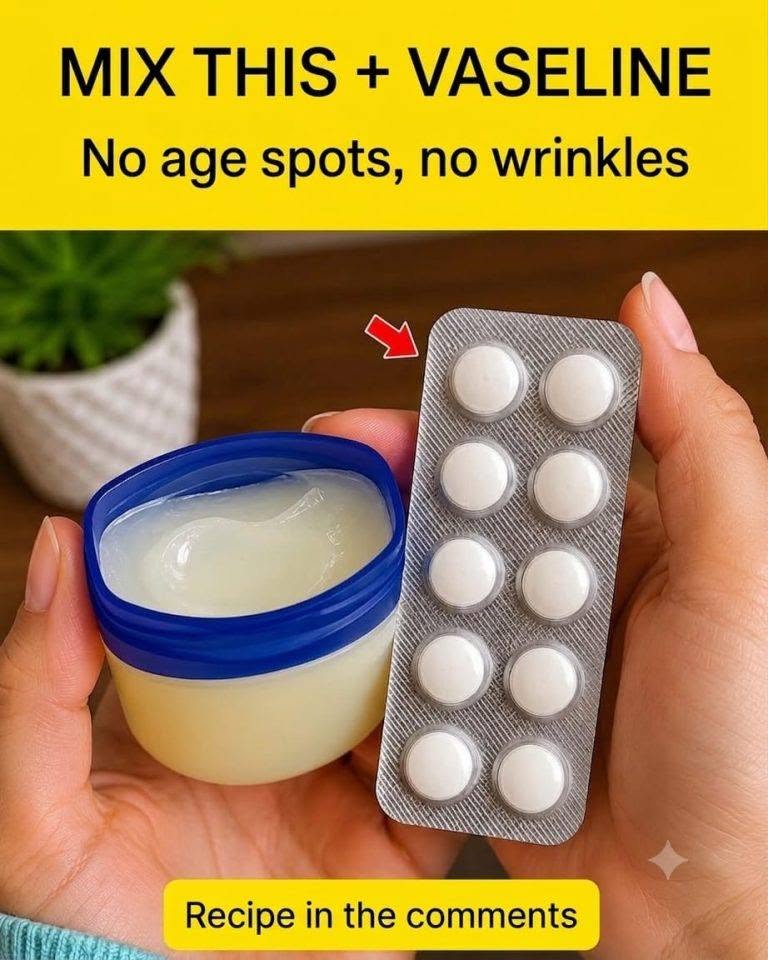
Scroll through social media and you’ll quickly encounter beauty recipes promising dramatic results from ingredients already sitting in your bathroom or medicine cabinet. One particularly common format is the “Vaseline + pills” beauty hack, where a creator claims that crushing a medication or tablet and mixing it with petroleum jelly can improve skin, remove spots, reduce wrinkles, brighten the complexion, or solve another cosmetic concern.
These videos can be extremely persuasive—but popularity is not the same thing as scientific evidence.
1. They promise an easy solution
People naturally gravitate toward solutions that appear inexpensive, simple, and convenient.
A recipe such as:
“Crush a tablet + mix with Vaseline + apply overnight”
looks much easier than researching ingredients, understanding skin conditions, or finding an appropriate skincare product.
The simpler the recipe appears, the easier it is for viewers to remember and share.
2. Familiar ingredients create a sense of safety
Vaseline, or petroleum jelly, is a familiar household product. Because people commonly associate it with protecting dry skin, they may assume that adding another familiar product automatically makes a safe skincare treatment.
But an ingredient being safe for one purpose does not mean every substance is safe to mix with it and apply to the skin.
This is especially important when the mystery “pill” is actually a medication.
3. Before-and-after images are powerful
A dramatic before-and-after photograph can make a beauty hack appear scientifically proven.
But photographs can be misleading.
Lighting, camera exposure, makeup, filters, skin hydration, facial expression, and even the angle of the photograph can make skin look substantially different.
A before-and-after image therefore doesn’t establish that the recipe caused the improvement.
4. Social-media algorithms reward dramatic claims
“Simple skincare tip” isn’t necessarily as attention-grabbing as:
“Doctors don’t want you to know this secret!”
or
“Mix this with Vaseline and watch what happens overnight!”
Strong claims generate curiosity. Curiosity encourages people to stop scrolling, watch the video, comment, save it, and share it.
Those interactions can help the content spread even when the underlying claim hasn’t been properly tested.
5. Personal testimonials feel like evidence
Another reason these hacks spread is the power of personal stories.
Someone may say:
“I tried it for seven days and my skin looks amazing!”
That may genuinely be their experience. But one person’s experience cannot establish that the same treatment will work for everyone.
Anecdotes don’t tell us whether the improvement came from the hack, normal changes in the skin, another product being used at the same time, or simply differences in photography.
6. “Natural” and “DIY” can sound healthier than they are
DIY skincare is often marketed as being more natural, affordable, and gentle than commercially manufactured products.
But natural doesn’t automatically mean safe, and homemade doesn’t automatically mean better.
The skin is a living organ with a protective barrier. Applying substances that weren’t designed for topical cosmetic use can potentially cause irritation, allergic reactions, chemical burns, or other problems.
7. The identity of the pill is sometimes unclear
This is one of the biggest concerns with viral “Vaseline + pills” recipes.
A video may simply refer to a pill by its appearance or by a vague name such as “vitamin tablet” without explaining its active ingredients, concentration, formulation, or intended use.
Some tablets contain ingredients that aren’t intended to be applied directly to the skin. Others may contain coatings, fillers, binders, or other inactive ingredients.
Crushing a tablet and applying it to your face does not make it a skincare product.
What About Vaseline Itself?
Plain petroleum jelly has legitimate dermatological uses. It acts primarily as an occlusive, meaning it helps reduce water loss from the outer layer of the skin.
That can make it useful for protecting and moisturizing dry or irritated skin.
But adding an unidentified medication or other substance doesn’t necessarily improve those properties.
In fact, the mixture could introduce unnecessary irritation or other risks.
Before Trying a Viral Beauty Hack, Ask These Questions
Before putting a social-media recipe on your skin, consider:
- What exactly is every ingredient?
- Was the product designed to be used on skin?
- Is there reliable evidence supporting the claimed benefit?
- Could the ingredients irritate sensitive skin?
- Could the mixture interact with another skincare product or medication?
- Is the person making the claim qualified to give medical advice?
- Are the before-and-after photographs independently verified?
If those questions can’t be answered, it’s worth being skeptical.
The Bottom Line
The appeal of “Vaseline + pills” beauty hacks is easy to understand: they’re cheap, simple, visually compelling, and promise dramatic results.
But a viral recipe isn’t a clinical trial.
Before experimenting with a medication or crushed tablet on your skin, check what the product actually contains and whether it is intended for topical use. When a skincare concern is persistent or significant, a dermatologist or other qualified healthcare professional can provide much safer, evidence-based guidance.
A good beauty hack shouldn’t just look convincing—it should also have a reasonable safety and evidence basis.