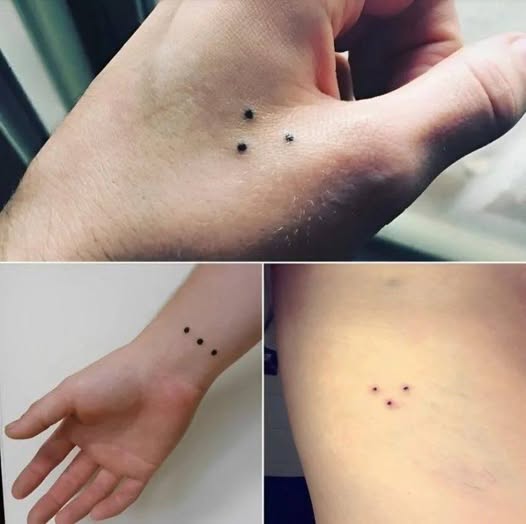
A small tattoo made up of three dots can look mysterious, especially when you don’t know what it represents. Over the years, different stories have circulated online claiming that the symbol identifies criminals, gang members, or dangerous people.
But there’s an important problem with that claim:
A three-dot tattoo does not automatically mean that someone is dangerous.
What Does a Three-Dot Tattoo Mean?
The three-dot tattoo is commonly associated with the Spanish phrase “mi vida loca,” meaning “my crazy life.”
The symbol has also been associated in some contexts with gang culture and prison culture, particularly in parts of the United States and Latin America.
However, its meaning isn’t universal.
A person might have three dots because of a personal experience, friendship, cultural connection, or simply because they like the design.
That’s why judging someone solely because of this tattoo can be misleading.
Why Do People Associate It With Gangs?
The association partly comes from the historical use of certain tattoo symbols within prison and gang environments.
Tattoos can sometimes communicate information about someone’s background, affiliations, experiences, or beliefs.
But symbols can also spread beyond their original context.
A design that once had a specific meaning in one community may later be adopted by people who have no connection to that community at all.
The three-dot tattoo is a good example.
Does It Mean Someone Has Been in Prison?
Not necessarily.
You may see websites claiming that three dots prove someone has spent time in prison.
That’s not a reliable rule.
Prison tattoo traditions vary significantly by country, institution, and individual.
Even when a particular tattoo has a known meaning within one group, that doesn’t mean every person wearing it shares the same history.
What About the Location of the Tattoo?
The location can sometimes provide additional context.
Three dots may appear on a hand, near the eye, or in another visible location.
Certain tattoo traditions attach different meanings to different placements.
But location alone still isn’t enough to determine someone’s identity, criminal history, or intentions.
A tattoo is not a criminal record.
Why You Shouldn’t “Run”
If you notice someone with a three-dot tattoo, there’s no reason to panic simply because of the tattoo.
Personal safety should always be based on behavior and circumstances, not stereotypes.
If someone is threatening you, following you, acting aggressively, or making you feel unsafe, create distance and seek help.
But if someone simply has a three-dot tattoo, that fact alone tells you very little about the person.
Tattoos Can Have Many Meanings
A tattoo can represent almost anything.
For one person, three dots might symbolize a difficult period in life.
For another, they could represent family members or close friends.
Someone else might choose the design because they like its appearance.
And yes, in some contexts, the symbol can have connections to gang or prison culture.
The important word is context.
The Real Lesson
The internet loves mysterious symbols.
A dramatic warning such as “run if you see this tattoo” is far more likely to attract attention than a nuanced explanation.
But reality is usually more complicated.
A three-point tattoo can have different meanings depending on the person, location, culture, and circumstances.
So if you see someone with three dots tattooed on their skin, don’t automatically assume they’re dangerous.
Look at the person’s behavior—not just the tattoo.
And remember: a symbol can tell you something about a person’s story, but it doesn’t tell you everything about who they are.