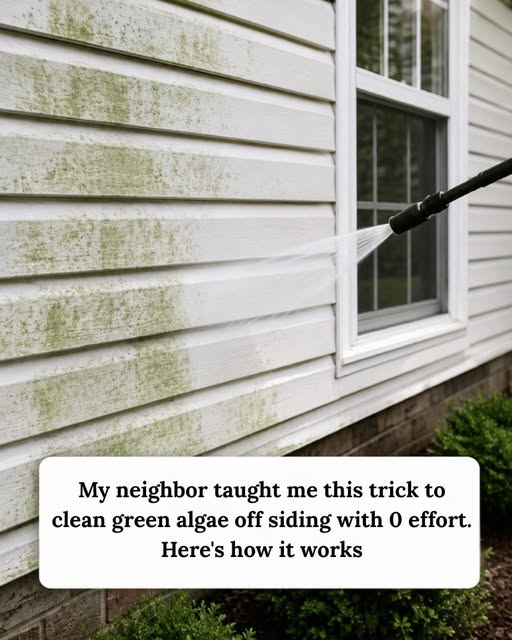
If you’ve ever looked at the outside of your house and noticed green algae, moss, or slimy buildup on the siding, you know how quickly it can make an otherwise clean home look neglected.
I used to think the only solution was hours of scrubbing.
Then my neighbor showed me a much easier method.
The trick isn’t about scrubbing harder. It’s about loosening the algae first and letting the cleaning solution do most of the work.
Why Does Green Algae Appear on Siding?
Green algae tends to thrive in areas that stay damp, shaded, and poorly ventilated.
That’s why you may notice it most often on:
- North-facing walls
- Areas underneath trees
- Siding close to the ground
- Places where rainwater doesn’t dry quickly
- Areas near leaking gutters or downspouts
If the underlying moisture problem isn’t addressed, the green buildup can eventually return.
The Easy Cleaning Method
Before you start, check your siding manufacturer’s cleaning instructions. Different materials can react differently to cleaners and pressure.
You’ll need:
- A garden hose
- A soft-bristle brush or soft siding-cleaning brush
- A bucket
- A mild household detergent or siding-safe cleaner
- Clean water
- Gloves and eye protection
For stubborn growth, use a commercial cleaner specifically labeled for algae/mildew on your type of siding, following its dilution and contact-time instructions.
Step 1: Wet the Siding
Start by gently rinsing the siding with a garden hose.
Work from the top downward so loosened dirt doesn’t run over areas you’ve already cleaned.
Avoid blasting the siding with excessive pressure, especially around seams, windows, doors, and vents.
Step 2: Apply the Cleaner
Mix your siding-safe cleaning solution according to its label.
Apply it to a manageable section of the wall.
Don’t let the solution dry on the surface.
Give it the recommended contact time so it can loosen the algae and grime.
This is the part that makes the job feel much easier.
Instead of immediately attacking the green buildup with a brush, let the cleaner do the work first.
Step 3: Lightly Agitate Stubborn Areas
Most loose buildup should rinse away fairly easily.
If some green patches remain, use a soft brush and gently work the area.
There’s no need to aggressively scrub.
The goal is to remove what’s left without damaging the siding.
Step 4: Rinse Thoroughly
Rinse the entire section with clean water.
Again, work from the top downward.
Make sure no cleaner residue remains, especially around windows, doors, plants, and other surfaces.
The Part My Neighbor Emphasized
My neighbor told me something that made perfect sense:
Don’t wait until the siding is completely covered in algae before cleaning it.
A light cleaning from time to time is usually much easier than allowing thick buildup to accumulate.
And if one particular wall keeps turning green, don’t just keep cleaning it.
Look for the reason.
A clogged gutter, leaking downspout, overgrown vegetation, or constant shade may be keeping that section wet.
What About Bleach?
You’ll find plenty of homemade recipes online involving bleach.
But stronger isn’t necessarily better.
Bleach can damage plants, discolor certain surfaces, corrode metal components, and create dangerous fumes if mixed with incompatible cleaners.
If you use a product containing bleach, follow the manufacturer’s instructions carefully and never mix bleach with ammonia, acids, vinegar, or other household cleaners.
For many homes, a siding-safe commercial cleaner is the simpler choice.
Don’t Forget the Plants
If you’re cleaning exterior siding near gardens or landscaping, protect nearby plants from runoff.
Cover or move vulnerable potted plants where practical, and rinse vegetation with plenty of clean water if the product instructions allow it.
Always follow the cleaner’s label regarding plants and outdoor surfaces.
How to Keep Algae From Coming Back
Once the siding is clean, prevention is much easier.
Trim branches that keep the wall heavily shaded.
Check that gutters are draining properly.
Make sure downspouts direct water away from the house.
Keep sprinklers from spraying directly onto the siding.
And improve airflow around areas that stay damp.
These small changes can make a surprisingly big difference.
The Real “Zero-Effort” Trick
There isn’t really a magic cleaner that makes algae disappear without any work at all.
The real trick is using the right cleaner, allowing enough contact time, and avoiding unnecessary scrubbing.
When the algae has been loosened properly, rinsing and a little gentle brushing can do most of the job.
So the next time you notice that ugly green film creeping across your siding, don’t immediately reach for the hardest brush you can find.
Wet it, clean it properly, let the solution work, gently brush what remains, and rinse thoroughly.
Your siding may look dramatically better with far less effort than you expected.