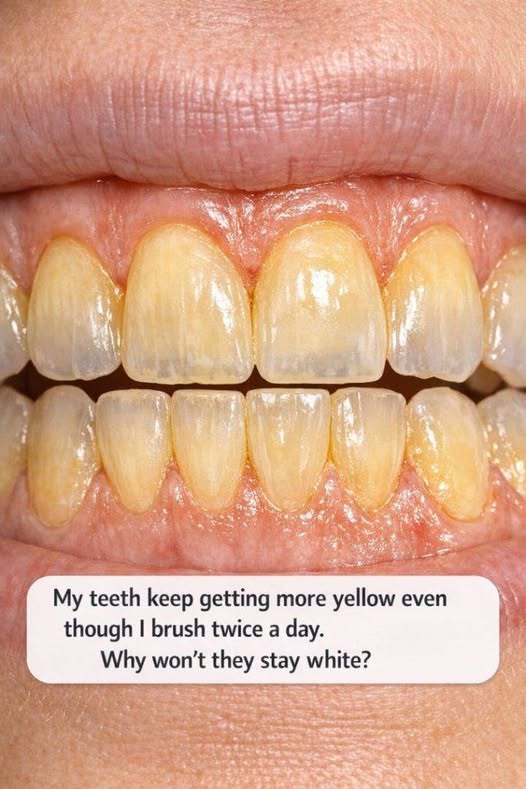
Brushing twice daily is important, but it cannot prevent every cause of yellow teeth. Learn why teeth become yellow and what can help keep your smile brighter.
My Teeth Keep Getting More Yellow Even Though I Brush Twice a Day. Why Won’t They Stay White?
If your teeth are becoming more yellow even though you brush twice a day, you’re not necessarily doing anything wrong. Brushing is essential for oral health, but it doesn’t guarantee naturally white teeth.
Tooth color is influenced by your enamel, the underlying dentin, your diet, aging, and certain habits. In some cases, yellowing can also indicate a dental problem that deserves professional attention.
1. Your Natural Tooth Color May Be Slightly Yellow
Perfectly white teeth aren’t necessarily the natural color of healthy teeth.
Under the outer enamel is a naturally yellowish tissue called dentin. If your enamel is relatively thin or becomes thinner over time, more of that underlying color can show through.
This is one reason teeth can appear more yellow as people get older.
2. Aging Can Change the Appearance of Your Teeth
As you age, enamel gradually wears down.
At the same time, dentin can become more noticeable. Consequently, even someone with excellent brushing habits may notice that their teeth aren’t as bright as they were when they were younger.
This is a normal part of aging and isn’t necessarily a sign of poor dental hygiene.
3. Coffee and Tea Can Cause Staining
Coffee and tea contain compounds that can stain the surface of teeth over time.
If you regularly drink these beverages, brushing twice a day may not completely remove the resulting discoloration.
You don’t necessarily have to give them up, but rinsing your mouth with water afterward can help reduce the amount of staining material that remains on your teeth.
4. Smoking and Tobacco Can Cause Significant Staining
Tobacco is another major contributor to tooth discoloration.
Smoking can produce yellow or brown stains that become increasingly difficult to remove over time. Tobacco also increases the risk of gum disease and other oral health problems.
If you use tobacco, quitting is one of the best things you can do for both your oral health and your overall health.
5. Plaque and Tartar May Be Part of the Problem
Even with regular brushing, plaque can accumulate in areas that are difficult to clean.
When plaque hardens into tartar, ordinary brushing cannot remove it effectively. Tartar can appear yellow or brown and may make the teeth look darker.
A professional dental cleaning can remove hardened deposits that a toothbrush cannot.
6. Your Brushing Technique Matters
Brushing twice a day is important, but technique matters too.
Use a soft-bristled toothbrush and fluoride toothpaste. Brush gently for about two minutes, making sure you reach the front, back, and chewing surfaces of your teeth.
Brushing aggressively isn’t better. Excessive pressure can contribute to enamel wear and gum recession, which can actually make teeth appear more yellow.
7. Some Foods and Drinks Can Stain Teeth
Coffee and tea aren’t the only culprits.
Red wine, cola, dark sauces, berries, and other strongly colored foods and drinks may contribute to surface staining.
After consuming staining foods or beverages, drinking water can help wash away residue.
8. Some Yellowing Comes From Inside the Tooth
Not all discoloration is a surface stain.
Certain medications, dental trauma, excessive fluoride exposure during tooth development, and other factors can cause changes within the tooth itself.
These types of discoloration may not respond to ordinary whitening toothpaste.
Should You Use Whitening Products?
Whitening toothpaste can help remove some surface stains, but it generally cannot dramatically change the natural color of your teeth.
Professional whitening can produce more noticeable results for appropriate candidates, but it isn’t suitable for every dental situation.
For example, whitening products won’t whiten crowns, veneers, or fillings in the same way they whiten natural teeth.
A dentist can determine what is causing the discoloration and recommend an appropriate option.
When Should You See a Dentist?
Make a dental appointment if the yellowing is new, getting noticeably worse, affects only one tooth, or occurs alongside:
- Tooth pain
- Sensitivity
- Bleeding or swollen gums
- Bad breath that doesn’t improve
- Visible holes or cracks
- Loose teeth
- Dark or brown areas
A dentist can determine whether you’re dealing with ordinary staining, tartar, enamel changes, decay, or another issue.
The Bottom Line
Yellow teeth don’t automatically mean that you’re not brushing properly.
Natural tooth color, aging, staining foods and drinks, tobacco, tartar, enamel changes, and certain medical or dental factors can all affect how white your teeth appear.
Continue brushing twice a day with fluoride toothpaste, clean between your teeth daily, and have regular dental checkups. If you’re concerned about increasing discoloration, a dentist can identify the underlying cause instead of simply covering it up with whitening products.