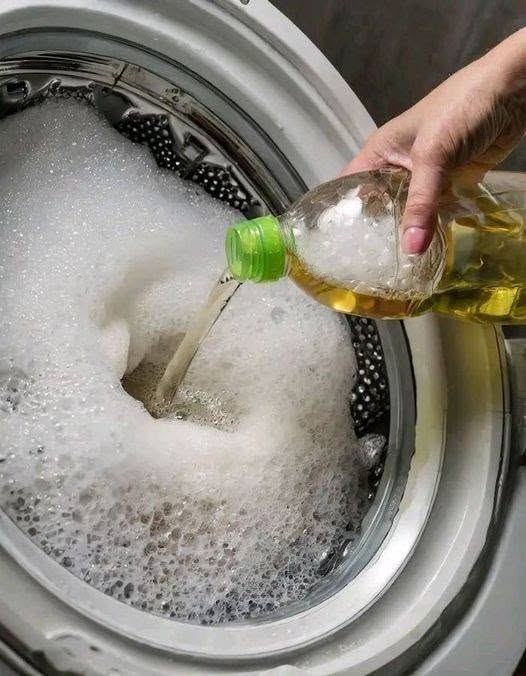
Learn how to use white vinegar correctly in your laundry to freshen clothes, reduce detergent residue and soften towels naturally, plus important mistakes to avoid.
If your white clothes look dull, your towels feel rough, or your laundry sometimes comes out of the washing machine with a musty smell, you may already have a simple household ingredient that can help: white vinegar.
Vinegar has become a popular laundry trick because it can help remove some detergent and mineral residues and can leave fabrics feeling fresher. But there is a right way—and a wrong way—to use it.
Using too much vinegar, putting it in the wrong compartment, or mixing it with certain cleaning products can damage fabrics or create dangerous fumes.
Here’s how to use vinegar properly in your laundry.
Why Do People Put Vinegar in the Washing Machine?
Distilled white vinegar contains acetic acid, which gives it its characteristic acidity.
In laundry, diluted vinegar can help with some of the residues that build up on fabrics and washing-machine surfaces. It can also help reduce unpleasant odors associated with residue.
However, vinegar is not a replacement for laundry detergent, and it should not be treated as a universal stain remover or fabric whitener.
Its main benefit is as an occasional laundry aid.
Can Vinegar Make Towels Softer?
It can help towels feel less stiff when detergent or mineral residue has accumulated in the fibers.
Over time, excess detergent and hard-water minerals can make towels feel rough and less absorbent. A properly diluted vinegar rinse may help remove some of that buildup.
But don’t expect vinegar to transform every old towel instantly.
If towels are damaged, heavily coated with fabric softener, or simply worn out, vinegar cannot restore the fibers to their original condition.
The Right Way to Use Vinegar for Towels
For a normal washing-machine load, use a modest amount of distilled white vinegar rather than pouring a large quantity directly onto the clothes.
A common approach is to add approximately ½ cup of distilled white vinegar to the fabric-softener compartment during the rinse cycle.
The washing machine will then release it during the appropriate part of the cycle.
If your machine’s manufacturer gives different instructions, follow the manufacturer’s guidance.
Why Use the Fabric-Softener Compartment?
Adding vinegar directly to the clothes at the beginning of the wash isn’t ideal because you generally want the vinegar to work during the rinse rather than being mixed with your detergent.
Using the fabric-softener dispenser also helps prevent concentrated vinegar from sitting directly on fabrics for an extended period.
Can Vinegar Whiten White Clothes?
Vinegar may help whites look fresher by removing certain residues, but it is important not to confuse this with bleaching.
Vinegar does not work like chlorine bleach.
If your white clothing has become gray because of accumulated detergent, minerals or dirt, improving your washing routine may make a noticeable difference.
For heavily stained whites, use a laundry product specifically designed for whitening or stain removal and follow its label directions.
Vinegar Can Help With Odors
One reason people use vinegar in laundry is to deal with unpleasant smells.
Odors can sometimes linger when detergent residue, body oils, mildew or other substances remain in fabric fibers.
A vinegar rinse may help reduce some of these odors, but persistent musty smells often indicate that the washing machine itself needs cleaning.
If your laundry repeatedly smells bad after washing, check:
- The washing-machine door seal
- The detergent drawer
- The filter, if your machine has one
- Areas where moisture collects
- Whether wet clothes are being left inside the machine
Leaving wet laundry sitting in the washer for hours can also contribute to unpleasant odors.
Don’t Use Vinegar as a Replacement for Detergent
This is one of the biggest mistakes.
Vinegar is acidic, but it is not a complete laundry detergent.
Detergent is formulated to remove oils, dirt and other soils from clothing. Vinegar does not perform the same job.
For normal washing, use an appropriate laundry detergent according to the manufacturer’s instructions.
Vinegar can be used separately as an occasional rinse aid if it is compatible with your fabrics and washing machine.
Never Mix Vinegar With Chlorine Bleach
This is the most important safety rule.
Never mix vinegar with chlorine bleach.
Acids such as vinegar can react with chlorine bleach and produce dangerous chlorine gas.
For the same reason, do not pour vinegar into a container, dispenser or cleaning mixture that contains chlorine bleach.
Use cleaning products separately and follow their labels carefully.
What About Baking Soda and Vinegar?
You may have seen viral laundry recipes recommending baking soda and vinegar together.
The problem is that when you combine an acid such as vinegar with an alkaline substance such as baking soda, they react with each other.
The resulting fizz may look impressive, but much of the immediate reaction simply neutralizes the two substances.
That doesn’t mean both ingredients are useless in laundry. It means they don’t necessarily work better when dumped together.
If you’re using either product for a specific laundry purpose, use it appropriately and separately rather than assuming that more fizz means better cleaning.
Don’t Pour Vinegar Directly Onto Delicate Fabrics
Concentrated vinegar is acidic, so repeatedly exposing certain delicate materials to acidic products may not be appropriate.
Always check the care label.
Be particularly cautious with:
- Silk
- Certain delicate synthetics
- Fabrics with special finishes
- Clothing with delicate dyes
- Items that specifically advise against acidic products
When in doubt, follow the garment manufacturer’s instructions.
What About Elastic Clothing?
Regular exposure to acidic products may not be ideal for some elastic materials.
If you’re washing garments containing elastic, such as certain sportswear or stretch clothing, check the care instructions before making vinegar part of every wash.
You don’t need vinegar in every load.
Vinegar and Your Washing Machine
Vinegar is sometimes promoted as a washing-machine cleaner, but you shouldn’t automatically use it inside every machine.
Modern washing machines can contain rubber seals, hoses and other components that manufacturers may recommend treating only with specific cleaning products.
Check your washing machine’s manual before regularly running vinegar through the machine.
If the manufacturer recommends a dedicated washing-machine cleaner, use the recommended product.
How Often Should You Use Vinegar?
There is no universal requirement to use vinegar in every wash.
For many households, occasional use is enough.
If you’re using vinegar because your towels feel stiff or your clothes seem to have detergent buildup, try using it periodically rather than automatically adding it to every load.
The correct frequency depends on:
- Water hardness
- Type and amount of detergent
- Fabric type
- Washing-machine type
- Laundry habits
- Manufacturer recommendations
A Simple Laundry Routine
If you want fresher, softer laundry without overcomplicating things, focus on the basics.
Step 1: Don’t Overload the Machine
Clothes need enough room to move through the wash cycle.
An overloaded washing machine may not clean or rinse clothing effectively.
Step 2: Use the Correct Amount of Detergent
More detergent does not necessarily mean cleaner clothes.
Excess detergent can leave residue behind, particularly if the washing machine is overloaded or the water is hard.
Follow the detergent manufacturer’s dosage instructions.
Step 3: Use the Correct Water Temperature
Follow the garment-care label.
Some fabrics need cold water, while others can tolerate warmer temperatures.
Step 4: Consider a Vinegar Rinse
If appropriate for your machine and fabrics, add a modest amount of distilled white vinegar to the fabric-softener compartment for the rinse cycle.
Step 5: Remove Laundry Promptly
Don’t leave wet towels and clothing sitting in the washing machine for long periods.
Move them to the dryer or drying area soon after the cycle finishes.
Will Your Clothes Smell Like Vinegar?
When used correctly and diluted during the rinse cycle, the strong vinegar smell generally does not remain on properly washed laundry.
If clothing smells strongly of vinegar after washing, you may be using too much or your washing machine may not be rinsing effectively.
Try reducing the amount and make sure the machine is completing its rinse cycle properly.
The Bottom Line
White vinegar can be a useful laundry helper, particularly when you’re dealing with detergent residue, mineral buildup or lingering odors.
But the secret isn’t using more.
Use distilled white vinegar in moderation, add it to the appropriate dispenser when suitable, follow your washing-machine and garment-care instructions, and never mix vinegar with chlorine bleach.
And remember: vinegar is not a replacement for laundry detergent or a magic whitening solution.
Sometimes the simplest laundry improvement is simply using the right amount of detergent, avoiding overloading the machine and giving clothes a thorough rinse.
Frequently Asked Questions
Can I put vinegar directly on clothes?
It is generally better to dilute it and use the appropriate dispenser rather than applying concentrated vinegar directly to fabric.
Can vinegar replace fabric softener?
Some people use vinegar as an alternative to commercial fabric softener, but its suitability depends on the fabric and washing-machine manufacturer’s recommendations.
Does vinegar remove stains?
Vinegar may help with certain residues and odors, but it is not a universal stain remover. Treat specific stains with a product designed for that stain and follow the care label.
Can I use vinegar with laundry detergent?
Avoid mixing vinegar directly with detergent in the same compartment or container. If using vinegar as a rinse aid, putting it in the fabric-softener compartment allows it to be released during the rinse cycle.
Is vinegar safe for every fabric?
No. Always check the garment-care label, particularly for delicate or specialty fabrics.
What type of vinegar should I use?
For laundry, plain distilled white vinegar is the usual choice. Avoid using dark or flavored vinegars because they can contain substances that aren’t appropriate for clothing.