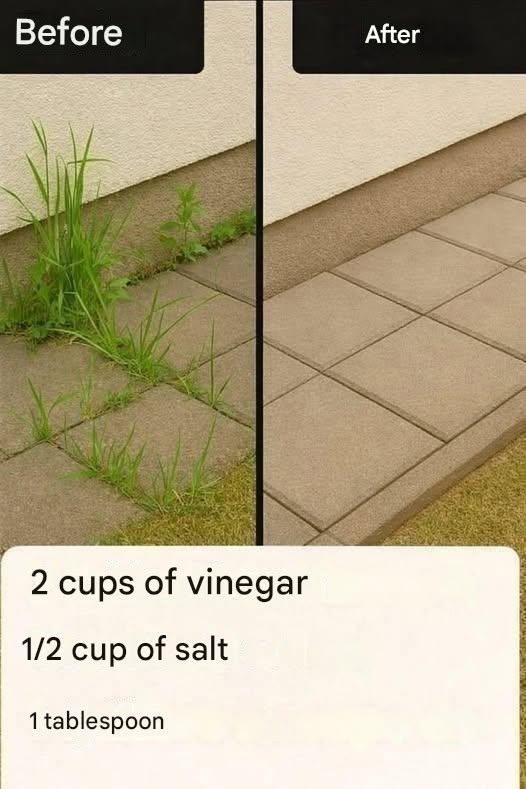
Learn how to make a simple homemade weed-control solution using common household ingredients, plus safer application tips to help manage unwanted weeds without damaging nearby plants.
How to Make a Super-Effective Homemade Herbicide
Unwanted weeds can quickly take over garden paths, cracks in paving, driveways, and other areas around the home. If you’re looking for a simple alternative to commercial weed killers, a homemade solution can help dry out and control small, unwanted weeds.
One of the most commonly used household approaches combines white vinegar with a small amount of dish soap. Vinegar can damage plant tissue on contact, while the soap helps the mixture spread and stick to the leaves.
What You’ll Need
- 1 liter of white vinegar
- 1–2 teaspoons of liquid dish soap
- A spray bottle
- Protective gloves
- Optional: a small amount of salt for hard-surface areas only
How to Make It
1. Add the Vinegar
Pour the white vinegar into a clean spray bottle.
2. Add the Dish Soap
Add 1–2 teaspoons of liquid dish soap. The soap isn’t the main weed-killing ingredient; it helps the liquid coat the leaves rather than immediately running off.
3. Mix Gently
Close the bottle and gently shake or swirl it to combine the ingredients.
4. Spray the Weeds
Apply the mixture directly to the leaves of unwanted weeds, preferably on a dry, sunny day with little or no wind.
Try to wet the foliage thoroughly without spraying surrounding plants.
Where Should You Use It?
This type of homemade weed-control spray is best reserved for places where you don’t want vegetation growing, such as:
- Cracks in sidewalks
- Driveways
- Gravel paths
- Patio edges
- Areas around paving stones
Be careful around lawns, flower beds, vegetable gardens, shrubs, and other desirable plants. Vinegar isn’t selective—it can damage plants you want to keep.
What About Adding Salt?
Salt can make a weed-control mixture more persistent, but that is also its biggest drawback.
Repeatedly applying salt to soil can make it difficult for desirable plants to grow and can potentially affect nearby vegetation. For that reason, avoid adding salt in garden beds or areas where you plan to grow plants later.
A Few Important Tips
Choose a calm day. Wind can carry the spray onto flowers, vegetables, grass, or other plants.
Treat young weeds early. Small weeds are generally easier to control than large, established plants.
Don’t spray before rain. Rain can wash the solution away before it has time to work.
Protect your skin and eyes. Even household vinegar can irritate the eyes and skin, so avoid contact and consider wearing gloves and eye protection while applying it.
Don’t mix household chemicals. Never combine vinegar with bleach, ammonia, or other cleaning products. Dangerous chemical reactions can occur.
Will It Kill the Roots?
Not necessarily. Vinegar primarily damages the plant tissue it contacts. Some perennial weeds can recover because their roots remain alive.
For stubborn weeds, physically removing the roots or repeatedly treating new growth may be more effective than relying on a single spray.
Final Thoughts
A homemade vinegar-and-soap spray can be a convenient option for controlling small weeds in cracks, paths, and other areas where you don’t want vegetation. However, it isn’t a selective herbicide, so careful application is essential.
For garden beds and areas where you want to preserve healthy soil and desirable plants, hand-pulling, mulching, or other non-chemical weed-control methods may be safer choices.