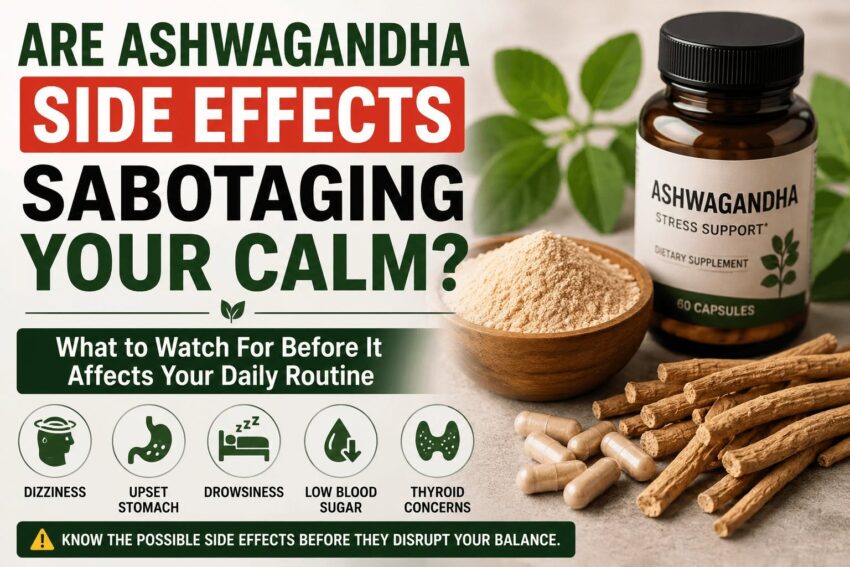
Ashwagandha has become one of the most popular herbal supplements for people looking to manage everyday stress, support relaxation, and improve sleep. Often described as an “adaptogen,” ashwagandha is traditionally used in Ayurvedic medicine and is now widely available in capsules, powders, gummies, teas, and herbal blends.
But there is an important question that doesn’t get enough attention:
Can ashwagandha sometimes make you feel worse instead of calmer?
The answer is yes. Although some research suggests that ashwagandha may help with stress and related symptoms, it can also cause side effects in certain people. The effects can depend on the dose, the type of extract, how long you take it, individual health factors, and medications or supplements you use.
Let’s take a closer look at the potential benefits, side effects, warning signs, and situations in which ashwagandha may not be the right choice.
What Is Ashwagandha?
Ashwagandha (Withania somnifera) is a plant traditionally used in Ayurvedic medicine. It is sometimes called Indian ginseng or winter cherry, although it is not botanically related to true ginseng.
The roots and, in some preparations, leaves are used to make supplements.
Ashwagandha is commonly promoted for:
- Stress management
- Relaxation
- Sleep support
- General well-being
- Exercise and physical performance
- Supporting energy and resilience
However, “natural” does not automatically mean “risk-free.” Herbal supplements can have biological effects, interact with medications, and cause unwanted reactions.
Why Do People Take Ashwagandha for Calm?
One reason ashwagandha attracts attention is its potential effect on the body’s stress response.
Some clinical research has found that certain ashwagandha preparations may reduce perceived stress and anxiety symptoms in some adults. Researchers have also investigated its possible effects on cortisol, a hormone involved in the body’s response to stress.
However, research results vary, and supplements aren’t standardized in exactly the same way as prescription medications. Different studies may use different extracts, doses, and formulations.
That means a result from one ashwagandha extract shouldn’t automatically be assumed to apply to every product on the shelf.
Common Ashwagandha Side Effects
Many people tolerate ashwagandha without major problems, but side effects can occur.
1. Stomach Upset
Digestive symptoms are among the more commonly reported problems.
Some people may experience:
- Nausea
- Stomach discomfort
- Diarrhea or loose stools
- Vomiting
- Abdominal discomfort
Taking a supplement that consistently upsets your stomach isn’t a good trade-off for stress relief.
2. Drowsiness and Sleepiness
Because ashwagandha is often taken to support relaxation and sleep, some people may experience increased drowsiness.
For someone taking it in the evening, this may not necessarily be a problem. But excessive daytime sleepiness, sluggishness, or impaired alertness can be inconvenient and potentially unsafe.
You should be particularly cautious about combining ashwagandha with other substances that cause drowsiness.
3. Headache or Feeling Unwell
Some users report headaches or a general feeling of discomfort after starting an herbal supplement.
If a new symptom consistently appears after beginning ashwagandha, consider discussing it with a healthcare professional rather than assuming you simply need a higher dose.
4. Possible Thyroid Effects
This is an area that deserves particular attention.
Research suggests that ashwagandha may influence thyroid hormone levels. That doesn’t necessarily mean it is harmful for everyone, but it can be important for people with thyroid disorders or those taking thyroid medication.
Symptoms such as unusual nervousness, shakiness, sweating, rapid heartbeat, or unexplained changes in energy should not automatically be blamed on stress.
If you have a thyroid condition, speak with your healthcare professional before using ashwagandha.
Can Ashwagandha Actually Make You Feel Anxious?
This is one of the most confusing questions surrounding the supplement.
Ashwagandha is commonly marketed for stress and anxiety support, yet an individual can occasionally experience an unpleasant or activating response.
If you notice new restlessness, unusual agitation, a racing heartbeat, insomnia, or feeling “wired” after starting a supplement, don’t assume that taking more will eventually make you calmer.
Individual responses vary, and other factors—including caffeine, medications, thyroid function, sleep deprivation, and other supplements—can contribute to similar symptoms.
If symptoms began soon after introducing ashwagandha and improve when it is discontinued, that timing is worth discussing with a healthcare professional.
Ashwagandha and Liver Health: A Rare but Important Concern
One of the most important safety considerations is the possibility of liver injury.
Reported cases appear to be uncommon, but liver problems associated with ashwagandha have been documented.
Stop using the supplement and seek prompt medical advice if you develop warning signs such as:
- Yellow skin or yellowing of the whites of the eyes
- Dark urine
- Unusual or severe itching
- Significant abdominal discomfort
- Persistent nausea or vomiting
- Unusual fatigue
- Loss of appetite
These symptoms can have many causes, but they should not be ignored.
Who Should Be Especially Careful With Ashwagandha?
Ashwagandha may not be appropriate for everyone.
Extra caution is warranted if you:
- Have a thyroid disorder
- Have an autoimmune condition
- Have liver disease or a history of liver problems
- Are pregnant or breastfeeding
- Take thyroid medication
- Take sedating medicines
- Take medicines for blood pressure or blood sugar
- Take immunosuppressive medication
- Take certain anticonvulsant medicines
- Are preparing for surgery
This doesn’t mean everyone in these groups will experience a problem. It means the potential risks and interactions deserve professional review before using the supplement.
Could Your Dose Be the Problem?
More isn’t necessarily better with herbal supplements.
A common mistake is assuming that if a small amount doesn’t produce noticeable effects, increasing the dose will provide greater benefits.
But higher doses may also increase the chance of side effects.
There is another complication: ashwagandha products aren’t all identical.
Products can differ in:
- Plant part used
- Extraction method
- Concentration
- Standardization
- Additional ingredients
- Serving size
Therefore, comparing products based only on the number of milligrams on the front label can be misleading.
How Long Does It Take to Notice Effects?
There isn’t one universal timeline.
Some people report changes relatively quickly, while research examining stress or sleep outcomes often evaluates effects over several weeks.
If you’re taking ashwagandha and experiencing unpleasant symptoms, however, you shouldn’t feel obligated to “push through” them simply because you’ve been told the supplement needs more time to work.
A supplement should be evaluated based on both potential benefits and potential risks.
Is Ashwagandha Safe for Long-Term Use?
This is another area where caution is appropriate.
Although ashwagandha has a long history of traditional use, traditional use and modern evidence about long-term supplementation aren’t the same thing.
Clinical studies have often been relatively short, and there are still unanswered questions about prolonged use of some preparations.
If you’re considering taking ashwagandha continuously for months, especially at higher doses, it’s sensible to discuss the plan with a healthcare professional.
What Should You Do If Ashwagandha Makes You Feel Worse?
If you notice new symptoms after starting ashwagandha, don’t immediately increase the dose or add another supplement to counteract the effects.
Instead:
Step 1: Review when the symptoms started
Think about whether the symptoms appeared after beginning ashwagandha or increasing the amount.
Step 2: Check the complete product label
Look beyond the word “ashwagandha.” Many supplements contain several active ingredients.
Step 3: Consider other recent changes
Caffeine, medications, sleep changes, alcohol, other supplements, and changes in diet or exercise can all affect how you feel.
Step 4: Speak with a healthcare professional if symptoms persist
This is particularly important if you take medications or have an underlying health condition.
Step 5: Don’t ignore serious warning signs
Symptoms suggesting a serious reaction—particularly signs of liver problems, severe allergic reactions, or significant heart symptoms—require prompt medical attention.
Natural Doesn’t Always Mean Risk-Free
The popularity of ashwagandha illustrates a broader point about supplements.
The word “natural” can create the impression that a product is automatically gentle or harmless. But plants contain biologically active compounds. That’s exactly why they can potentially have effects—and side effects.
The goal shouldn’t be to decide that ashwagandha is either “good” or “bad.”
A better question is:
Is this particular supplement appropriate for this particular person?
That depends on individual health, medications, dose, product formulation, and the reason for taking it.
Ashwagandha Side Effects vs. Expected Effects
It can sometimes be difficult to tell whether you’re experiencing a desirable effect or an unwanted reaction.
For example:
| What You Notice | Possible Interpretation |
|---|---|
| Mild relaxation | Potentially a desired effect |
| Improved sleep | Potentially beneficial |
| Excessive daytime sleepiness | Possible side effect |
| Nausea | Possible side effect |
| Diarrhea | Possible side effect |
| New agitation or restlessness | Worth discussing with a healthcare professional |
| Racing heartbeat | Should be evaluated, especially if persistent |
| Yellowing of the skin or eyes | Urgent medical concern |
This table isn’t a diagnostic tool. Symptoms can have many different causes.
The Bottom Line
Ashwagandha may help some people manage stress or support sleep, but it isn’t universally calming and isn’t completely risk-free.
Potential side effects can include digestive problems and drowsiness, while less common but more serious concerns include possible thyroid effects, medication interactions, and liver injury.
If you started taking ashwagandha hoping to feel calmer but instead feel more anxious, restless, unusually tired, sick, or otherwise unwell, don’t simply assume you need a higher dose.
Pay attention to the timing of your symptoms, review the product and other ingredients, and consider speaking with a qualified healthcare professional.
Most importantly, remember that a supplement doesn’t need to work for everyone to be useful—and you don’t need to keep taking something that appears to be making you feel worse.
Frequently Asked Questions
Can ashwagandha cause anxiety?
Although it is commonly used for stress support, individual responses can differ. If you develop new anxiety, agitation, restlessness, insomnia, or other concerning symptoms after starting it, discuss the situation with a healthcare professional.
Does ashwagandha make you sleepy?
It can cause drowsiness in some people. Be cautious when combining it with other substances or medications that cause sedation.
Can ashwagandha affect the thyroid?
Ashwagandha may influence thyroid hormone levels. People with thyroid conditions or those taking thyroid medication should consult a healthcare professional before using it.
Can ashwagandha damage the liver?
Rare cases of liver injury have been reported. Seek medical attention if you develop symptoms such as jaundice, dark urine, severe itching, or significant abdominal discomfort.
Should you stop taking ashwagandha if you experience side effects?
If you develop concerning or persistent symptoms, contact a healthcare professional for individualized advice. Severe symptoms or possible signs of liver injury require prompt medical evaluation.
Is ashwagandha suitable for everyone?
No. Pregnancy, breastfeeding, thyroid or autoimmune conditions, liver problems, medication use, and upcoming surgery are among the reasons to seek professional advice before taking it.
Medical disclaimer: This article is for educational purposes only and does not replace professional medical advice, diagnosis, or treatment. Dietary supplements can affect people differently and may interact with medications. Speak with a qualified healthcare professional before starting, stopping, or changing a supplement, particularly if you have a medical condition or take prescription medicines.