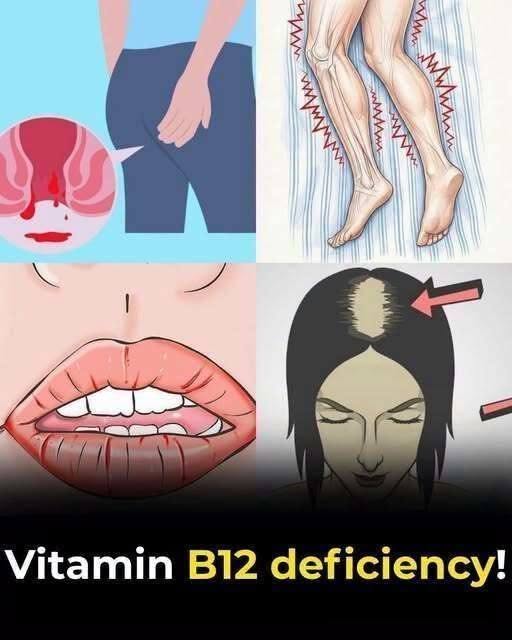
Vitamin B12 is an essential nutrient that helps your body make healthy red blood cells, maintain normal nerve function, and produce DNA. When B12 levels become too low, symptoms can develop gradually and may sometimes be mistaken for stress, aging, or simply being tired.
1. Persistent Fatigue
Feeling unusually tired or weak is one of the more common signs associated with vitamin B12 deficiency. Because B12 is involved in red blood cell production, a deficiency can contribute to anemia, which may leave you feeling drained even after getting enough sleep.
2. Tingling or Numbness
Low B12 can affect the nervous system. Some people experience pins and needles, tingling, burning sensations, or numbness, particularly in the hands and feet.
3. Pale or Yellowish Skin
A B12 deficiency can contribute to anemia and may make the skin appear paler than usual. In some cases, changes in red blood cell breakdown can give the skin or eyes a slightly yellowish appearance.
4. Weakness or Dizziness
Muscle weakness, lightheadedness, or dizziness can occur, particularly when B12 deficiency has led to anemia. These symptoms can have many other causes, so they shouldn’t automatically be attributed to B12.
5. Trouble With Balance or Coordination
More significant or prolonged B12 deficiency can affect nerves responsible for movement and balance. Some people may notice difficulty walking steadily or feel less coordinated.
6. A Sore or Smooth Tongue
Changes in the mouth can occur with B12 deficiency. The tongue may become sore, red, swollen, or unusually smooth, and some people develop mouth ulcers.
7. Changes in Memory or Concentration
Difficulty concentrating, forgetfulness, confusion, or changes in mood can sometimes occur with B12 deficiency, particularly when the deficiency is significant.
8. Vision Problems
In rare cases, prolonged B12 deficiency can affect the optic nerve and contribute to visual disturbances. New or unexplained vision changes should always be evaluated by a healthcare professional rather than assumed to be caused by a vitamin deficiency.
When Should You Get Tested?
Having one or more of these symptoms does not necessarily mean you have low vitamin B12. Similar symptoms can result from iron deficiency, thyroid problems, sleep deprivation, medications, diabetes, and other conditions.
If you’re experiencing persistent or unexplained symptoms, a healthcare professional can determine whether testing is appropriate. A blood test can help assess your B12 status, and additional tests may sometimes be needed to understand the cause.
Who May Be More Likely to Develop B12 Deficiency?
Risk can be higher in people who eat little or no animal-derived food, have certain digestive or absorption problems, have had some gastrointestinal surgeries, or take certain medications that interfere with B12 absorption.
The important thing is not to rely on symptoms alone. Proper testing can help confirm whether B12 deficiency is actually present and whether treatment is needed.
Meta Description: Learn the common signs of vitamin B12 deficiency, including fatigue, tingling, weakness, balance problems, mouth changes, and memory difficulties.