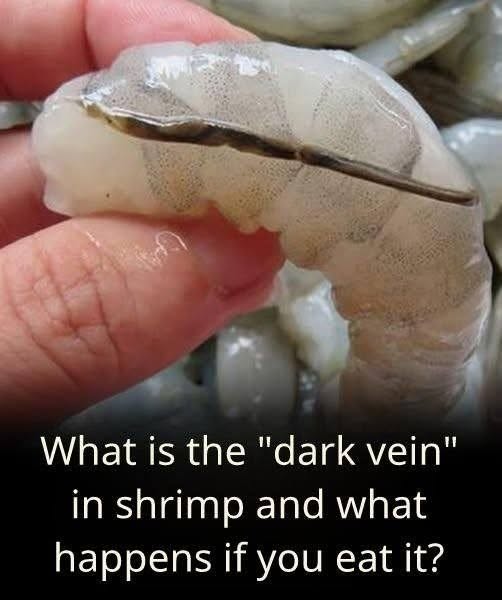
The dark line running along the back of a shrimp is commonly called the “shrimp vein.” But despite the name, it isn’t actually a vein.
So, What Is It?
That dark thread is the shrimp’s digestive tract, or intestine.
It can contain partially digested food and waste material, which is why it may look dark, especially in larger shrimp. The color can vary depending on what the shrimp has eaten.
Do You Have to Remove It?
Not necessarily.
The digestive tract isn’t considered poisonous, and eating properly cooked shrimp with the tract intact is generally safe. However, many people choose to remove it because of its appearance, texture, or the possibility that it contains grit or digestive contents.
That’s why recipes often instruct you to “devein” shrimp.
How Do You Remove It?
Removing it is fairly simple:
- Peel the shrimp if desired.
- Make a shallow cut along the curved back.
- Look for the dark line.
- Lift it out gently with the tip of a knife or a clean toothpick.
- Rinse the shrimp if necessary.
- Cook it thoroughly.
Some shrimp are sold already peeled and deveined, making preparation even easier.
What About the Line on the Underside?
Shrimp can have another visible dark or thread-like structure along the underside. This is associated with the ventral nerve cord, not the digestive tract.
It is usually not necessary to remove it for safety.
Is the “Vein” Dangerous?
The main food-safety issue with shrimp isn’t whether the digestive tract has been removed. It’s proper handling and cooking.
Keep raw shrimp refrigerated, prevent cross-contamination with ready-to-eat foods, and cook shrimp until the flesh is opaque and firm.
If shrimp smells strongly of ammonia, feels unusually slimy, or appears spoiled, don’t eat it.
The Bottom Line
The “vein” in shrimp is actually its digestive tract, not a blood vessel. Removing it is largely a matter of preference and presentation rather than an absolute requirement.
So the next time you’re cleaning shrimp, you’ll know exactly what that little dark line really is.