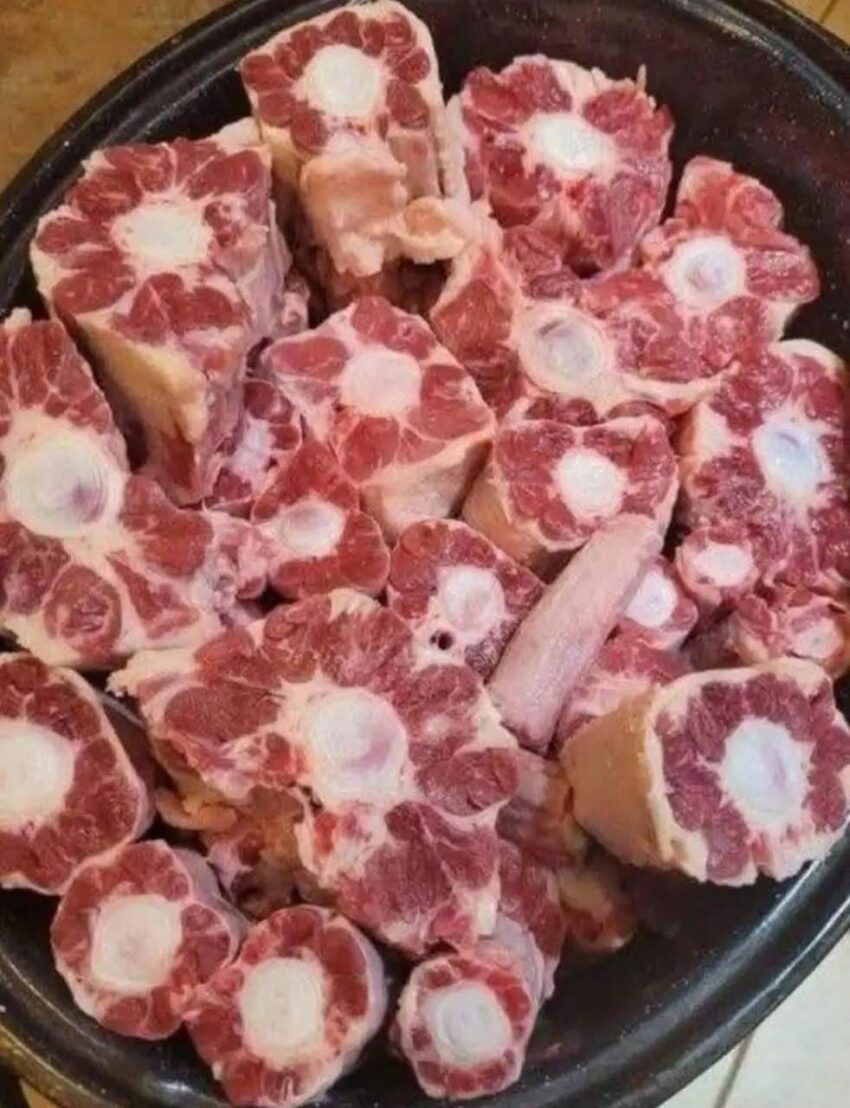
Oxtail is the flavorful, bony tail section of cattle, usually cut into thick round pieces. Despite its name, modern oxtail generally comes from beef cattle rather than oxen. Each slice contains bone, connective tissue, and meat, making it especially delicious when cooked slowly.
What Does Oxtail Taste Like?
Oxtail has a rich, beefy flavor and a silky texture when properly cooked. Because it contains a lot of connective tissue and collagen, it can become exceptionally tender after several hours of slow cooking.
The meat is not naturally soft like a steak, so oxtail is best suited to soups, stews, curries, and braised dishes.
How to Cook Oxtail
The key to good oxtail is low and slow cooking.
Ingredients
- 2–3 lb sliced oxtail
- 1 large onion, chopped
- 3–4 cloves garlic, minced
- 2 carrots, sliced
- 2 tomatoes, chopped
- 2 tbsp cooking oil
- 4–5 cups beef stock or water
- 1 tsp salt, or to taste
- ½ tsp black pepper
- 1 tsp paprika
- 1 bay leaf
- Optional: potatoes, green chilies, or your favorite herbs
Method
- Brown the oxtail: Heat oil in a heavy pot and brown the oxtail pieces on all sides. This adds deep flavor.
- Cook the vegetables: Remove the meat temporarily and sauté onion and garlic. Add carrots and tomatoes.
- Add the liquid: Return the oxtail to the pot and pour in enough stock or water to mostly cover the meat.
- Season: Add salt, black pepper, paprika, and bay leaf.
- Slow cook: Cover and simmer gently for about 3–4 hours, or until the meat is very tender and begins pulling away from the bones.
- Finish the dish: Add potatoes or other vegetables during the final part of cooking if desired.
- Serve hot: Oxtail is excellent with rice, mashed potatoes, bread, or roti.
Can Oxtail Be Cooked in a Pressure Cooker?
Yes. A pressure cooker can dramatically reduce the cooking time. Depending on the size of the pieces and the cooker, oxtail commonly takes around 45–60 minutes under pressure, followed by natural pressure release. Check tenderness afterward and cook longer if necessary.
Why Is Oxtail So Gelatinous?
Oxtail contains substantial connective tissue and collagen. During prolonged cooking, collagen breaks down into gelatin, which gives the resulting broth its thick, silky texture.
This is one reason oxtail is particularly popular for hearty soups and stews.
Tips for Better Oxtail
- Brown the meat before adding liquid for deeper flavor.
- Don’t boil it aggressively; a gentle simmer produces more tender meat.
- Give it plenty of cooking time.
- Refrigerating the finished stew can make it easier to remove excess hardened fat from the surface.
- The bones add flavor to the broth, so keep them in during cooking.
Final Thought
Oxtail may look like an ordinary cut of beef, but its combination of meat, bone, and connective tissue makes it ideal for slow cooking. With patience, those tough-looking slices can turn into an incredibly tender, rich and comforting meal.