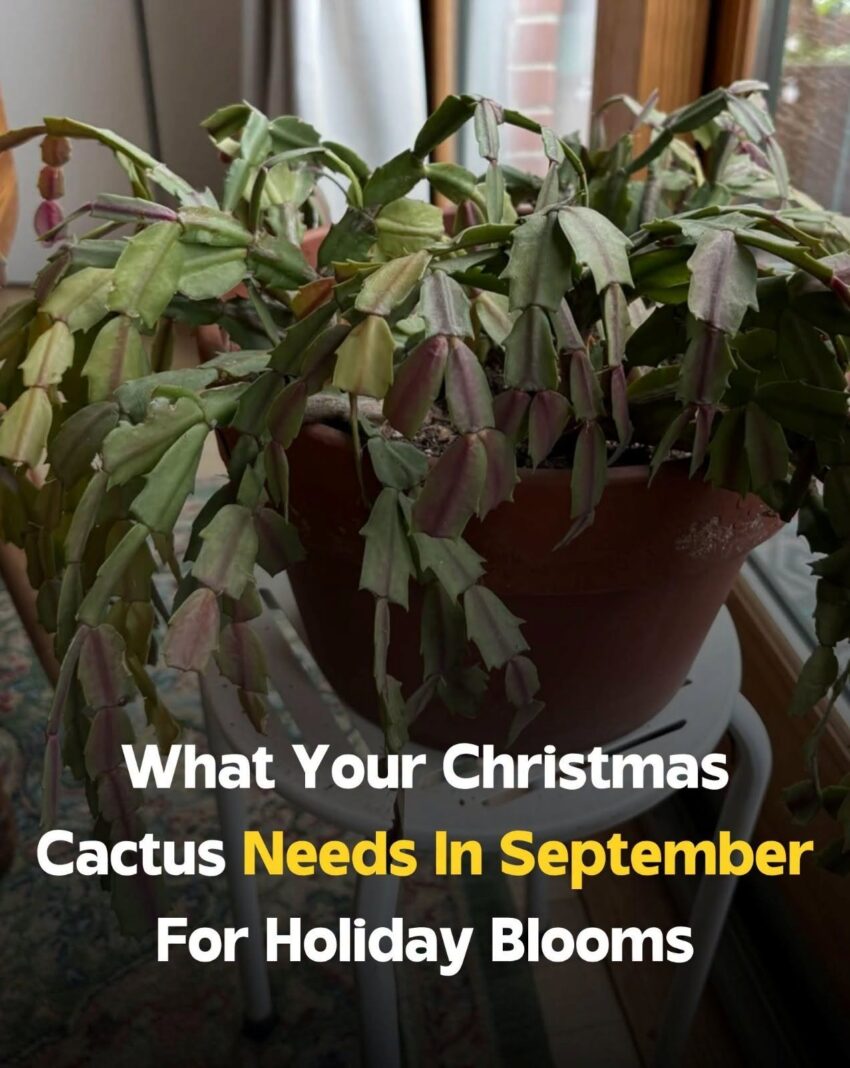
Your Christmas cactus may not look very exciting right now, but beneath those green, segmented stems, the plant may already be responding to the conditions it needs for its next spectacular bloom.
Unlike many houseplants, a Christmas cactus does not simply flower whenever it gets older. Its blooming is strongly influenced by light, temperature, watering, and the length of nighttime darkness. With the right care in the weeks leading up to winter, a healthy plant can reward you with colorful flowers around the holiday season.
The Quiet Period Is Important
After flowering, a Christmas cactus enters a quieter period. This does not mean the plant has stopped growing or that something is wrong.
During this time, the plant is storing energy and producing new growth. It is also responding to seasonal changes that eventually help trigger flower-bud formation.
So, if your cactus looks ordinary during late summer or early fall, don’t assume you’ve missed your chance for flowers.
Give It Plenty of Bright, Indirect Light
Christmas cactus prefers bright light, but harsh direct sunlight—especially through a hot window—can stress or scorch the stems.
A spot near an east-facing window can work well. If your home receives strong afternoon sunlight, filtered light may be better.
Good lighting helps the plant maintain healthy growth while seasonal changes prepare it for flowering.
Darkness Helps Trigger Buds
One of the most important factors in Christmas cactus flowering is long, uninterrupted periods of darkness.
As autumn approaches, naturally shorter days can help signal that it is time to begin producing flower buds.
Try not to place the plant somewhere that receives bright artificial light late into the night. A nearby lamp that stays on for several hours after sunset can interfere with the natural day-and-night cycle.
You don’t necessarily need to put the plant in a closet. In many homes, simply placing it in an area with normal seasonal darkness is enough.
Cooler Nights Can Make a Difference
Moderately cool nighttime temperatures can also encourage Christmas cactus to form buds.
The plant generally benefits from cooler conditions during the bud-forming period, but avoid exposing it to freezing temperatures or sudden extreme changes.
Keep it away from cold drafts, heaters, fireplaces, and air-conditioning vents.
Don’t Overwater It
One of the easiest ways to cause trouble is watering too frequently.
Christmas cactus likes moisture, but it does not want constantly saturated soil. Allow the upper portion of the potting mix to dry somewhat before watering again, and always use a container with drainage holes.
When you water, water thoroughly enough that excess moisture can drain from the bottom. Don’t allow the pot to sit in standing water.
Your exact watering schedule will depend on temperature, humidity, pot size, soil, and the amount of light the plant receives.
Avoid Moving the Plant Once Buds Appear
This is an especially useful tip.
Once your Christmas cactus has started developing flower buds, try to leave it in its established location.
Sudden changes in temperature, light, watering, or orientation can sometimes cause developing buds to drop.
If you’ve finally noticed tiny buds forming along the stem segments, resist the temptation to keep moving the plant around to find a “better” display location.
Don’t Overfeed Before Blooming
Fertilizer can be useful during active growth, but more fertilizer does not automatically mean more flowers.
Excessive feeding can encourage leafy growth rather than giving the plant the balanced conditions it needs for flowering.
Follow the instructions for your chosen houseplant fertilizer and avoid applying more than recommended.
What to Look for as Flowering Approaches
Your first clue may be small, pointed structures appearing along the edges of the stem segments.
These developing buds can gradually become larger and more noticeable. With continued appropriate care, they eventually open into the familiar flowers associated with Christmas cactus.
Depending on the plant and growing conditions, flowering may not happen at exactly the same time every year. That’s normal.
If Your Christmas Cactus Didn’t Bloom Last Year
Don’t give up on it.
Poor flowering can happen for several reasons, including:
- Too much artificial light at night
- Excessive warmth during the bud-forming period
- Inconsistent watering
- Very low light
- Stress from frequent movement
- Overfertilization
- General poor plant health
The good news is that these problems can often be corrected for the next flowering season.
A Simple Fall Care Routine
As autumn approaches, focus on consistency rather than complicated tricks.
Bright, indirect light: Give the plant plenty of suitable daylight.
Natural darkness: Let it experience long, uninterrupted nights.
Cooler conditions: Keep it away from excessive heat where possible.
Careful watering: Water according to the soil’s moisture rather than following a rigid calendar.
Stable location: Once buds appear, avoid unnecessary movement.
Moderate feeding: Don’t overfertilize in an attempt to force flowers.
The Best Part Is That You May Not See the Work Happening
That’s what makes Christmas cactus so interesting.
The plant can appear almost unchanged while environmental signals are quietly preparing it for its next flowering cycle.
So if your Christmas cactus looks “quiet” right now, don’t give up on it. The lack of flowers today doesn’t mean there won’t be flowers later.
Give it the right light, appropriate watering, suitable temperatures, and a consistent routine—and you may soon notice the tiny buds that signal the show is about to begin.
Meta Description
Learn how to care for your Christmas cactus before blooming season, including light, darkness, watering, temperature, and tips for encouraging beautiful holiday flowers.