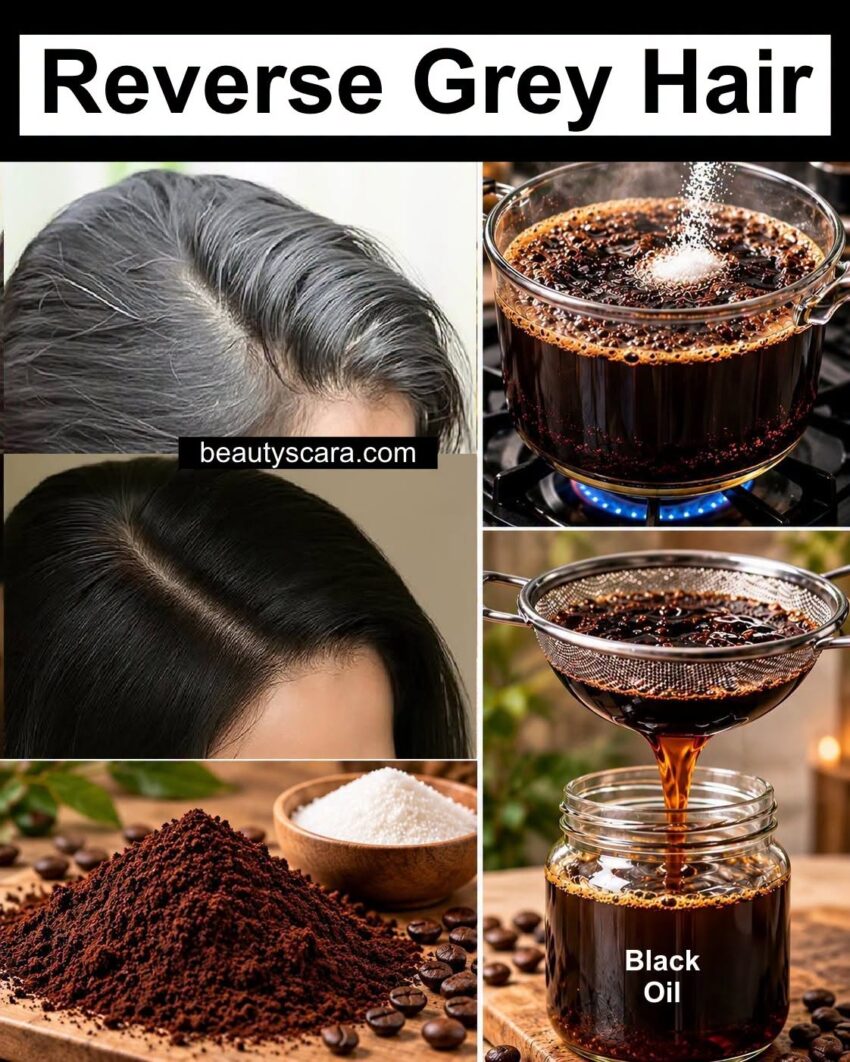
Can gray or white hair turn black again? Learn what causes premature graying, when repigmentation may occur, and which habits support healthier hair.
Seeing the first gray or white hairs can be surprising, especially when they appear earlier than expected. This often leads people to search for ways to “reverse” gray hair and restore their natural color.
But there is an important distinction between supporting healthy hair pigmentation and actually turning established white hair permanently black.
Hair becomes gray or white when the pigment-producing cells in the hair follicle produce less melanin. Age, genetics, certain nutritional deficiencies, medical conditions, and other factors can influence this process.
While there is no proven home remedy that can reliably turn all white hair black again, understanding why graying happens can help you choose realistic and safer approaches.
Why Does Hair Turn Gray or White?
Your natural hair color comes largely from a pigment called melanin.
Specialized cells in the hair follicle, called melanocytes, produce this pigment. As melanocyte activity decreases, newly growing hair contains less pigment.
Hair may gradually become:
- Gray
- Silver
- White
The timing varies greatly from person to person.
For many people, genetics plays a major role. Some people naturally begin graying in their twenties or thirties, while others retain their natural color much longer.
Can Gray Hair Actually Turn Black Again?
Sometimes, partial repigmentation can occur, but it is not something that can be guaranteed or reliably achieved with a particular food, oil, or homemade treatment.
Research has documented instances in which individual hairs regain some pigmentation after certain factors change. However, this does not mean that established gray hair can generally be reversed at will.
If graying is related to an underlying, treatable factor, addressing that factor may sometimes help prevent further premature loss of pigment and, in certain cases, may allow some repigmentation.
The Role of Nutrition
Hair follicles require adequate nutrients to function normally.
Certain nutritional deficiencies have been associated with premature graying, although taking supplements when you are not deficient does not automatically restore hair color.
Nutrients commonly discussed in relation to hair health include:
Vitamin B12
Low vitamin B12 levels can be associated with several health problems and have also been reported in association with premature graying.
If a deficiency is suspected, testing and appropriate treatment are more useful than randomly taking high-dose supplements.
Iron
Iron is important for normal physiological function, and iron deficiency can affect hair health.
However, iron supplements should not be taken simply because hair is turning gray. Too much iron can be harmful.
Copper
Copper is involved in melanin production, but copper supplementation should only be considered when medically appropriate.
Vitamin D
Vitamin D has roles throughout the body, and low levels have been investigated in relation to hair and skin conditions. However, taking vitamin D specifically to reverse gray hair is not a proven treatment.
Eat for Healthy Hair, Not a Miracle Color Change
A balanced diet can support normal hair growth and overall health even though it cannot guarantee that gray hair will become black again.
Include a variety of:
- Eggs
- Fish or other protein sources
- Beans and lentils
- Nuts and seeds
- Dairy or suitable alternatives
- Leafy vegetables
- Colorful fruits and vegetables
- Whole grains
Protein is particularly important because hair is primarily composed of a protein called keratin.
What About Stress?
Stress and hair pigmentation have a complicated relationship.
Research has suggested that significant stress can affect the biology of hair follicles and may contribute to changes in pigmentation in some circumstances.
However, saying that every gray hair is caused by stress would be inaccurate.
Genetics and aging remain major factors in ordinary graying.
Managing chronic stress is still worthwhile for overall health, sleep, and well-being, even if it does not turn existing white hair black.
Does Plucking Gray Hair Cause More Gray Hair?
No.
Plucking one gray hair does not cause the surrounding hairs to turn gray.
However, repeatedly plucking hairs can irritate or damage the follicle. If you dislike an individual gray hair, trimming it is generally preferable to repeatedly pulling it out.
And when that hair grows back, it will generally have the same pigmentation pattern as before.
Can Hair Oils Reverse Gray Hair?
Popular oils such as:
- Coconut oil
- Olive oil
- Castor oil
- Rosemary oil
- Amla oil
are often promoted online as natural gray-hair treatments.
Some oils can help condition the hair or reduce dryness and breakage, but there is not strong evidence that applying an oil to the scalp can reliably restore melanin production in gray follicles.
This distinction is important:
Healthier-looking hair is not the same as restored hair pigmentation.
What About Amla?
Amla, also known as Indian gooseberry, is widely used in traditional hair-care practices.
Amla-based products may be used as conditioning or cosmetic treatments, but claims that amla can permanently reverse established gray hair are not well established by clinical evidence.
If you enjoy using an amla oil or hair treatment, think of it as a cosmetic hair-care product rather than a guaranteed gray-hair reversal treatment.
Can Onion Juice Turn Gray Hair Black?
Onion juice is another popular online remedy.
It has been studied in certain hair-loss contexts, but that does not establish it as a proven treatment for reversing gray hair.
Applying onion juice can also irritate sensitive skin.
There is currently no good reason to assume that putting onion juice on the scalp will reliably restore the original pigment of gray or white hair.
Can Rosemary Oil Reverse Graying?
Rosemary oil has received attention in hair-care discussions, particularly regarding hair growth.
That is different from restoring pigment.
There isn’t sufficient evidence to conclude that rosemary oil can reliably turn established gray hair black.
If using essential oils, remember that concentrated essential oils can irritate the skin and generally should not be applied undiluted.
What About Black Tea or Coffee Hair Rinses?
Coffee and black tea are sometimes used as temporary natural hair-coloring rinses.
They may make lighter hair appear darker temporarily, depending on the hair and the preparation.
However, this is coloring rather than biological reversal of graying.
The effect generally washes out rather than permanently restoring melanin production.
When Premature Graying Deserves Attention
If you begin developing a significant amount of gray hair unusually early or notice a sudden change, discussing it with a healthcare professional can be worthwhile.
Depending on your circumstances, they may consider whether there are nutritional deficiencies, medication effects, autoimmune conditions, or other factors that deserve evaluation.
This is particularly relevant when hair changes occur alongside other unexplained symptoms.
Don’t Take High-Dose Supplements Without a Reason
One of the biggest mistakes people make when trying to reverse gray hair is taking multiple supplements at once.
More is not necessarily better.
Excessive amounts of certain nutrients can cause health problems. For example, unnecessary iron or other high-dose supplements can be harmful.
A better approach is to identify an actual deficiency or medical issue and treat it appropriately.
Protect Your Hair From Damage
Even if you cannot change the natural color of gray hair, you can improve its appearance and condition.
Try to:
- Use a gentle shampoo
- Condition regularly
- Avoid excessive heat styling
- Protect hair from unnecessary chemical damage
- Avoid very tight hairstyles
- Keep the scalp clean and comfortable
- Use products appropriate for your hair type
Gray hair can sometimes have a different texture from pigmented hair, so conditioning may help it look smoother and more manageable.
If You Want Black Hair, Cosmetic Color Is the Reliable Option
If your main goal is simply to restore a dark appearance, hair coloring is considerably more predictable than DIY remedies.
Options include:
- Permanent hair color
- Demi-permanent color
- Semi-permanent color
- Temporary color products
- Henna-based coloring products
Before using any dye, follow the product instructions and perform the recommended allergy/patch test.
A Realistic “Reverse Greying” Strategy
Instead of looking for one miracle ingredient, focus on the factors you can actually control.
Step 1: Check Your Diet
Make sure your diet provides adequate protein and a variety of vitamins and minerals.
Step 2: Consider Medical Evaluation if Graying Is Premature
If your hair started turning gray unusually early or the change has been sudden, ask a healthcare professional whether testing is appropriate.
Step 3: Avoid Unnecessary Supplements
Only supplement nutrients when there is a reason to do so.
Step 4: Take Care of Your Scalp and Hair
Gentle washing, conditioning, and protection from excessive heat and chemical treatments can improve hair quality.
Step 5: Use Hair Color If You Want Immediate Results
Cosmetic coloring remains the most predictable way to make gray or white hair appear black or another shade.
The Bottom Line
There is no scientifically established home remedy that can reliably turn all established white hair permanently black.
However, premature graying can sometimes be associated with treatable nutritional or medical factors, and addressing those issues may help in certain situations. Genetics and natural aging remain major reasons why hair loses its pigment.
Rather than relying on claims about a single oil, herb, or kitchen ingredient, focus on balanced nutrition, appropriate medical evaluation when needed, and gentle hair care.
And if your goal is simply to cover gray hair, modern hair-coloring products can provide a much more predictable result.
Frequently Asked Questions
Can white hair naturally become black again?
In some circumstances, individual hairs may experience partial repigmentation, particularly when an underlying factor changes. However, there is no guaranteed method for turning established white hair black.
Does vitamin B12 deficiency cause gray hair?
Vitamin B12 deficiency has been associated with premature graying in some studies. If you suspect a deficiency, testing is more useful than taking supplements without confirmation.
Can coconut oil reverse gray hair?
Coconut oil can condition hair and reduce dryness, but there is no strong evidence that it can reliably restore natural pigment.
Does plucking gray hair cause more gray hairs?
No. Plucking one gray hair does not cause neighboring follicles to turn gray.
Can stress make hair gray?
Stress can affect hair biology, and research has found mechanisms through which significant stress may influence pigmentation. However, genetics and aging are major contributors to ordinary graying.
What is the fastest way to make gray hair look black?
Hair coloring provides the most predictable cosmetic result. Choose a product appropriate for your hair and follow its safety instructions carefully.