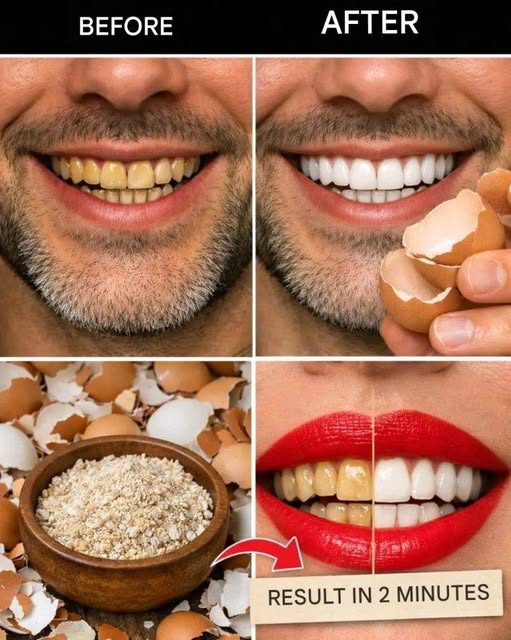
Looking for a quick way to make yellow teeth appear brighter? Learn what can realistically improve tooth color, why some viral 5-minute whitening hacks can be harmful, and the safest ways to get a cleaner, brighter smile.
After 5 Minutes, the Yellow Color of the Teeth Becomes Pearly White and Shiny?
A bright, white smile is something many people want, but teeth cannot safely become dramatically pearly white in just five minutes with a homemade remedy. Viral posts often promise instant results using ingredients such as baking soda, lemon juice, vinegar, hydrogen peroxide, or other household products. Unfortunately, some of these methods can do more harm than good.
If your teeth look yellow, the first step is understanding why they appear yellow.
Why Do Teeth Become Yellow?
Teeth naturally aren’t always pure white. The outer enamel is slightly translucent, and the naturally yellowish dentin underneath can show through.
Yellowing can also become more noticeable because of:
- Coffee and tea
- Tobacco use
- Red wine and other strongly colored foods
- Plaque buildup
- Aging and enamel thinning
- Certain medications or dental conditions
- Inadequate brushing and flossing
Surface stains and plaque can sometimes be improved considerably with proper oral hygiene, but deeper discoloration generally requires professional or dentist-supervised whitening.
Be Careful With Lemon and Vinegar
One of the most common internet whitening tricks involves rubbing lemon juice, vinegar, or another acidic substance onto the teeth.
This is not a good idea.
Acids can weaken and erode tooth enamel. Once enamel is permanently worn away, it does not grow back. Ironically, excessive enamel erosion can eventually make teeth appear more yellow, because the underlying dentin becomes more visible.
What About Baking Soda?
Baking soda is mildly abrasive and can help remove some surface stains when used appropriately in dental products.
However, aggressively scrubbing your teeth with dry baking soda isn’t a shortcut to instant whitening. Excessive abrasion can damage enamel and irritate the gums.
A fluoride toothpaste formulated for stain removal is generally a safer everyday option.
Can Teeth Actually Look Whiter in Five Minutes?
You may notice a temporary difference after cleaning your teeth, particularly if surface plaque or food debris was making them look dull.
But a dramatic transformation from yellow to pearly white in five minutes is unrealistic.
Professional whitening works through bleaching agents that penetrate the tooth and change the color of the tooth itself. It isn’t equivalent to simply scrubbing away surface stains.
Safer Ways to Brighten Your Smile
For a healthier-looking smile:
1. Brush twice daily
Use fluoride toothpaste and a soft-bristled toothbrush. Avoid aggressive scrubbing.
2. Clean between your teeth
Floss or use another interdental cleaning method to remove plaque that brushing misses.
3. Limit staining foods and drinks
Coffee, tea and tobacco can contribute to discoloration. Rinsing your mouth with water after strongly colored drinks can help reduce prolonged exposure.
4. Consider whitening toothpaste
Whitening toothpastes can help remove surface stains, although they won’t dramatically change the natural color of the tooth.
5. Ask a dentist about whitening
If you want a noticeably whiter smile, dentist-supervised whitening is a much safer approach than experimenting with acidic or abrasive household ingredients.
One More Important Point
If your teeth have suddenly changed color, one tooth has become noticeably darker, or you have pain, sensitivity, bleeding gums, or visible damage, whitening shouldn’t be your first priority. A dental examination can determine what’s causing the discoloration.
Bottom Line
There is no safe magic ingredient that turns yellow teeth pearly white in five minutes. Be especially skeptical of viral recipes involving lemon, vinegar, concentrated peroxide, or harsh scrubbing. Protecting your enamel is more important than chasing an instant whitening effect.
A healthy, professionally assessed smile is far better than temporarily whiter teeth achieved at the cost of damaged enamel.