Discover a simple, old-fashioned method for loosening stubborn freezer ice quickly using hot water and a little patience. Learn how to defrost an icy freezer safely without damaging the appliance or creating a watery mess.
My Nana Taught Me This Hack to Defrost Icy Freezers in 5 Minutes With 0 Work. Here’s How It Works
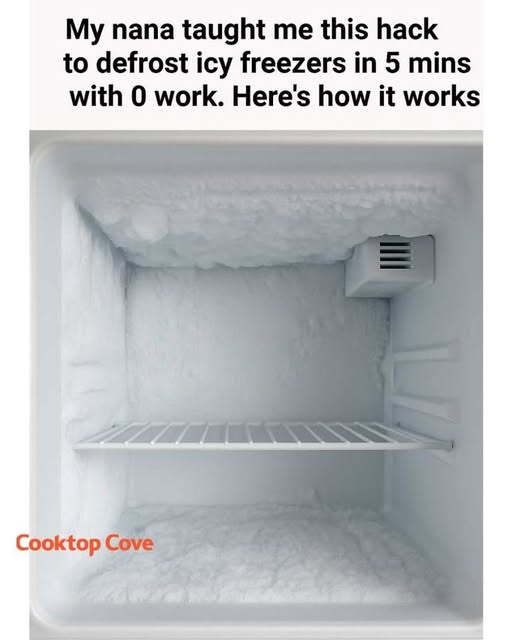
A freezer covered in thick ice can be frustrating. Not only does the buildup take up valuable storage space, but excessive frost can also make drawers difficult to open and may reduce usable space inside the freezer.
There’s a simple trick that has been used for years: warm steam and heat can help loosen stubborn frost much faster than simply waiting for it to melt naturally.
But there’s an important safety rule: never pour boiling water directly onto freezer walls or plastic parts. A sudden temperature change can damage components or crack plastic.
The Quick Defrost Method
1. Turn the freezer off
Before doing anything, unplug the appliance or switch it off according to the manufacturer’s instructions.
Remove all food and place frozen items in an insulated cooler or another freezer if available.
2. Put a bowl of hot water inside
Heat water until it is hot and steaming, but you don’t need it to be violently boiling.
Pour it into a heat-resistant bowl or pan and place it inside the empty freezer.
Close the door for several minutes.
The warm air and steam will raise the temperature inside the compartment and help soften the frost.
3. Replace the water if necessary
For a freezer with particularly thick ice, the first bowl may cool down before enough frost has melted.
Carefully remove it and replace it with another bowl of hot water.
You may find that large sheets of softened ice begin separating from the walls.
4. Let the ice loosen naturally
Once the frost has softened, gently remove loose pieces with your hands or a plastic scraper.
Never use a knife, screwdriver, fork, or other sharp metal object to chip away at freezer ice. You could puncture the freezer liner or accidentally damage refrigeration components.
5. Wipe everything completely dry
Once the ice is gone, wipe the interior thoroughly with a clean towel.
Leaving standing water behind can simply turn into new frost once the freezer is switched back on.
Can It Really Work in Five Minutes?
Sometimes a thin layer of frost can loosen surprisingly quickly, especially with the help of warm steam.
However, a freezer covered in thick, solid ice generally won’t be completely defrosted in five minutes. The exact time depends on how much ice has accumulated, the freezer’s design, and the temperature of the ice.
So the “five-minute” claim is better understood as a quick-start trick rather than a guaranteed complete defrosting time.
Why the Trick Works
The idea is simple: warm water transfers heat to the surrounding air, while steam helps warm and soften the frozen buildup.
Once the frost begins melting, it becomes much easier to remove without aggressive scraping.
What NOT to Do
Avoid these common shortcuts:
- ❌ Don’t pour boiling water directly onto freezer surfaces.
- ❌ Don’t use a hair dryer near standing water.
- ❌ Don’t chip ice with a knife or screwdriver.
- ❌ Don’t use a heat gun.
- ❌ Don’t force ice that is still firmly attached.
- ❌ Don’t restart the freezer until the interior is dry.
An Easier Long-Term Solution
If your freezer repeatedly develops a thick layer of frost, the problem may be more than just forgetting to defrost it.
Check whether the door is closing properly and whether the door gasket is sealing tightly. Frequently opening the door, leaving it ajar, or allowing warm humid air to enter can contribute to frost buildup.
If frost continues accumulating unusually quickly, the appliance may need inspection.
The Bottom Line
The hot-water method can be a simple way to speed up the defrosting process, especially when frost has become stubborn. It doesn’t literally guarantee a completely ice-free freezer in five minutes, but it can soften the buildup and make the job much easier.
The most important part is doing it safely: switch the freezer off, use hot—not aggressively boiling—water, avoid sharp tools, and keep electrical components away from water.