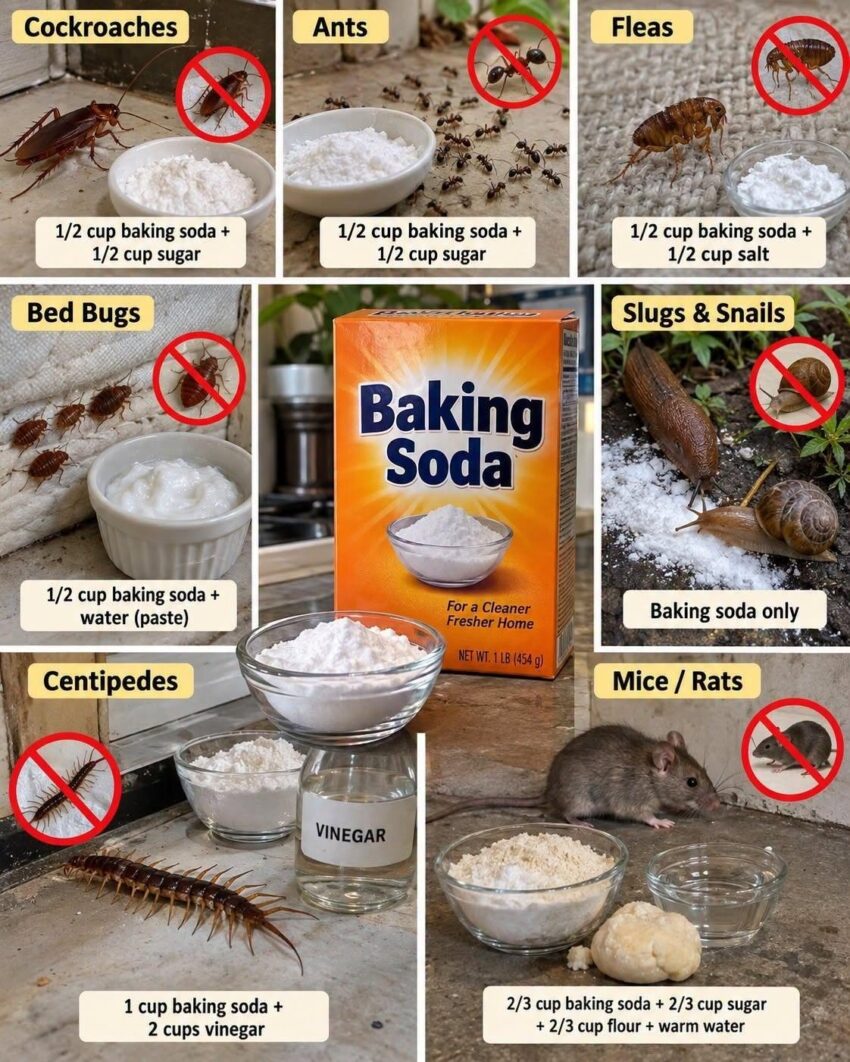
When pests begin appearing around the kitchen, bathroom, garden, or other parts of the home, many people look for simple alternatives to strong chemical sprays. One household ingredient that is often mentioned as a natural pest-control option is baking soda.
Baking soda is inexpensive, widely available, and useful for cleaning and deodorizing. But how effective is it against insects and other household pests?
How Baking Soda May Help With Pests
Baking soda, also known as sodium bicarbonate, is a mildly alkaline powder. Some DIY pest-control methods suggest that insects may be harmed after consuming it, particularly when it is combined with a food source that attracts them.
One commonly discussed method involves mixing baking soda with powdered sugar. The sugar is intended to attract insects, while the baking soda is supposed to act as the pest-control ingredient.
However, the effectiveness of this method can vary, and baking soda should not be considered a guaranteed replacement for proven pest-control products.
Using Baking Soda Around the Home
For people who want to try a simple household approach, baking soda can also be useful as part of general pest prevention.
1. Keep Areas Dry and Clean
Many household pests are attracted to food crumbs, moisture, and organic waste. Regularly cleaning countertops, floors, cupboards, and food-storage areas can make the environment less attractive to insects.
2. Deal With Food Sources
Store sugar, flour, cereal, pet food, and other dry goods in sealed containers. Even tiny food particles can attract ants, cockroaches, and other pests.
3. Reduce Moisture
Fix leaking taps and pipes, dry wet areas, and avoid leaving standing water around the home. Moist environments can encourage insects to remain nearby.
4. Use Baking Soda for Odor Control
Even when it isn’t directly controlling pests, baking soda can help neutralize unpleasant household odors. Keeping the home clean and free of food odors can indirectly make it less attractive to certain pests.
What About Cockroaches?
Baking soda is frequently promoted online as a cockroach killer, usually when mixed with sugar or another food attractant. While there are claims that cockroaches can be killed after consuming baking soda, evidence for homemade baking-soda mixtures being a consistently effective cockroach treatment is limited.
If you have a significant cockroach infestation, targeted bait products or professional pest control are generally more reliable.
What About Ants?
Baking soda alone is also unlikely to eliminate an established ant colony. Ants leave pheromone trails and can have nests in locations that are difficult to reach.
The most effective approach is usually to remove food sources, clean trails, seal entry points, and use an appropriate ant bait when necessary.
Is Baking Soda Completely Safe?
Although baking soda is a common household product, that doesn’t mean it should be scattered everywhere. Keep it away from children and pets who might accidentally ingest large amounts.
Avoid applying homemade mixtures directly to food-preparation surfaces without cleaning them afterward. Also, don’t mix baking soda with unknown chemicals or cleaning products.
A Better Natural Pest-Control Strategy
Instead of relying on one ingredient, combine several prevention methods:
- Keep food sealed in airtight containers.
- Clean crumbs and spills quickly.
- Empty household garbage regularly.
- Repair leaks and eliminate unnecessary moisture.
- Seal cracks around windows, doors, and pipes.
- Keep outdoor vegetation from touching the house where possible.
- Use traps or properly labeled pest-control products when needed.
Final Thoughts
Baking soda is a useful, inexpensive household ingredient, and it has become popular in DIY pest-control recipes. However, many claims about its ability to eliminate insects are stronger than the available evidence.
For a small pest problem, keeping the home clean, dry, and free of accessible food may make a bigger difference than any homemade mixture. For persistent or heavy infestations, a proven pest-control treatment is a safer bet than relying solely on baking soda.