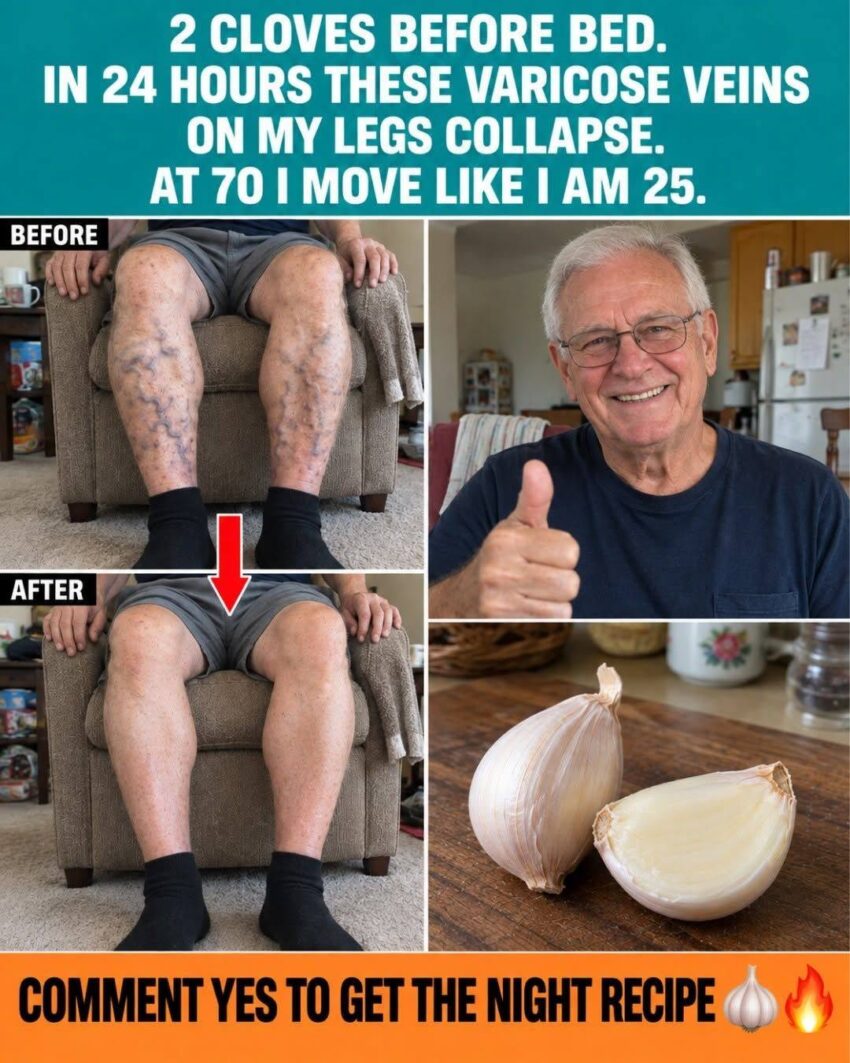
Can two cloves of garlic before bed really flatten varicose veins in 24 hours? Learn what garlic may do for circulation, what causes varicose veins, and which proven habits can help manage symptoms safely.
Varicose veins are one of those problems that can become more noticeable with age. The enlarged, twisted veins may appear blue or purple beneath the skin, most commonly on the legs. For some people, they are mainly a cosmetic concern. For others, they can come with aching, heaviness, swelling, itching, or tired legs.
That is why claims about simple home remedies can be incredibly appealing.
One viral claim says that eating two cloves of garlic before bed can flatten varicose veins within just 24 hours—and that older adults may wake up feeling dramatically more energetic and mobile.
It sounds almost too good to be true.
And there is an important reason for that: there is no reliable scientific evidence that eating two cloves of garlic can make established varicose veins disappear or flatten within 24 hours.
However, garlic itself is an interesting food with compounds that have been studied for cardiovascular health. Understanding what garlic can realistically do—and what it cannot do—can help you avoid wasting time on exaggerated remedies.
What Exactly Are Varicose Veins?
Varicose veins are enlarged and twisted veins that develop when blood doesn’t move efficiently back toward the heart.
The veins in your legs have tiny one-way valves. These valves help keep blood moving upward against gravity.
When the valves become weak or don’t close properly, some blood can flow backward and collect inside the vein. Over time, increased pressure can cause the vein to enlarge and become more visible.
This is why varicose veins can look raised, twisted, or rope-like beneath the skin.
They can occur at almost any age, but they become more common as people get older.
Why Do Some People Develop Varicose Veins?
Several factors can increase the likelihood of developing varicose veins.
Age
As we get older, the valves inside our veins can become less effective. The walls of the veins may also lose some elasticity.
Family History
Genetics can play a significant role. If close family members have varicose veins, you may be more likely to develop them.
Pregnancy
Pregnancy increases blood volume and puts additional pressure on the veins in the pelvis and legs. Hormonal changes can also affect the vein walls.
Standing for Long Periods
People whose jobs require prolonged standing may experience increased pressure in the veins of their legs.
Being Overweight
Additional body weight can increase pressure on the veins and contribute to circulation problems.
So Where Does Garlic Come In?
Garlic contains several biologically active compounds. One of the best-known is allicin, which forms when garlic is chopped or crushed.
Garlic has been investigated for a variety of potential effects, including cardiovascular health and blood pressure.
That makes garlic a nutritious food to include in a balanced diet.
But there’s an important distinction:
A food that may support general cardiovascular health is not automatically a treatment for a specific vein problem.
There is no good evidence showing that eating two cloves of garlic before bed will physically dissolve, flatten, or remove established varicose veins in 24 hours.
What Happens When You Crush Garlic?
This is where some of the “secret preparation” claims come from.
When fresh garlic is chopped or crushed, enzymes help produce allicin and other sulfur-containing compounds.
That’s why freshly crushed garlic has such a strong smell and flavor.
Some online remedies suggest crushing garlic, waiting for a specific amount of time, and then swallowing it before bed.
While preparation can influence garlic’s chemistry, there is no established preparation method that turns garlic into a proven treatment for varicose veins.
You can enjoy garlic in your meals without believing that it will make visible veins disappear overnight.
Can Garlic Improve Circulation?
Garlic has been studied in relation to cardiovascular health, but research findings don’t support the dramatic claims often made on social media.
Circulation is also much more complicated than simply eating a particular food.
Blood flow is influenced by the heart, arteries, veins, blood pressure, muscle activity, body composition, medications, and many other factors.
So if someone feels better after adding garlic to their diet, that doesn’t mean the garlic has repaired damaged vein valves.
Why Might Someone Feel Better After Making a Lifestyle Change?
This is an important point.
Someone who starts eating healthier, walking more, drinking enough fluids, losing excess weight, and paying more attention to their health may genuinely feel better.
But it can be difficult to identify one food as the reason.
For example, regular walking activates the calf muscles, which help push blood upward from the legs. Reducing long periods of sitting or standing can also make some people feel less heavy or uncomfortable.
Those changes may be much more meaningful for leg comfort than a single bedtime food ritual.
What Can Actually Help Varicose Vein Symptoms?
If varicose veins are causing discomfort, there are several practical approaches that may help.
1. Walk Regularly
Walking is one of the simplest ways to keep the leg muscles active.
The calf muscles act as a kind of pump, helping move blood upward through the veins.
You don’t necessarily need an intense workout. Regular movement throughout the day can be beneficial.
If you’ve been sitting for a long time, getting up and walking around for a few minutes can be a useful habit.
2. Avoid Sitting or Standing for Very Long Periods
Long periods in the same position can contribute to leg discomfort and swelling.
If possible, change position regularly.
If you sit for work, stand up and walk around periodically. If your job requires prolonged standing, try to move your legs and take sitting breaks when appropriate.
3. Elevate Your Legs
For some people, elevating the legs can temporarily reduce swelling and the sensation of heaviness.
You can lie down and place your legs on pillows so they are comfortably elevated.
This isn’t a permanent treatment for varicose veins, but it can be a simple way to manage symptoms.
4. Consider Compression Stockings
Compression stockings gently squeeze the legs and can help improve the movement of blood through the veins.
They may reduce symptoms such as swelling, aching, and heaviness.
However, compression stockings aren’t suitable for everyone. People with certain arterial circulation problems or other medical conditions may need medical advice before using them.
5. Maintain a Healthy Weight
If you are carrying excess weight, gradual weight management may reduce pressure on the veins.
This doesn’t mean following extreme diets or trying to lose weight quickly.
A balanced diet containing vegetables, fruits, whole grains, protein sources, and healthy fats is a much more sustainable approach.
And yes, garlic can absolutely be part of that healthy diet.
Can Varicose Veins Be Completely Removed Naturally?
Unfortunately, established varicose veins generally cannot be expected to disappear simply because someone changes their diet or starts eating a particular food.
Lifestyle changes can help manage symptoms and support overall vascular health, but they don’t repair faulty vein valves.
If varicose veins are causing significant problems, medical treatments are available.
Depending on the veins and the individual’s health, a healthcare professional may discuss options such as minimally invasive procedures or other treatments.
When Should Varicose Veins Be Checked?
Many varicose veins are harmless, but some symptoms deserve medical attention.
Make an appointment with a healthcare professional if you experience:
- Persistent or worsening leg pain
- Significant swelling
- Skin discoloration around the ankle or lower leg
- Itching or skin changes
- A sore that doesn’t heal
- Bleeding from a varicose vein
- Veins that are becoming increasingly painful
- Recurrent inflammation around a vein
Seek urgent medical attention for sudden symptoms
Sudden swelling, pain, warmth, or redness in one leg can sometimes indicate a blood clot rather than ordinary varicose veins.
If these symptoms occur suddenly—especially with chest pain, shortness of breath, or coughing blood—seek emergency medical care.