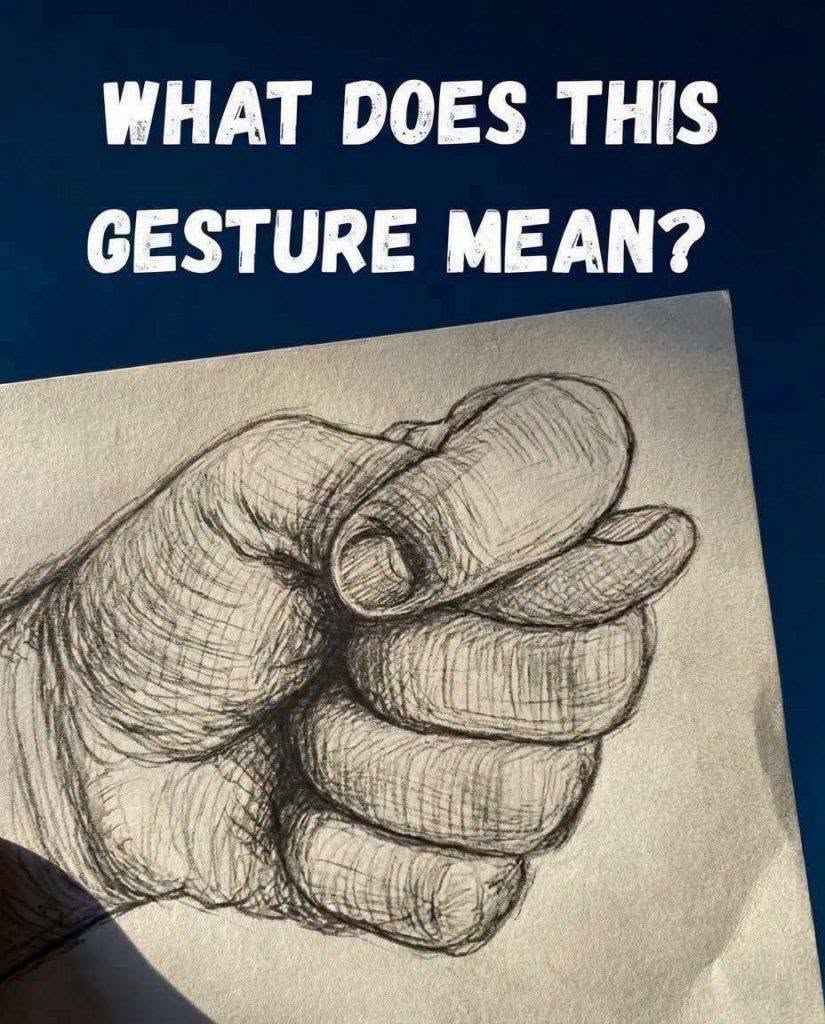
Hand gestures can communicate emotions and intentions without words. Discover what common everyday gestures may mean and why context matters when interpreting them.
We use our hands to communicate almost as much as we use our voices. A simple movement can express agreement, uncertainty, encouragement, impatience, or even affection—sometimes without us realizing we’re doing it.
One of the most familiar examples is the thumbs-up gesture.
What Does a Thumbs-Up Really Mean?
In many parts of the world, raising your thumb is understood as a positive signal. It can mean:
- “Okay.”
- “Good job.”
- “I agree.”
- “Everything is fine.”
- “Well done.”
- “I approve.”
It’s often used when words aren’t necessary. Someone might give you a thumbs-up from across a room simply to let you know they’ve understood you.
But Context Changes Everything
Body language doesn’t have one universal dictionary.
The same gesture can have different meanings depending on the country, culture, situation, and relationship between the people involved. A gesture that’s friendly in one place may be considered rude or inappropriate somewhere else.
Even within the same culture, a thumbs-up can be playful, sarcastic, reassuring, or genuinely enthusiastic depending on facial expression and tone.
Look at the Whole Body
One hand gesture shouldn’t normally be interpreted on its own.
For example, if someone gives you a thumbs-up while smiling and making eye contact, the message is probably positive. But if their arms are tense, their expression looks uncomfortable, and they’re avoiding eye contact, the gesture might simply mean they’re trying to end the conversation or reassure you despite feeling uneasy.
That’s why body language works best when you consider several signals together.
The Bottom Line
That little hand movement you’ve seen thousands of times may communicate much more than a simple “yes.”
But there’s an important lesson when interpreting gestures: context matters. Don’t assume that one movement automatically reveals what someone is thinking or feeling.
Sometimes, the smallest gestures really do say a lot—but you have to look at the whole picture to understand what they mean.