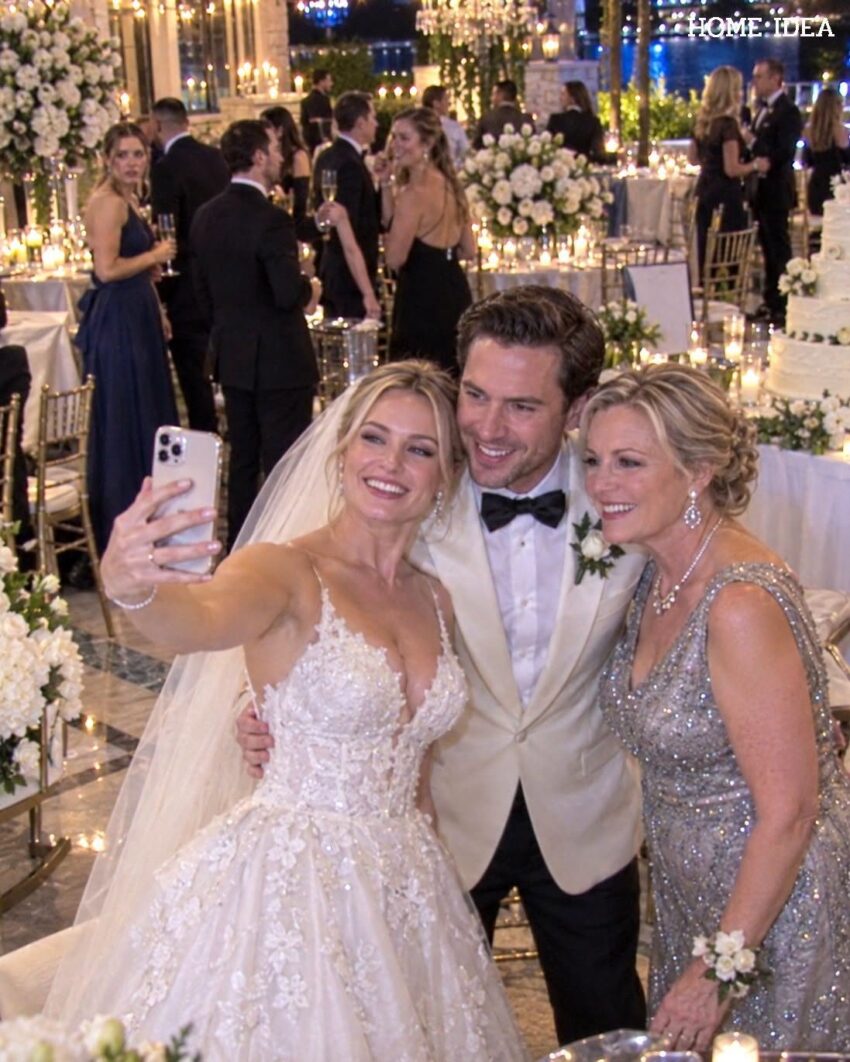
My Husband Married His Mistress While I Was Working… But He Forgot One Thing
My Husband Married His Mistress While I Was Working… But He Forgot One Thing
Meta Description: While I was working hard to support our family, my husband secretly married his mistress, convinced I would never discover his betrayal. But he forgot one important detail—one that would change everything he thought he owned.
The first sign that something was wrong was a photograph.
I was sitting in the staff room during my lunch break when my phone vibrated. I glanced at the screen, expecting a message from my husband, Mark, asking me to pick up groceries on my way home.
Instead, I saw a picture from a mutual acquaintance.
Mark was standing beneath a flower-covered arch, wearing a dark suit. Beside him was a woman in a white wedding dress, her hand resting proudly on his arm.
I recognized her immediately.
Vanessa.
The woman he had introduced to me as a business associate six months earlier. The woman whose name appeared on his phone late at night. The woman he insisted was simply going through a difficult divorce and needed someone to talk to.
And there he was, smiling at her as though the two of them had never done anything wrong.
The caption beneath the photograph read:
“Congratulations to the newlyweds! Wishing Mark and Vanessa a lifetime of happiness.”
For several seconds, I couldn’t breathe.
I zoomed in on the photograph, hoping there was some explanation I had missed. Perhaps it was an old picture. Perhaps the caption was a cruel joke.
Then another message arrived.
“I thought you should know. Everyone in their circle has been talking about it.”
I looked at the clock.
12:47 p.m.
I had forty-three minutes left before I needed to return to work.
So I put my phone facedown, walked to the restroom, locked myself in a stall, and cried until my eyes burned.
Not because I suddenly stopped loving my husband.
But because I finally understood that the man I had spent fifteen years building a life with had made a decision about our future without even giving me the dignity of a conversation.
And the worst part?
He had chosen to do it while I was at work.
While I was earning the money that kept our household running.
While I was making sacrifices for a marriage he had apparently already abandoned.
He had forgotten one thing, though.
Something he should have remembered before he ever walked down that aisle.
He had forgotten who had built the life he was so confident he could take away from me.
The Wife Who Worked While Her Husband Dreamed
My name is Claire Bennett, and for fifteen years, I believed marriage meant standing beside someone even when life became difficult.
When Mark and I first married, we didn’t have much.
Our apartment had secondhand furniture, our car had more than two hundred thousand miles on it, and we sometimes had to choose between repairing something and replacing it.
But we had plans.
Mark wanted to start his own construction company. He was ambitious, charming, and convinced that one day he would build something impressive enough to make everyone who had ever doubted him regret it.
I believed in him.
I worked long shifts as an operations manager at a medical supply company. I took extra responsibilities when they were available and learned how to stretch our money when business was slow.
When Mark finally launched his company, I helped with the paperwork, organized invoices, contacted suppliers, and spent evenings checking expenses after finishing my own work.
I wasn’t officially his business partner, but I was often the person making sure the business didn’t fall apart.
When his first major client delayed payment, I used my savings to help cover the bills.
When he needed equipment, we discussed the costs together.
When the company struggled during a difficult year, I accepted extra shifts and postponed my own plans.
I never kept a list of what I had sacrificed.
I thought we were building a future together.
Over time, however, something changed.
Mark began referring to the company as his achievement.
He introduced me as his wife but rarely mentioned the hours I had spent helping him. He bought expensive suits, attended networking events, and started spending time with people who seemed impressed by money and status.
At first, I was proud of him.
Then the late nights began.
He would arrive home smelling of unfamiliar perfume and claim that he had been at a client’s office. He became protective of his phone and started changing passwords without explanation.
Whenever I asked whether something was wrong, he accused me of being suspicious.
“Claire, you’re always looking for a problem,” he would say. “Can’t you just trust me?”
So I tried.
I told myself that demanding work could change a person. I told myself that stress made him distant. I even wondered whether I had become so focused on my job that I had neglected our relationship.
I kept trying to repair a marriage that Mark had already begun dismantling.
Then Vanessa appeared.
The Woman He Told Me Not to Worry About
Vanessa Reed was introduced to me at a company dinner.
She was elegant, confident, and quick with a compliment. She wore an expensive watch and spoke about travel as though airports were simply extensions of her living room.
Mark introduced her as a consultant who had been helping him with a new project.
“She’s brilliant with business development,” he told me.
Vanessa smiled.
“Mark says you practically run his life.”
I laughed politely.
“Someone has to keep him organized.”
For a moment, her expression changed.
It was subtle, but I noticed it.
She looked at Mark, then back at me.
“Of course,” she said. “You’re very lucky to have each other.”
At the time, I didn’t think much of the exchange.
Over the following months, however, Vanessa’s name began appearing everywhere.
Mark mentioned meetings with her. He received calls from her after dinner. Sometimes he would step outside to answer, returning with an explanation about a client emergency.
One evening, I asked him directly whether he was having an affair.
He stared at me as though I had insulted him.
“Are you serious?”
“Then tell me why you’re hiding your conversations with her.”
“Because I knew you’d react like this.”
He walked away, leaving me standing in our kitchen with a thousand unanswered questions.
The next morning, he brought home flowers.
He kissed my forehead and told me that I was the only woman he wanted.
I wanted to believe him so badly that I accepted the flowers as proof.
Looking back, I realized that I had been trying to turn his reassurances into evidence because the alternative was too painful to face.
The Wedding I Wasn’t Invited To
The photograph that reached me during lunch wasn’t the only evidence.
Once I started looking, I discovered that the wedding had been planned for weeks.
There were pictures of a small ceremony at a countryside venue. Vanessa stood beside Mark in a white dress while several guests applauded. A professional photographer had captured them cutting a cake.
Mark had told me he was attending a business conference that day.
He had even asked me to have his suit cleaned earlier that week.
I remembered ironing his shirt the night before.
I remembered him kissing me goodbye that morning.
I remembered saying, “Drive carefully. Call me when you get there.”
He had smiled and promised he would.
Then he had driven away to marry another woman.
I returned to my desk that afternoon and completed my work because I didn’t know what else to do. I answered emails, attended a scheduled meeting, and spoke to a colleague about a delivery deadline.
Every ordinary task felt unreal.
At 5:30 p.m., I collected my bag and drove home.
Mark’s car was in the driveway.
When I entered the house, I found him sitting in the living room with a glass of water in his hand. He looked up, and for a fraction of a second, I saw surprise cross his face.
Then he recovered.
“You’re home early,” he said.
I placed my bag on the table.
“No. I’m home at my usual time.”
He shifted in his seat.
“What’s wrong?”
I took out my phone, opened the photograph, and placed it in front of him.
“Would you like to explain this?”
His face changed.
For several seconds, he said nothing.
Then he leaned back and exhaled as though I had inconvenienced him.
“Claire, I was going to tell you.”
“When?”
“Soon.”
“Before or after you came home from your honeymoon?”
He rubbed his forehead.
“It isn’t as simple as you think.”
I stared at him.
“You married her while I was at work.”
He looked away.
“Things between us have been complicated for a long time.”
“Then you could have told me you wanted to end our marriage.”
He didn’t answer.
Instead, he said the words that hurt more than anything else he could have chosen.
“Vanessa understands me in ways you don’t anymore.”
I waited for the pain to pass, but it didn’t.
“Did she understand you when I used my savings to keep your company afloat? Did she understand you when I worked extra shifts because your clients weren’t paying? Did she understand you when you told me you were attending a conference today?”
He stood up.
“Don’t make this about money.”
I almost laughed.
“You made it about money the moment you decided you could use the life we built together while pretending I didn’t exist.”
He picked up his phone.
“I’m going to stay somewhere else tonight.”
“Fine.”
He looked surprised by my answer.
Perhaps he had expected me to cry, beg, or demand that he choose between us.
Perhaps he still believed I would spend the next several days trying to convince him to come home.
But I was finished asking him to value something he had already decided to betray.
He left twenty minutes later.
Before closing the door, he turned back.
“Claire, don’t do anything you’ll regret.”
I looked at him calmly.
“I won’t.”
He had no idea how seriously I meant it.
The One Thing He Had Forgotten
That evening, I sat at the kitchen table with a notebook and a folder of financial documents.
I wasn’t planning revenge.
I was planning to understand exactly where I stood.
Over fifteen years, Mark and I had accumulated assets, debts, contracts, and responsibilities. Some were connected to the house. Others involved the construction company. We had joint accounts, personal savings, insurance policies, and documents that had been signed at different stages of our marriage.
Mark had always handled most of the business conversations, but I had kept copies of important paperwork.
It was a habit I had developed long before Vanessa entered the picture.
I had learned that financial records matter, especially when life becomes unpredictable.
As I reviewed the documents, I came across a folder containing the original paperwork from the early years of Mark’s company.
I remembered the night we signed those documents.
His business had been struggling, and he needed financial support to secure a major contract. We had consulted a lawyer and accountant about the arrangement.
The final agreement had clearly recorded the financial contributions I made and the terms under which those contributions were treated.
It was not a secret weapon.
It was a legal record.
But Mark had spent years behaving as though my role in his success could be erased simply by refusing to acknowledge it.
He had forgotten that the past was documented.
He had forgotten that our finances were more complicated than the version of our story he told his new friends.
And he had forgotten that I was not powerless simply because I had spent years trying to save our marriage.
The following morning, I contacted a family-law attorney and scheduled a consultation.
I brought the records, explained the situation, and asked what my options were.
The attorney listened carefully.
“First,” she said, “we need to separate what you know from what you suspect. Second, we need to establish which assets and obligations belong to you individually, which are shared, and which involve the company. Then we can discuss your legal options.”
“Can I stop him from taking everything?”
“That depends on the ownership records, your jurisdiction, and the circumstances. But you should not assume that you have no rights just because he has been handling the business.”
For the first time since seeing the photograph, I felt something other than grief.
I felt grounded.
I didn’t need to destroy Mark.
I needed to protect myself.
The Financial Reality He Never Considered
In the weeks that followed, I stopped relying on Mark’s explanations and started relying on verified information.
I made copies of the financial records I was legally entitled to access. I documented the money I had contributed to the household and business. I reviewed the mortgage, the joint accounts, and our outstanding obligations with my attorney.
I did not secretly access his private accounts, remove company funds, or attempt to punish him financially.
I wanted a clear picture of my rights, not another problem that could be used against me.
The more information we gathered, the more complicated the situation became.
Mark had treated the construction company as though it were entirely separate from our marriage whenever he wanted to claim credit for its success. Yet when the business needed money, he had often relied on resources we had built together.
The paperwork did not automatically guarantee me a particular outcome, but it established questions that could not simply be dismissed.
My attorney explained that the treatment of business interests, marital property, financial contributions, and debts would depend on applicable law and the specific documents involved.
That was enough.
I didn’t need a dramatic courtroom revelation. I needed facts.
Meanwhile, Mark’s messages became increasingly impatient.
At first, he asked when I would be ready to talk.
Then he asked whether I had told anyone about the wedding.
Finally, he began asking questions about the company.
“Have you spoken to the accountant?” he texted one afternoon.
“Why?”
“Because some documents need to be updated.”
I looked at the message for a long time.
Then I replied, “Please send any financial or legal requests to my attorney.”
He called immediately.
I didn’t answer.
For years, Mark had expected me to solve problems the moment he placed them in front of me.
Now, for the first time, I was allowing him to experience the consequences of his own decisions.
Vanessa Discovers the Other Side of the Story
I never contacted Vanessa.
I had no desire to compete with her, insult her, or convince her that I was the better woman.
She had made her choices, and Mark had made his.
But eventually, she contacted me.
Her message arrived on a Tuesday morning.
“Claire, I think we need to talk about Mark’s situation.”
I read it twice before responding.
“What situation?”
She called a few minutes later.
Her voice was not nearly as confident as it had been at the company dinner.
“Mark told me that your marriage was effectively over.”
I said nothing.
“He said you were living separate lives. He said the only reason you hadn’t filed for divorce was because of financial complications.”
I closed my eyes.
“Did he tell you that we were still living in the same house?”
She hesitated.
“Yes, but he said you were only staying there until the paperwork was sorted out.”
“We were not separated. He never told me he wanted a divorce. He married you without my knowledge.”
Vanessa went quiet.
Then she asked, “Why would he do that?”
I almost answered that question, but I realized it wasn’t mine to answer.
“You should ask Mark.”
She began to cry.
I felt no satisfaction.
I knew what betrayal felt like, and I wouldn’t wish that pain on another person. But I also understood that her heartbreak did not erase mine.
Before ending the call, she said something I would remember.
“He told me he had built everything himself.”
I glanced at the folder on my desk.
“Then you should ask him to show you the records.”
I ended the call.
For the first time, I understood that Mark’s greatest talent had never been building a company.
It had been telling different people different versions of the same story.
The Meeting That Changed Everything
Several weeks later, Mark requested a meeting through our attorneys.
By then, I had filed the appropriate paperwork to begin addressing our marital situation. The process was not quick, and there were no guarantees about how every financial issue would be resolved.
But I was no longer making decisions based on fear.
At the meeting, Mark looked tired.
He had lost some of the confidence that once seemed to follow him into every room.
“I never wanted things to become this ugly,” he said.
I looked at him.
“You married someone else without telling me. What did you think would happen?”
He rubbed his hands together.
“I thought we could work everything out privately.”
“You had fifteen years to speak to me honestly.”
“I know.”
“No, Mark. I don’t think you do.”
He looked down at the table.
Then he asked whether we could put the dispute behind us and agree on a financial arrangement that would allow him to continue running the company without further complications.
I listened while our attorneys discussed the relevant documents and possible options.
For the first time, Mark could not simply insist that everything belonged to him and expect me to accept it.
There were records to review, obligations to account for, and legal questions that required answers.
The outcome would depend on the evidence and the applicable law, not on who spoke most confidently.
I did not walk into that meeting expecting to take his company away from him.
I walked in expecting the truth to matter.
And that was the one thing he had never prepared himself for.
The Life I Built After Him
The legal process took time.
There were difficult days when I wondered whether the years I had invested in our marriage had been wasted. There were moments when I missed the man Mark had been when we were young, before ambition became entitlement and reassurance became a substitute for honesty.
But I eventually understood that grieving the marriage did not mean I had to return to it.
I began spending time with friends I had neglected. I took a long-delayed vacation. I enrolled in a professional course that I had postponed for years because Mark’s business always seemed to need something from me.
I learned to make plans without checking whether they fit his schedule.
I learned to enjoy quiet evenings without wondering when he would come home.
And I stopped measuring my worth by whether a man who had betrayed me regretted losing me.
The legal and financial matters were handled through the appropriate channels. I did not need to make a public spectacle of the process or turn my pain into a competition with Vanessa.
My future was no longer dependent on either of them.
Months later, a mutual friend told me that Mark had been telling people our marriage had simply run its course.
I didn’t correct every version of the story.
The people who mattered knew the truth, and the records spoke for themselves where necessary.
I had spent too many years trying to make Mark understand what I contributed to his life.
I no longer needed his understanding.
What He Really Forgot
Looking back, I sometimes think about that photograph.
The flowers. The white dress. Mark’s smile.
I remember sitting alone in the staff-room restroom, wondering how the man I loved could humiliate me so completely.
At the time, I thought the worst part was that he had married Vanessa.
Eventually, I realized the deeper betrayal was that he had spent years allowing me to believe we were building a future together while he quietly constructed a different life for himself.
He thought that because I worked long hours, I would be too busy to notice.
He thought that because I had supported his ambitions, I would continue supporting him no matter what he did.
He thought that because I loved him, I would never stand up for myself.
And he thought that because he was the face of the company, he was the only person whose contribution mattered.
He forgot the woman who had stood beside him when success was only a dream.
He forgot the financial records that documented our shared history.
Most importantly, he forgot that being a devoted wife did not mean surrendering my rights, my dignity, or my future.
I never needed revenge.
I needed clarity, professional advice, and the courage to stop accepting less than honesty.
Mark married his mistress while I was working, believing he could begin a new chapter without confronting the consequences of the old one.
But a wedding ceremony could not erase fifteen years of shared history.
And betrayal could not erase the woman I had become.
He thought I would be too heartbroken to fight for myself.
He was wrong.
Editorial note: This is a fictional relationship drama created for entertainment. The legal and financial details are illustrative; real outcomes depend on local law, ownership records, and individual circumstances.