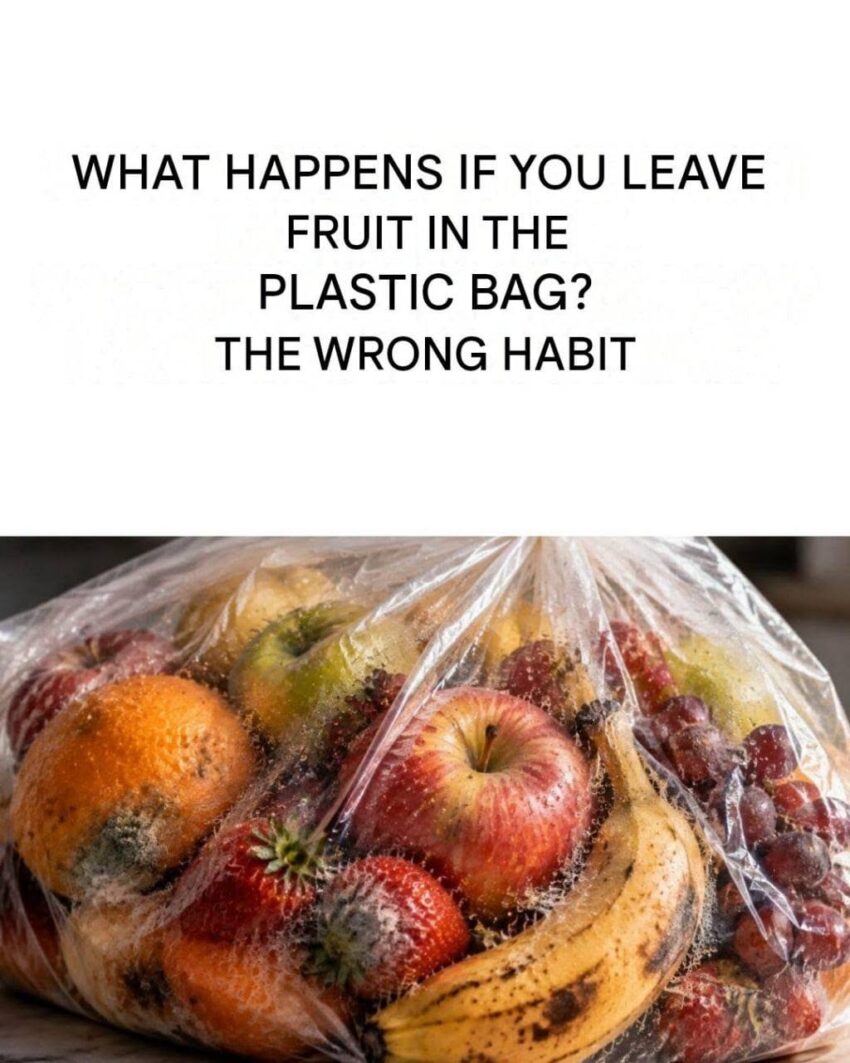
Learn how to store supermarket fruit properly in your refrigerator, when to use plastic bags, and a simple household trick that may help reduce moisture and food waste.
Have you ever brought fresh fruit home from the supermarket, placed it in the refrigerator, and discovered a few days later that it had become soft, moldy, or spoiled? You’re not alone. Improper storage and excess moisture can cause fruit to deteriorate faster than expected.
A simple household item you may already have can help: a clean paper towel. When used appropriately, it can absorb excess moisture inside certain fruit-storage containers and help keep the fruit’s surface drier.
The Simple Trick for Storing Fruit
The next time you bring fruit home, follow these easy steps.
1. Check the Fruit First
Remove damaged, bruised, or moldy fruit before storing the rest. One spoiled piece can affect nearby fruit, especially when moisture is trapped in a container.
2. Use a Clean Paper Towel
For suitable fruits, line a clean storage container or place a paper towel inside a perforated produce bag to absorb excess condensation.
This can be useful for delicate fruits such as berries, which are particularly vulnerable to moisture and mold.
Important: A paper towel helps manage moisture; it does not kill bacteria or guarantee that fruit will last longer.
3. Avoid Washing Everything Before Storage
Unless you plan to eat the fruit immediately, it’s often best to wash it just before eating. Extra moisture left on fruit can encourage mold growth.
If you wash fruit before storing it, dry it thoroughly first.
4. Don’t Seal Every Fruit in an Airtight Plastic Bag
Different fruits have different storage needs. Some benefit from refrigeration and ventilation, while others need to ripen at room temperature.
Use produce bags with ventilation holes or suitable containers rather than trapping wet fruit in a tightly sealed bag.
5. Store Different Fruits Properly
- Strawberries and raspberries: Refrigerate promptly in a clean, ventilated container.
- Grapes: Refrigerate in a ventilated bag and wash just before eating.
- Apples: Refrigerate to maintain freshness.
- Bananas: Keep at room temperature until ripe; refrigeration can darken the peel.
- Unripe mangoes: Leave at room temperature until ripe, then refrigerate if desired.
What About Other Household Items?
A clean, food-safe container or a produce-storage box can also help. Avoid using newspaper, scented tissues, dirty cloths, or materials that aren’t intended for food contact.
Always remove spoiled fruit promptly and keep the refrigerator at or below 4°C (40°F).
Final Thoughts
Keeping fruit fresh isn’t about one magical trick. The best results come from controlling excess moisture, providing suitable ventilation, refrigerating the right fruits, and checking regularly for spoilage.
A simple paper towel may be helpful for certain fruits, but proper storage depends on the type of fruit and how ripe it is when you bring it home.