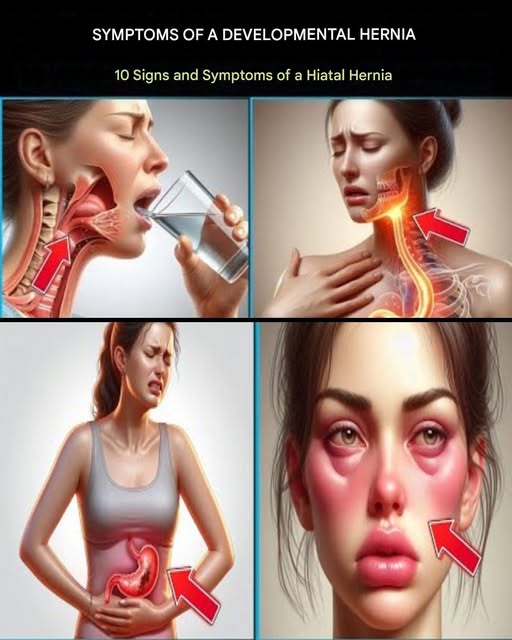
Discover 10 common signs and symptoms of a hiatal hernia, including heartburn, chest discomfort, acid reflux, difficulty swallowing, and bloating. Learn when to seek medical attention.
10 Signs and Symptoms of Hiatal Hernia You Should Know
Have you ever experienced a burning sensation in your chest after eating, frequent acid reflux, or uncomfortable pressure in your upper abdomen? These symptoms are common and can have several causes. One possible explanation is a condition known as a hiatal hernia.
A hiatal hernia occurs when part of the stomach moves upward through an opening in the diaphragm, the large muscle that separates the chest from the abdomen. Some people have no symptoms and discover the condition during a medical examination for another reason. Others experience symptoms related to acid reflux.
Understanding the possible warning signs can help you decide when to seek medical advice.
What Is a Hiatal Hernia?
The diaphragm contains a small opening called the hiatus, through which the esophagus passes before connecting to the stomach. When part of the stomach pushes through this opening into the chest cavity, it is called a hiatal hernia.
There are different types of hiatal hernia. A sliding hiatal hernia is the most common, while a paraesophageal hernia is less common and can sometimes cause serious complications.
A hiatal hernia does not always cause symptoms, and symptoms alone cannot confirm the diagnosis.
1. Frequent Heartburn
Heartburn is one of the most common symptoms associated with a hiatal hernia, particularly when acid reflux is also present.
You may notice a burning sensation behind your breastbone that moves upward toward your throat. It may occur after meals, when bending over, or when lying down.
Heartburn can also occur without a hiatal hernia, so frequent symptoms should be discussed with a healthcare professional.
2. Acid Reflux or a Sour Taste in the Mouth
Acid reflux happens when stomach contents flow backward into the esophagus. This may produce a sour or bitter taste, a burning sensation, or the feeling that food or liquid is coming back into your throat.
Some people notice these symptoms after large meals or when lying down soon after eating.
Repeated reflux may irritate the esophagus and deserves medical attention if it happens frequently.
3. Chest Discomfort
A hiatal hernia associated with reflux can cause burning or discomfort in the chest. However, chest pain should never automatically be attributed to a digestive problem.
Heart-related conditions can cause similar symptoms.
Seek emergency medical care for new or unexplained chest pressure or pain, especially if it spreads to the arm, back, neck, or jaw, or occurs with sweating, breathlessness, nausea, or dizziness.
4. Difficulty Swallowing
Some people experience a sensation that food is moving slowly or getting stuck when they swallow.
Difficulty swallowing may have several causes, including inflammation from reflux or other esophageal conditions. Persistent or worsening swallowing problems require medical evaluation.
If food becomes completely stuck or you cannot swallow your saliva, seek emergency care.
5. Bloating and a Feeling of Fullness
Bloating or upper abdominal fullness may occur alongside digestive symptoms in some people with a hiatal hernia.
You might feel uncomfortable after eating even a moderate-sized meal. However, bloating is extremely common and can also be related to gas, constipation, food intolerance, or other digestive conditions.
Keeping track of meals and symptoms may help you identify patterns to discuss with your doctor.
6. Frequent Burping
Repeated burping may occur with reflux, swallowed air, or indigestion. Some people with a hiatal hernia experience these symptoms after meals.
Burping by itself does not mean you have a hernia. Eating slowly, avoiding carbonated drinks if they trigger symptoms, and choosing smaller meals may help reduce excessive air swallowing.
7. Regurgitation of Food or Liquid
Regurgitation occurs when food or liquid comes back into the mouth without the forceful contractions associated with vomiting.
It may leave a sour taste or an unpleasant sensation in the throat, particularly after meals or when lying down.
Frequent regurgitation should be evaluated, especially if accompanied by swallowing difficulties, unexplained weight loss, or persistent coughing.
8. Nausea After Eating
Some people with upper digestive problems report nausea, particularly after large meals or when reflux occurs.
However, nausea is not a specific sign of a hiatal hernia. It can result from many conditions, including infections, medication effects, pregnancy, and other stomach problems.
Persistent nausea, repeated vomiting, or an inability to keep fluids down requires medical advice.
9. A Persistent Cough or Hoarse Voice
Reflux may sometimes irritate the throat and contribute to a chronic cough, throat clearing, or hoarseness.
These symptoms can also be caused by allergies, asthma, respiratory infections, or other conditions. A cough or hoarse voice alone cannot establish that you have a hiatal hernia.
If symptoms persist, a healthcare professional can help determine the cause.
10. Symptoms That Become Worse When Lying Down
Some people notice that heartburn, regurgitation, or chest burning becomes worse when they lie down after eating.
Gravity normally helps keep stomach contents from flowing backward, so lying flat soon after a meal can aggravate reflux in susceptible people.
If nighttime reflux is a problem, try the following:
- Eat smaller meals rather than very large portions.
- Avoid lying down for about three hours after eating.
- Raise the head of your bed if nighttime reflux occurs.
- Identify and limit foods or drinks that consistently trigger your symptoms.
- Seek medical advice if symptoms are frequent or do not improve.
These measures may help reflux symptoms, but they do not physically repair a hiatal hernia.
What Causes a Hiatal Hernia?
The exact cause is not always clear. Factors associated with a hiatal hernia include:
- Age-related changes in the diaphragm.
- Natural weakness of supporting tissues.
- Increased pressure within the abdomen.
- Pregnancy or obesity, which can increase abdominal pressure.
- Certain injuries or previous surgical procedures.
A hiatal hernia is not necessarily caused by something a person has done wrong, and many people develop one without an obvious reason.
How Is a Hiatal Hernia Diagnosed?
A doctor may recommend tests depending on your symptoms and medical history. These can include:
Upper endoscopy: A flexible tube with a camera is used to examine the esophagus and stomach.
Barium swallow: You swallow a contrast liquid while X-ray images are taken to assess the upper digestive tract.
Esophageal testing: In selected cases, additional tests may help evaluate swallowing or reflux.
Not everyone with heartburn needs these tests. Your doctor will decide which investigations are appropriate.
Can a Hiatal Hernia Be Treated?
Treatment depends on the type of hernia, the severity of symptoms, and whether complications are present.
Many people with a small sliding hiatal hernia do not need surgery. If reflux is present, treatment may include lifestyle changes and medication recommended by a healthcare professional.
Surgery may be considered for selected patients with severe symptoms, complications, or certain larger hernias. The decision depends on an individual’s circumstances.
Do not take acid-reducing medicines or other treatments indefinitely without appropriate advice if your symptoms are persistent or unexplained.
When Should You Seek Medical Attention?
Arrange a medical appointment if you experience frequent heartburn, persistent reflux, recurring swallowing difficulties, unexplained weight loss, or ongoing vomiting.
Seek emergency care if you develop severe chest or upper abdominal pain, vomiting blood, black tarry stools, sudden severe pain with repeated vomiting, or an inability to swallow.
These symptoms may indicate a serious condition and should not be assumed to be caused by a hiatal hernia.
Final Thoughts
A hiatal hernia can sometimes contribute to heartburn, acid reflux, regurgitation, and other upper digestive symptoms. However, many people have no symptoms at all, and the symptoms listed above can occur for reasons unrelated to a hernia.
Pay attention to persistent changes in your digestion, avoid self-diagnosing based on a single symptom, and consult a healthcare professional when needed. With an accurate diagnosis, most people can find an appropriate way to manage their symptoms and protect their digestive health.