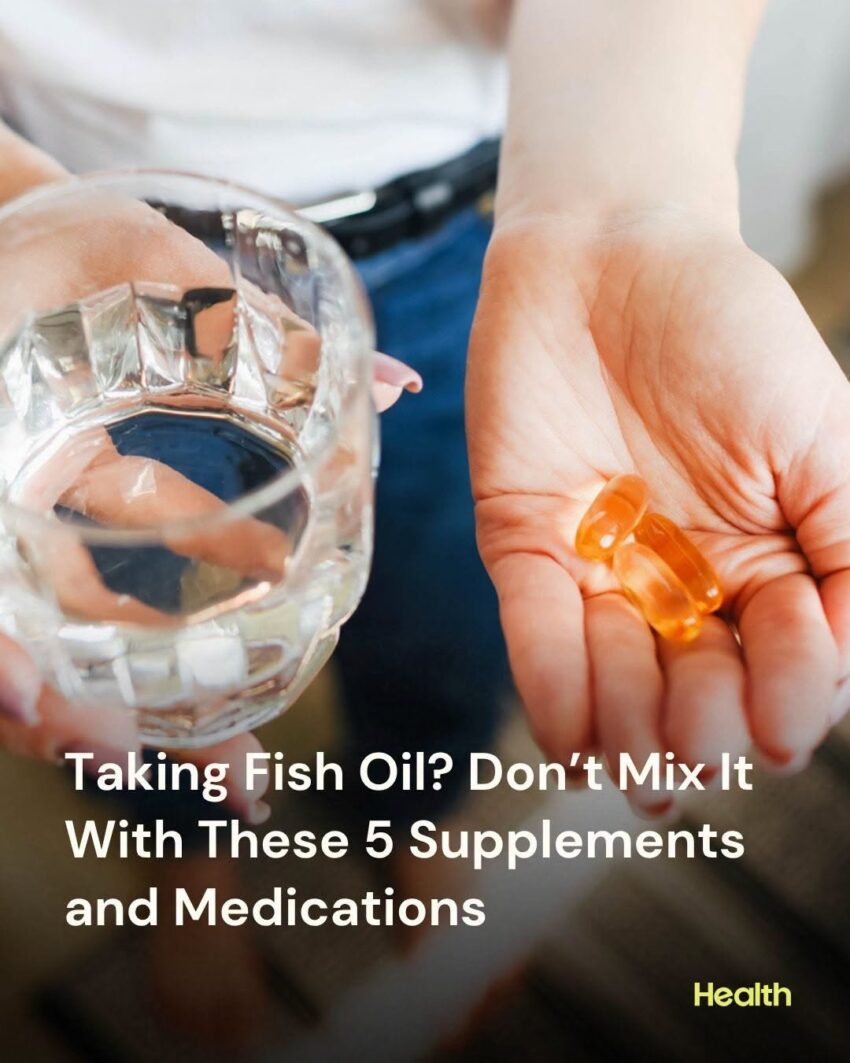
Learn about fish oil benefits, possible medication interactions, and which medicines and supplements require caution when taking omega-3 supplements.
Fish oil is widely used for its omega-3 fatty acids, particularly EPA (eicosapentaenoic acid) and DHA (docosahexaenoic acid). These healthy fats play important roles in heart health, brain function, and normal cellular activity. Some people take fish oil to support healthy triglyceride levels, while others use it as part of their general wellness routine.
However, fish oil supplements are not suitable for everyone, and combining them with certain medications or supplements may require extra care. The risk depends on the dose, the specific products involved, and a person’s medical history.
1. Blood-Thinning Medications
Fish oil may affect platelet activity, which helps blood clot. People taking anticoagulants such as warfarin or apixaban, or antiplatelet medicines such as clopidogrel, should discuss fish oil use with their healthcare professional.
Although usual fish oil doses do not appear to cause a major increase in bleeding for most people, high doses and certain combinations deserve particular attention.
2. Aspirin
Aspirin reduces platelet activity and is often prescribed to prevent blood clots in specific medical situations. Fish oil also has effects on platelet function, so people taking both should check with their healthcare professional, especially before starting high-dose fish oil.
Do not stop prescribed aspirin without medical advice.
3. Other Omega-3 Supplements
Taking multiple products containing fish oil, krill oil, cod liver oil, or concentrated EPA and DHA can increase your total omega-3 intake without you realizing it.
Read the labels carefully and check the combined amounts of EPA and DHA. Cod liver oil also contains vitamins A and D, which can accumulate at excessive doses.
4. Blood Pressure Medications
Fish oil may produce a modest reduction in blood pressure in some people. When combined with blood pressure medication, this may occasionally contribute to lower readings.
People who experience dizziness, weakness, or lightheadedness should have their blood pressure checked and consult their healthcare professional.
5. Vitamin E Supplements
Vitamin E can affect blood clotting, particularly at high supplemental doses. Combining high-dose vitamin E with fish oil and blood-thinning medication may warrant additional caution.
This does not mean that ordinary dietary sources of vitamin E must be avoided. The main concern is the use of concentrated supplements, especially in combination.
6. Ginkgo Biloba
Ginkgo is an herbal supplement commonly marketed for memory and circulation. It may increase bleeding risk, particularly when used with anticoagulant or antiplatelet medicines.
Evidence that fish oil itself substantially increases bleeding at usual doses is limited, but anyone combining several products that may affect clotting should seek professional advice.
7. High-Dose Fish Oil With Certain Heart Medications
Prescription omega-3 products are sometimes used to lower very high triglyceride levels. However, high-dose omega-3 treatment has been associated with an increased risk of atrial fibrillation, a type of irregular heartbeat, in some clinical trials.
People with a history of atrial fibrillation or other heart rhythm problems should discuss the benefits and risks with their healthcare professional before taking high-dose omega-3 products.
Who Should Be Especially Careful?
Talk to a healthcare professional before starting fish oil if you:
- Take blood-thinning or antiplatelet medication.
- Use several supplements that may affect bleeding.
- Have a bleeding disorder or a history of abnormal heart rhythms.
- Are scheduled for surgery or another invasive procedure.
- Are pregnant or breastfeeding and considering a concentrated supplement.
During pregnancy, avoid assuming that all fish oil products are interchangeable. Cod liver oil may contain high amounts of preformed vitamin A, which can be harmful during pregnancy. Ask your obstetrician which product, if any, is appropriate.
How to Use Fish Oil More Safely
Check the label: The total amount of fish oil is not the same as the amount of EPA and DHA.
Avoid excessive doses: More is not always better. High-dose omega-3 treatment should be supervised by a healthcare professional.
Tell your doctor about supplements: Include herbal products, vitamins, and over-the-counter medicines when discussing possible interactions.
Choose reliable products: Look for quality testing and clear ingredient information.
Final Thoughts
Fish oil can be useful for certain health goals, especially when used appropriately, but it is not necessary for everyone. Most importantly, interactions depend on the particular medicine, supplement, and dose rather than simply on taking fish oil.
If you take prescribed medication, do not stop or change it on your own. A pharmacist or healthcare professional can help determine whether fish oil is appropriate for your individual situation.