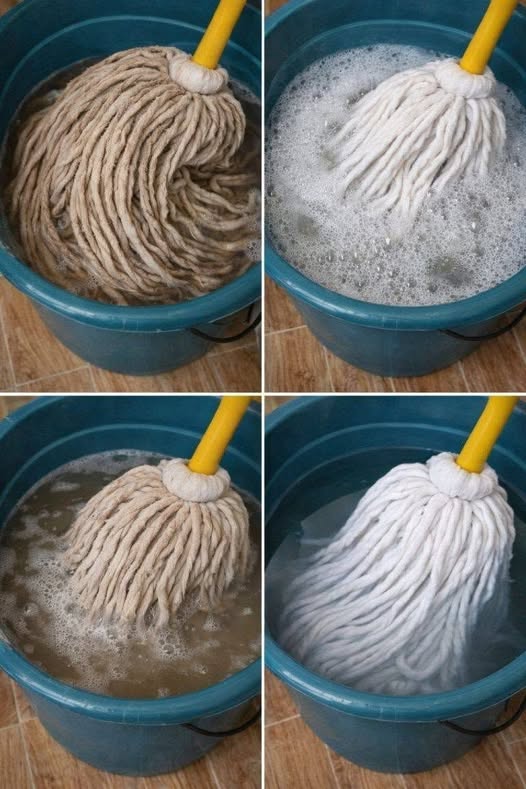
Learn how to clean a dirty, smelly mop using a simple household ingredient, plus practical tips for removing grime, odors, and buildup without damaging the mop fibers.
Very Dirty Mop? Don’t Throw It Away—A Simple Cleaning Trick Can Make a Big Difference
A mop can look clean after washing the floor while actually holding onto dirt, grease, bacteria, and unpleasant odors. Over time, that buildup can make the mop smell bad and even spread grime around instead of removing it.
Fortunately, you don’t necessarily need to replace it every time it becomes dirty. A thorough cleaning can often restore a reusable mop.
Start With a Thorough Rinse
Before using any cleaning solution, rinse the mop thoroughly with warm water.
Remove as much visible dirt, hair, and debris as possible. If the mop head is removable, take it off and clean it separately according to the manufacturer’s instructions.
Add a Little White Vinegar
White vinegar can help loosen mineral buildup and reduce unpleasant odors.
For a washable mop head, mix approximately 1 part white vinegar with several parts warm water in a bucket. Soak the mop head for a short period, then rinse it thoroughly with clean water.
Vinegar is useful for cleaning and deodorizing, but it should not be considered a disinfectant for situations where true disinfection is required.
For Heavily Soiled Mops
If the mop contains greasy residue, a small amount of ordinary dishwashing liquid can help break down the buildup.
Wash the mop thoroughly, rinse until the water runs clear, and then allow it to dry completely.
Never Mix Vinegar With Bleach
This is extremely important.
Never combine vinegar with bleach or chlorine-based cleaners. Mixing them can produce dangerous chlorine gas.
If you’ve previously used bleach on the mop, rinse it extremely well before using any other cleaning product, and follow the manufacturer’s instructions.
Don’t Forget to Dry the Mop
Proper drying is just as important as washing.
A wet mop left inside a bucket or closed laundry area can quickly develop a musty smell. After cleaning, wring it out thoroughly and hang it somewhere with good airflow so it can dry completely.
If the mop head is machine-washable, follow its care instructions and dry it appropriately.
When Should You Replace It?
Cleaning won’t always restore a mop that has become badly worn.
Consider replacing it if the fibers are permanently damaged, the mop remains foul-smelling after thorough cleaning and drying, or it can no longer clean effectively.
The Bottom Line
A dirty mop doesn’t necessarily need to go straight into the trash. A thorough rinse, appropriate washing, and a little diluted white vinegar for deodorizing can help refresh many reusable mop heads.
The most important habits are to rinse away dirt, avoid dangerous chemical combinations, and let the mop dry completely after every use.