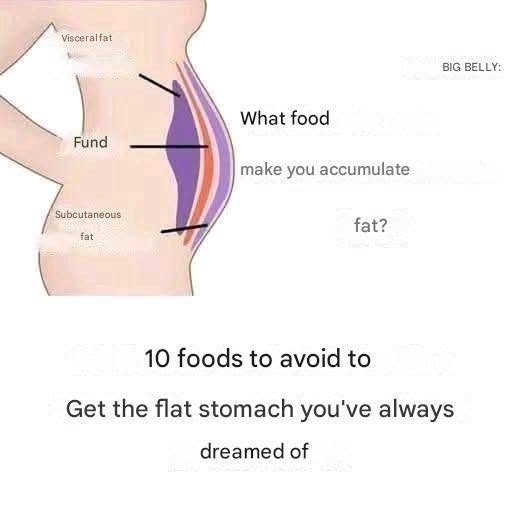
Want a flatter-looking stomach? Learn which 10 foods may contribute to bloating, excess calories, or water retention—and what to eat instead for a healthier, more comfortable belly.
A flatter stomach is a common fitness goal, but it’s important to understand that no single food causes belly fat, and eliminating specific foods cannot guarantee a flat stomach. Your body shape is influenced by genetics, overall calorie intake, activity, sleep, hormones, and many other factors.
That said, some foods can contribute to bloating, digestive discomfort, or excess calorie intake. If you’re trying to feel less bloated and support a healthy weight, these are worth limiting.
1. Sugary Soft Drinks
Sodas and other sugar-sweetened beverages can add a substantial amount of sugar and calories without making you feel particularly full.
Try instead: Water, sparkling water, or unsweetened tea.
2. Processed Snack Foods
Chips, crackers, cookies, and similar packaged snacks can be easy to overeat because they’re often calorie-dense and highly processed.
Try instead: Fresh fruit, plain yogurt, nuts in moderate portions, or vegetables with hummus.
3. Fried Foods
French fries, fried chicken, and other deep-fried foods can be high in calories and fat. Large portions may also leave some people feeling heavy or bloated.
Try instead: Grilled, baked, roasted, or air-fried versions.
4. Processed Meats
Bacon, sausages, hot dogs, and other processed meats can be high in sodium and saturated fat. Excess sodium can contribute to temporary water retention.
Try instead: Fish, eggs, chicken, beans, or other minimally processed protein sources.
5. Highly Refined Baked Goods
Pastries, doughnuts, cakes, and many sweet baked goods combine refined carbohydrates, added sugar, and fat, making them easy to consume in large amounts.
You don’t necessarily need to eliminate them completely. Portion size and frequency matter.
6. Large Amounts of White Bread and Refined Grains
Refined grains aren’t automatically “bad,” but eating large portions of refined carbohydrates can make it harder to maintain an appropriate overall calorie intake.
Try instead: Whole-grain bread, oats, brown rice, or other high-fiber carbohydrate sources.
7. Very Salty Foods
Instant noodles, packaged soups, salty snacks, and heavily salted restaurant foods can contain large amounts of sodium.
Too much sodium can cause temporary water retention, which may make your abdomen or other parts of your body look puffier.
8. Alcohol
Alcohol provides calories and can also affect appetite and food choices. Some alcoholic beverages additionally contain considerable amounts of sugar.
Reducing alcohol may help if your goal is weight management or reducing bloating.
9. Foods That Trigger Your Personal Bloating
This category is different for everyone.
Some people experience bloating after consuming foods such as beans, onions, certain dairy products, or particular high-fiber foods. These foods aren’t inherently unhealthy—in fact, many are highly nutritious.
Instead of unnecessarily eliminating foods, pay attention to your own digestive patterns.
10. Ultra-Processed Desserts and Sugary Treats
Ice cream, candy, chocolate bars, and other sugary treats can fit into a healthy diet occasionally. However, eating them frequently or in large portions can make maintaining a calorie deficit more difficult if you’re trying to lose body fat.
What Should You Eat for a Healthier, Flatter-Looking Stomach?
Rather than focusing only on foods to eliminate, build most meals around:
- Vegetables and fruits
- Lean proteins
- Whole grains and other high-fiber carbohydrates
- Beans and legumes, if tolerated
- Nuts and seeds in reasonable portions
- Adequate water
- Minimally processed foods
And don’t forget the basics: regular physical activity, resistance training, sufficient sleep, and an overall balanced diet are much more important than avoiding one particular food.
The Bottom Line
A “flat stomach” isn’t simply the result of removing 10 foods from your diet. Reducing excess calories, maintaining a healthy body weight, staying active, and identifying foods that personally cause bloating are more realistic strategies.
You don’t have to completely ban your favorite foods. A sustainable eating pattern that you can maintain long term is far more effective than a restrictive diet.
Health note: If you have persistent abdominal swelling, severe bloating, unexplained weight changes, pain, vomiting, or changes in bowel habits, speak with a healthcare professional rather than assuming it’s simply dietary bloating.