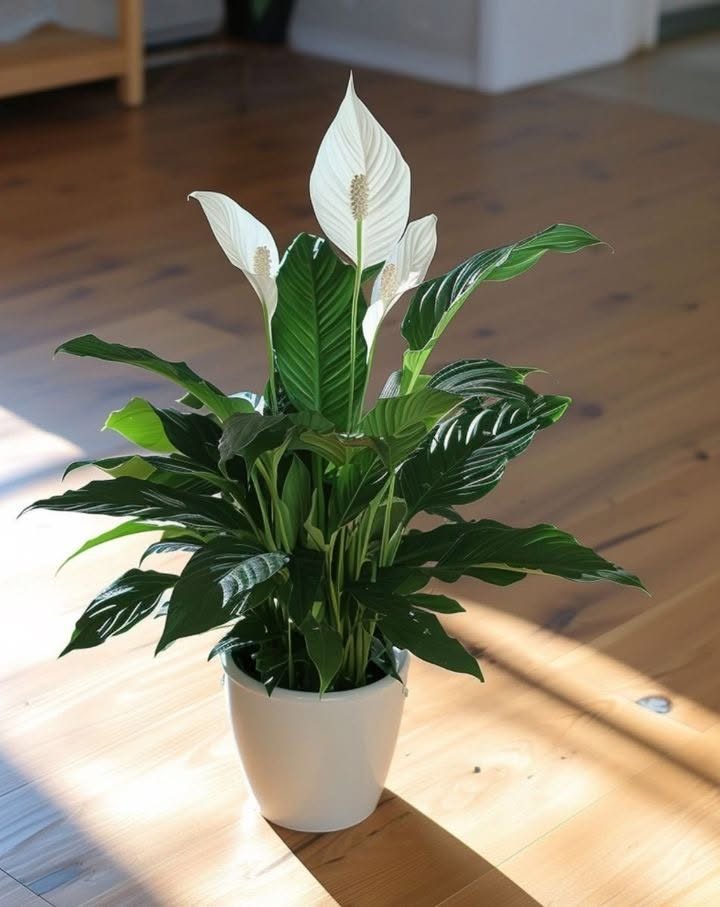
Learn 11 simple ways to encourage your peace lily to bloom, from proper light and watering to feeding, humidity, repotting, and pruning.
Peace lilies are loved for their beautiful green foliage and elegant white flowers. But sometimes a plant can look healthy and still refuse to bloom. Fortunately, a few changes to its growing conditions can encourage flowering.
Here are 11 practical ways to help your peace lily produce more blooms.
1. Give It Bright, Indirect Light ☀️
Light is one of the biggest factors affecting flowering.
Place your peace lily somewhere with bright, indirect light. A spot near an east- or north-facing window can work well, while harsh direct afternoon sunlight may scorch the leaves.
If the plant is in a very dark corner, it may survive but produce few or no flowers.
2. Don’t Overwater
Peace lilies like consistently moist soil, but they don’t like sitting in water.
Water when the upper layer of soil begins to dry. Make sure the pot has drainage holes so excess water can escape.
Tip: Yellowing leaves and constantly wet soil can be signs that you’re watering too frequently.
3. Don’t Let It Become Extremely Dry
Although overwatering is a common problem, allowing the plant to become severely dry can also stress it.
If the leaves repeatedly wilt for long periods, flowering may suffer.
Aim for even moisture rather than constantly wet or bone-dry soil.
4. Maintain Moderate Humidity
Peace lilies are tropical plants and generally appreciate humid conditions.
If your indoor air is very dry, especially during periods of heavy air conditioning, consider using a humidifier or placing the plant near other plants.
Avoid keeping it directly next to a heater or strong air-conditioning vent.
5. Feed It During Active Growth
A peace lily may benefit from occasional fertilization during its active growing season.
Use a balanced houseplant fertilizer according to the product’s instructions. Avoid excessive fertilizer because too much can damage roots and cause salt buildup in the soil.
More fertilizer does not necessarily mean more flowers.
6. Avoid Excessive Nitrogen
Very high nitrogen levels can encourage lots of green leaf growth while flowering remains limited.
If your peace lily has enormous amounts of foliage but rarely produces flowers, review your fertilizer routine.
A balanced fertilizer is generally a better choice than repeatedly applying a high-nitrogen product.
7. Keep It Warm
Peace lilies prefer warm indoor conditions and can become stressed by cold temperatures.
Keep the plant away from cold drafts, open windows during cold weather, and sudden temperature changes.
A comfortable, stable indoor environment can help support healthy growth.
8. Don’t Keep Moving the Plant
Peace lilies don’t always appreciate being moved from one environment to another.
If you’ve found a location with good indirect light and comfortable temperatures, give the plant time to adjust instead of constantly changing its position.
9. Check the Roots and Pot
If your peace lily has been in the same pot for a long time, inspect the roots.
If roots are tightly circling the pot or growing through the drainage holes, the plant may eventually benefit from repotting into a slightly larger container.
Don’t jump into an oversized pot, though. Too much unused soil can retain excess moisture.
10. Remove Old Flowers
Once a flower has turned green, brown, or begins to decline, you can cut the flower stalk near its base with clean scissors.
This improves the plant’s appearance and allows it to focus its energy on new growth rather than maintaining an old flower.
11. Be Patient 🌱
Sometimes the biggest secret is simply giving the plant time.
A peace lily may produce plenty of healthy leaves before it decides to flower. If the plant has suitable light, moisture, temperature, nutrition, and humidity, consistent care is usually more useful than constantly trying new “blooming hacks.”
Bonus: The Most Important Three
If you don’t want to change everything at once, start with these:
💡 Bright, indirect light
Make sure your peace lily isn’t sitting in a dark corner.
💧 Correct watering
Keep the soil moderately moist without leaving the roots waterlogged.
🌿 Appropriate feeding
Use a balanced houseplant fertilizer during active growth and follow the label directions.
Final Thoughts
Getting a peace lily to bloom isn’t usually about one magical ingredient. Light, watering, nutrition, temperature, humidity, and overall plant health work together.
If your peace lily has healthy leaves but isn’t flowering, light is one of the first things worth checking. Move it gradually to a brighter location with plenty of indirect light, then maintain consistent care.
With the right conditions and a little patience, your peace lily may reward you with those beautiful white blooms again.