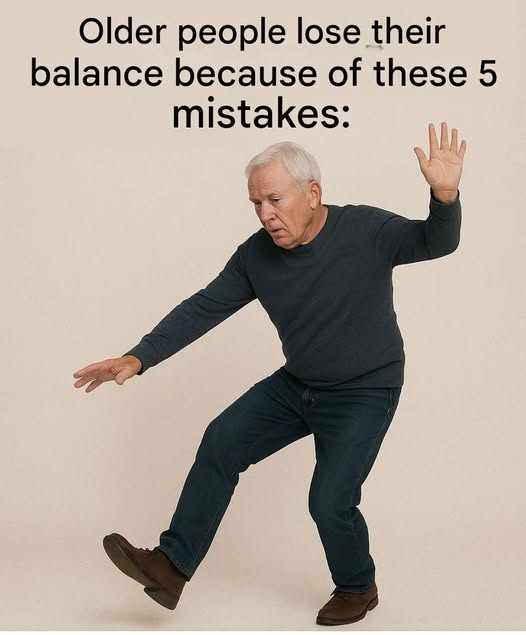
Discover five common everyday mistakes that can increase the risk of poor balance and falls in older adults, plus simple ways to improve safety and stability.
Balance can become more challenging with age, but getting older does not automatically mean that falls are inevitable. In many cases, everyday habits and environmental hazards can make balance problems worse.
Here are five common mistakes older adults and their families should watch for.
1. Ignoring Changes in Vision
Good vision plays an important role in maintaining balance. Difficulty seeing steps, uneven surfaces, obstacles, or changes in lighting can increase the risk of stumbling.
Regular eye examinations and properly prescribed glasses can help. At home, make sure hallways, stairs, and bathrooms are adequately lit.
2. Wearing Unsafe Footwear
Loose slippers, worn-out shoes, smooth soles, and footwear without adequate support can make walking less stable.
Choose comfortable shoes that fit properly and have secure fastenings and slip-resistant soles. Avoid walking around the house in footwear that easily slides off.
3. Standing Up Too Quickly
Getting up suddenly from a chair or bed can sometimes cause a temporary drop in blood pressure, resulting in dizziness or lightheadedness.
A safer habit is to sit on the edge of the bed or chair for a moment before standing. If dizziness occurs frequently, speak with a healthcare professional because medications, dehydration, anemia, and other conditions can contribute to it.
4. Becoming Too Inactive
Avoiding movement because of fear of falling can actually contribute to weaker muscles and poorer balance.
When medically appropriate, regular walking and exercises designed to improve strength, flexibility, and balance can help older adults maintain physical function.
Anyone with significant mobility problems should ask a healthcare professional or physical therapist about exercises appropriate for their abilities.
5. Ignoring Hazards Around the Home
Small household hazards can become major fall risks.
Common examples include:
- Loose rugs
- Cluttered walkways
- Electrical cords across floors
- Poor lighting
- Wet bathroom floors
- Lack of handrails on stairs
Keeping frequently used pathways clear and installing appropriate grab bars or handrails can make a home considerably safer.
When Balance Problems Shouldn’t Be Ignored
A sudden or unexplained loss of balance deserves medical attention, especially when it occurs with weakness, numbness, difficulty speaking, severe headache, vision changes, chest pain, or fainting.
Repeated falls or increasing unsteadiness should also be discussed with a healthcare professional. Balance problems can sometimes be related to medications, inner-ear disorders, vision problems, neurological conditions, or other treatable issues.
The Bottom Line
Good balance isn’t simply about “being careful.” Vision, muscle strength, footwear, medications, hydration, physical activity, and the home environment can all play a role.
Small changes—such as improving lighting, removing tripping hazards, wearing supportive footwear, and staying appropriately active—can help older adults move more safely and confidently.