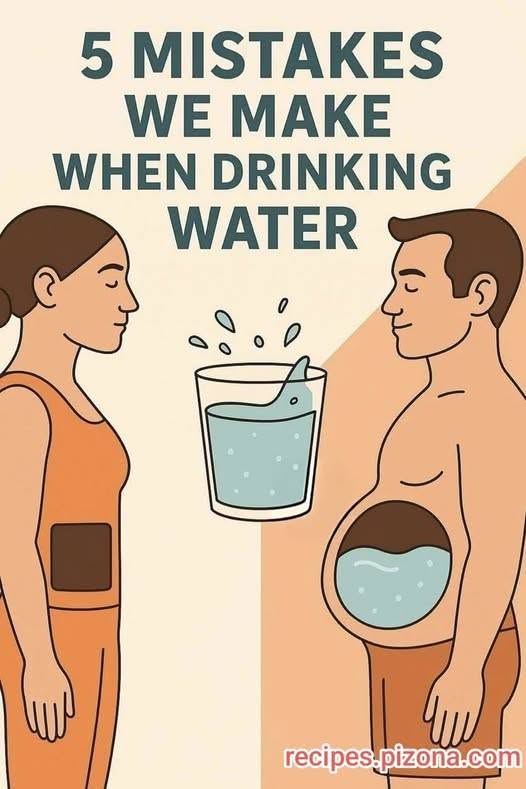
Water is essential for nearly every function in the body. It helps regulate temperature, supports digestion, carries nutrients, and helps the kidneys remove waste.
But while drinking enough water is important, how you drink it can matter too. Some common habits can leave you uncomfortable or, in extreme cases, cause health problems.
Here are five mistakes worth avoiding.
1. Drinking Too Much Water Too Quickly
More water isn’t always better.
Drinking a very large amount in a short period can overwhelm the kidneys’ ability to remove excess water. In extreme situations, this can dilute the sodium level in the blood, a potentially serious condition called hyponatremia.
For most people, there’s no need to force down large quantities of water at once. Sip fluids throughout the day and let thirst help guide your intake.
People with certain medical conditions may have specific fluid restrictions, so they should follow their healthcare professional’s advice.
2. Waiting Until You’re Extremely Thirsty
Thirst is an important signal from your body, but constantly ignoring it isn’t a good habit.
If you’re exercising, spending time in hot weather, sweating heavily, or experiencing vomiting or diarrhea, your fluid needs may increase.
Instead of waiting until you’re extremely thirsty, make drinking fluids a regular part of your day.
3. Assuming Everyone Needs the Same Amount
There’s no single amount of water that is perfect for every person.
Fluid requirements can vary depending on body size, activity level, climate, diet, pregnancy, breastfeeding, illness, and medications.
Also remember that food contributes to your total fluid intake. Fruits, vegetables, soups, milk, and other beverages all contain water.
Rather than obsessing over a particular number, pay attention to thirst and other signs of hydration, while following medical advice if you have a condition that affects fluid balance.
4. Forgetting About Water During Exercise or Heat
Hot weather and physical activity increase fluid loss through sweat.
If you’re sweating heavily for a prolonged period, simply drinking a huge amount of plain water may not always be the best strategy. Depending on the circumstances, electrolytes may also be lost.
For everyday activity, ordinary water is usually sufficient. During prolonged, intense exercise or heavy sweating, an appropriate electrolyte-containing drink may sometimes be useful.
5. Believing That More Water Can Fix Everything
Water is important, but it isn’t a cure-all.
Drinking extra water won’t automatically “flush toxins,” melt body fat, cure chronic diseases, or repair every health problem.
If you have persistent headaches, dizziness, unusual thirst, swelling, very dark urine, or other concerning symptoms, it’s better to look for the underlying cause rather than simply drinking more and more water.
A Better Way to Stay Hydrated
A simple approach is to keep water available, drink regularly, and increase your intake when you’re losing more fluid through heat, exercise, vomiting, or diarrhea.
You can also get a significant amount of fluid from foods such as:
- Watermelon
- Cucumbers
- Oranges
- Strawberries
- Soups and broths
- Yogurt
- Other water-rich fruits and vegetables
The Bottom Line
Healthy hydration isn’t about forcing yourself to drink enormous amounts of water. It’s about getting enough fluid for your individual needs without going to extremes.
Listen to your body’s thirst signals, drink more when circumstances increase your fluid losses, and follow medical advice if you have a condition that affects how much fluid you should consume.
If you enjoy practical health information, useful home tips, and delicious recipes, leave a “Thank you” in the comments. Your support helps me know you’d like me to keep sharing more! ❤️