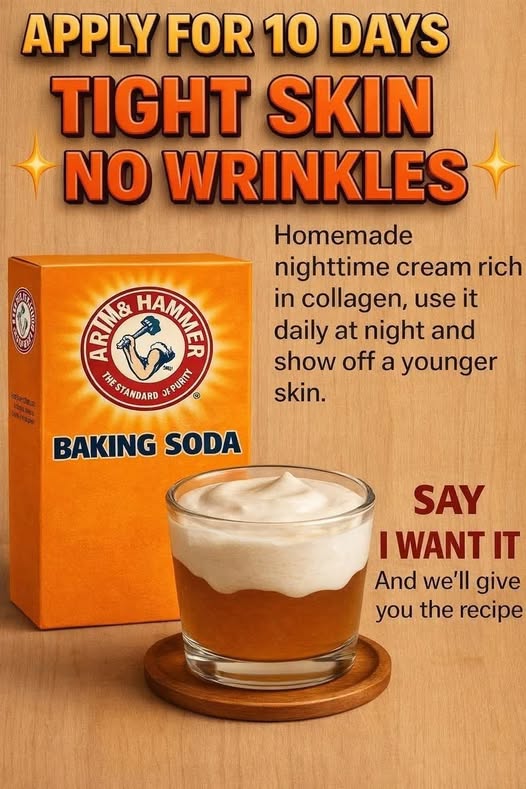
Baking soda and cornstarch are popular DIY skincare ingredients, but they aren’t proven treatments for clear skin and baking soda can irritate the skin barrier. Learn safer ways to soothe and smooth your skin at home.
Homemade Baking Soda and Cornstarch Cream: A Natural Remedy for Smooth, Clear Skin
DIY skincare recipes often promise smoother, brighter, clearer skin using ingredients already sitting in your kitchen. One popular combination is baking soda and cornstarch, sometimes described as a natural cream for softening the skin and reducing blemishes.
But there’s an important distinction between a traditional home remedy and a skincare treatment supported by evidence.
🌿 What Does This Mixture Supposedly Do?
Cornstarch is a fine powder that can absorb moisture and give a homemade mixture a soft, creamy texture.
Baking soda, meanwhile, is alkaline and mildly abrasive. Because of these properties, some people use it in DIY recipes intended to:
- Remove surface buildup
- Reduce excess oil
- Make skin feel temporarily smoother
- Absorb moisture
- Provide a gentle-looking exfoliating effect
However, baking soda isn’t a proven treatment for acne, dark spots, wrinkles, or other skin conditions.
⚠️ Why You Should Be Careful With Baking Soda
Healthy skin has a naturally acidic environment known as the skin’s acid mantle. Applying alkaline substances such as baking soda can disrupt the skin barrier, particularly when used frequently or in concentrated amounts.
This may result in:
- Dryness
- Burning or stinging
- Redness
- Irritation
- Increased sensitivity
- Worsening of existing skin problems
And if irritation leads to inflammation, it can sometimes make dark marks more noticeable—especially in people prone to post-inflammatory hyperpigmentation.
For this reason, using baking soda regularly on the face isn’t recommended.
🥣 A Gentler DIY Alternative
If your goal is simply to make your skin feel soft and moisturized, you don’t need baking soda.
A safer simple option is to use a fragrance-free moisturizer designed for facial skin.
If you’re interested in a homemade soothing mask, plain colloidal oatmeal mixed with water can be a gentler choice for many people.
Apply it for a short period, rinse gently, and moisturize afterward.
If You Still Want to Try a DIY Recipe
Before applying any homemade mixture to your face, perform a patch test on a small area of skin first.
Don’t use it on:
- Broken skin
- Sunburn
- Active rashes
- Freshly shaved or waxed skin
- Areas with eczema or significant irritation
Stop immediately if you experience burning, swelling, severe redness, or itching.
✨ What Actually Helps With Clearer Skin?
For consistently smoother and healthier-looking skin, evidence-based skincare is a better approach.
A simple routine can include:
Morning
- Gentle cleanser
- Moisturizer
- Broad-spectrum sunscreen
Evening
- Gentle cleanser
- Appropriate treatment if needed
- Moisturizer
For acne, dark spots, or persistent texture problems, ingredients such as salicylic acid, benzoyl peroxide, azelaic acid, or retinoids may be useful depending on the specific problem and individual skin type.
The Bottom Line
Baking soda and cornstarch may sound like a simple natural beauty treatment, but “natural” doesn’t automatically mean safe or effective.
Cornstarch can absorb moisture, while baking soda can be irritating and may disrupt the skin barrier. If your goal is clear, smooth skin, gentle skincare and proven ingredients are generally a better choice than repeatedly applying baking soda to your face.
A healthy skin barrier is one of the best foundations for smooth-looking skin—so gentle is usually better than harsh.