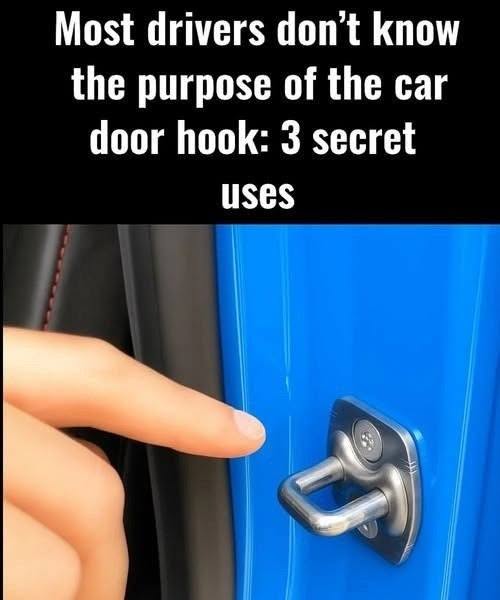
That metal “hook” on your car door is actually part of the door-latching system. Learn what the door striker does, why its position matters, and three useful things drivers should know about it.
Most Drivers Don’t Know the Purpose of the Car Door Hook: 3 Things It Really Does
That U-shaped metal piece shown in the image may look like a small hook, but it has a very important job. It is generally called the door striker or striker plate, and it works together with the locking mechanism inside the car door.
When you close the door, the latch inside the door grabs onto this metal striker. This keeps the door securely closed while you’re driving.
1. It Keeps the Door Closed
The primary purpose of the striker is simple: it provides the solid point that the door latch locks onto.
When you shut the door:
- The latch inside the door moves toward the striker.
- The latch catches around the striker.
- The door is held tightly against the vehicle body.
- The locking mechanism prevents the latch from releasing unintentionally.
Without this component, the door could not properly remain secured to the vehicle body.
2. It Helps Keep the Door Properly Aligned
The striker also plays an important role in door alignment.
If the striker is damaged, loose, or incorrectly positioned, you may notice:
- The door requires extra force to close.
- The door doesn’t sit flush with the body.
- You hear rattling or squeaking.
- The door feels loose after closing.
- The door may appear slightly higher or lower than the surrounding body panels.
Don’t casually loosen or reposition the striker yourself. Its position is set to work correctly with the door latch, and incorrect adjustment can affect how securely the door closes.
3. It Is Part of the Vehicle’s Safety System
The striker isn’t simply a piece of metal holding the door shut. It is part of the vehicle’s overall door-retention system.
During a collision, the door and its latch/striker assembly need to work together to help keep the door attached to the vehicle body.
Modern vehicles can have carefully engineered striker and latch assemblies designed to work with the vehicle’s crash-safety structure.
What About the “Secret Uses”?
You may see social-media posts claiming that the striker is designed for things such as hanging bags, holding groceries, or other “hidden” purposes.
Be careful with those claims. The component shown in the image is primarily a door-latching component, not a general-purpose hook.
You shouldn’t hang heavy objects from it or use it as an improvised attachment point unless the vehicle manufacturer specifically says it is designed for that purpose. Doing so could interfere with the latch or damage the mechanism.
A Simple Test You Can Do
With the vehicle parked safely, look at the striker and check whether:
- The metal appears firmly attached.
- There are no obvious cracks or severe damage.
- The door closes normally.
- The door sits evenly with the surrounding body panels.
- There is no unusual movement or rattling after the door is closed.
If the door suddenly becomes difficult to close, doesn’t latch securely, or opens unexpectedly, don’t ignore it. Have the door latch and striker inspected by a qualified mechanic.
The Bottom Line
That little “hook” isn’t a useless piece of hardware. It’s a key part of your car’s door-latching system.
Its main jobs are to give the door latch something to grab, help maintain proper door alignment, and contribute to keeping the door securely retained during normal driving and crashes.
So the next time you notice it, remember: it’s much more important than it looks.