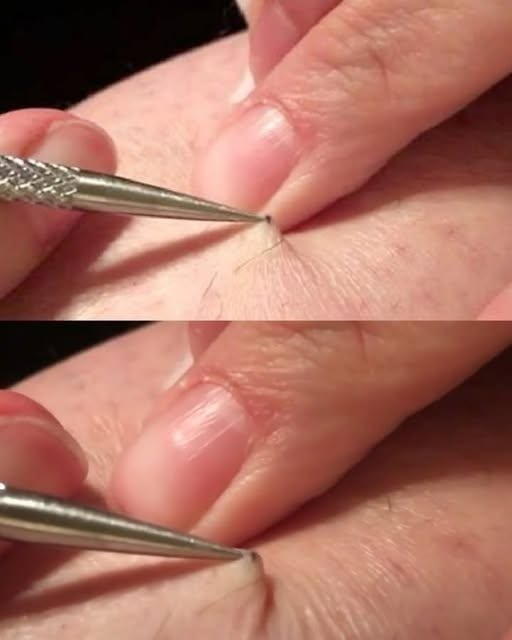
A mysterious black spot on the leg may look like a harmless scab, but some skin changes can be caused by ticks, scabs, blood-filled lesions, infections, or other conditions. Learn why picking at an unexplained black spot can be risky and when it needs medical attention.
It All Started With an Itch—and Ended in Shock: What Could a Black Spot on the Leg Really Be?
A small, itchy spot on the skin may seem like something that can simply be scratched or picked away. But when a black spot suddenly appears on the leg, removing it without knowing what it is can sometimes lead to an unpleasant surprise.
Stories about people discovering something unusual beneath a dark spot often spread quickly online. However, a black mark on the skin can have many explanations, and not every dramatic-looking lesion represents something dangerous.
What Can Cause a Black Spot on the Leg?
Several things can make an area of skin appear black or very dark.
1. A tick attached to the skin
A tick can sometimes resemble a dark bump or spot, particularly when it has been attached for some time. It may be mistaken for a scab or small piece of debris.
If a tick is suspected, don’t repeatedly pick or crush it with your fingers. Proper removal with fine-tipped tweezers is generally recommended, followed by cleaning the area.
2. A scab
A healing wound can develop a dark crust made from dried blood and tissue. Picking it off prematurely can reopen the wound, cause bleeding, increase infection risk, and potentially delay healing.
3. A blood blister or dried blood
Minor trauma can produce a dark red, purple, brown, or nearly black area. These spots can look alarming while they heal.
4. An insect bite
Some insect bites initially appear as itchy red bumps and later develop a darker center. Scratching or picking can damage the surrounding skin and introduce bacteria.
5. A skin lesion
Some benign and potentially serious skin lesions can be darkly pigmented. A spot that is new, changing, irregular, bleeding, or refusing to heal deserves professional evaluation rather than home removal.
Why Picking at an Unknown Spot Can Be a Bad Idea
The biggest mistake is assuming that every dark spot is something sitting on top of the skin.
If the spot is actually part of the skin, trying to pull or scrape it away can cause:
- Bleeding
- Infection
- Scarring
- Delayed healing
- Irritation
- Damage to surrounding tissue
And if the object is an attached tick, improper handling can make identification or complete removal more difficult.
When Should a Black Spot Be Checked?
Consider getting medical advice if a spot is:
- Newly appearing and unexplained
- Getting larger or changing shape
- Developing several different colors
- Irregular around the edges
- Bleeding without an obvious injury
- Painful, swollen, or increasingly warm
- Producing pus or other drainage
- Not healing
- Associated with fever or feeling unwell
A rapidly worsening wound, significant swelling, severe pain, fever, or spreading redness should receive prompt medical attention.
Don’t Let a Viral Story Replace a Medical Examination
The dramatic version of this story—someone notices an itch, finds a black spot, pulls it off, and discovers something shocking—makes compelling social-media content. But without a photograph, medical examination, or reliable source, there is no way to know what was actually removed.
A black spot could be a harmless scab, an attached tick, dried blood, a bite reaction, or a skin lesion. The safest approach is to identify it before attempting to remove it.
The Bottom Line
An itchy black spot on the leg shouldn’t automatically cause panic, but it also shouldn’t automatically be picked away.
If something appears attached to or growing from the skin and you don’t know what it is, stop picking at it and have it properly assessed. When in doubt—especially if the spot is changing, bleeding, infected-looking, or associated with other symptoms—seek medical advice.
This article is for general educational purposes and is not a diagnosis. A healthcare professional should evaluate an unexplained or changing skin lesion.