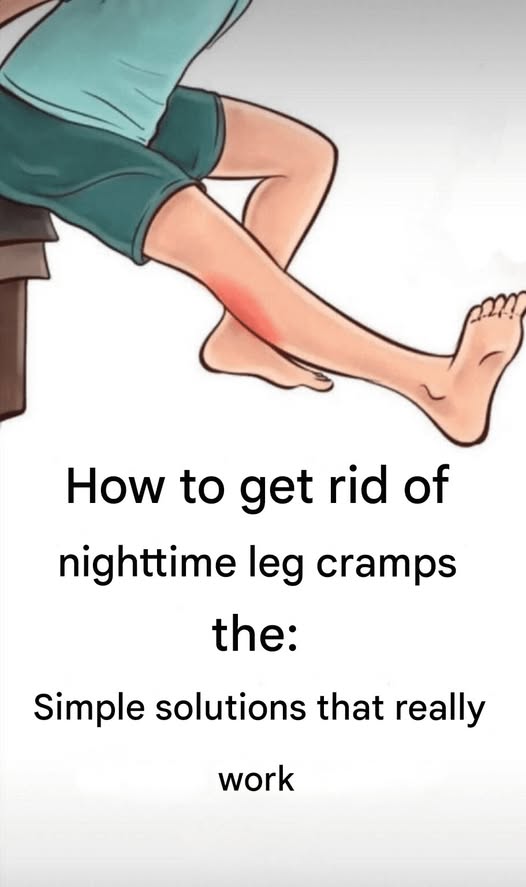
Discover practical ways to relieve nighttime leg cramps, including gentle stretching, massage, hydration, and prevention tips. Learn when leg cramps may require medical attention.
Waking up in the middle of the night with a sudden, painful leg cramp can be an unpleasant experience. One moment you are sleeping peacefully, and the next, your calf or foot feels painfully tight. The muscle may become hard, and even moving your leg slightly can feel uncomfortable.
Nighttime leg cramps are common and can affect people of different ages, particularly older adults, pregnant women, and people who spend long periods sitting or standing.
The good news is that simple measures can often help relieve a cramp and may reduce how frequently it occurs. Understanding what to do during an episode—and when to seek medical advice—can make a real difference.
1. Gently Stretch the Affected Muscle
Stretching is one of the most useful first steps when a nighttime leg cramp strikes.
Calf cramps often cause the toes to point downward while the muscle tightens. Gently moving the foot in the opposite direction can help the muscle relax.
If your calf cramps while you are in bed:
- Straighten your affected leg as comfortably as possible.
- Slowly pull your toes toward your shin.
- Hold the stretch for around 20–30 seconds, if comfortable.
- Release gently and repeat if needed.
Avoid bouncing or forcing the stretch. If the cramp affects your foot or thigh, use a gentle stretch appropriate for that muscle.
If you are pregnant or have difficulty moving safely, do not attempt a stretch that strains your abdomen, back, or balance.
2. Massage the Tight Muscle Gently
A gentle massage may help ease the discomfort and tension associated with a cramp.
Use your hands to rub the affected muscle with slow, gentle movements. For a calf cramp, you can massage the muscle while keeping the leg in a comfortable position.
Do not press hard if the area is swollen, unusually warm, red, or painful even after the cramp has stopped. These symptoms may indicate a problem other than an ordinary muscle cramp.
3. Apply Gentle Warmth
Warmth can feel soothing when a muscle is tight or uncomfortable.
You can try a warm towel or a heating pad set to a low temperature for a short period. Always place a protective layer between the heat source and your skin.
Avoid falling asleep with a heating pad switched on. People with reduced skin sensation or poor circulation should be particularly cautious because burns can occur without being noticed.
A warm shower before bedtime may also help some people relax, although it is not a guaranteed way to prevent cramps.
4. Drink Enough Fluids Throughout the Day
Dehydration may contribute to muscle cramps in some circumstances, especially after heavy sweating, vomiting, diarrhea, or inadequate fluid intake.
Try drinking water regularly throughout the day rather than consuming a large amount immediately before bed.
However, drinking extra water will not necessarily stop nighttime cramps if dehydration is not the cause.
People with heart failure, kidney disease, or a prescribed fluid restriction should follow their healthcare professional’s advice instead of increasing their fluid intake independently.
5. Stretch Your Calves Before Going to Bed
If cramps repeatedly wake you during the night, a gentle stretching routine may be worth trying.
For a simple standing calf stretch:
- Stand facing a wall and place your hands against it.
- Move one foot behind the other.
- Keep the back heel on the floor and the rear leg straight.
- Lean forward gently until you feel a stretch in the calf.
- Hold for about 20–30 seconds without bouncing.
- Repeat on the other side.
Perform the stretch once or twice on each side if comfortable.
If standing is difficult, a seated stretch using a towel around the front of the foot may be more suitable. Avoid any movement that causes sharp pain or threatens your balance.
Some studies suggest that stretching may help certain people, but evidence for preventing nighttime cramps is mixed.
6. Check Your Sleeping Position
The position of your feet during sleep may influence calf muscle tension in some people.
Sleeping with the toes pointed downward for long periods can shorten the calf muscles. If this seems to trigger your cramps, try keeping your feet in a more neutral position.
Avoid tightly tucking heavy bedding around your feet if it forces your toes downward.
Comfort is the priority. You do not need to force your legs into an unfamiliar position, and changing your sleeping posture will not resolve every cause of cramps.
7. Review Your Daily Activity
Long periods of sitting, standing, or repetitive exercise may contribute to muscle fatigue and discomfort.
If you spend much of the day sitting, try taking brief movement breaks. If you stand for long periods, alternate activities and allow time for rest.
After exercise, cool down gradually and stretch gently.
Do not suddenly begin intense workouts to prevent cramps. Increase physical activity gradually, particularly if you have not exercised recently or have a medical condition that affects your mobility.
8. Could Magnesium Help?
Magnesium is often promoted as a remedy for nighttime leg cramps, but the evidence does not support taking it routinely for everyone.
Research suggests magnesium supplements are unlikely to provide a meaningful benefit for most older adults with ordinary nighttime cramps. Evidence is also uncertain in other groups.
Magnesium may be appropriate when a healthcare professional identifies a deficiency or another specific reason for supplementation.
Taking too much can cause diarrhea and, in people with impaired kidney function, potentially dangerous magnesium accumulation. Supplements may also interact with certain medicines.
Do not begin magnesium supplements simply because your legs cramp at night.
9. Do You Need More Potassium or Calcium?
Potassium and calcium play important roles in normal muscle and nerve function. Significant abnormalities in these minerals can cause muscle symptoms, but ordinary nighttime cramps do not automatically mean you have a deficiency.
Eating a balanced diet that includes vegetables, fruit, dairy products or suitable alternatives, legumes, and other nutritious foods supports general health.
However, taking potassium or calcium supplements without a medical reason may be harmful. Potassium supplements can be particularly dangerous for people with kidney disease or those taking certain blood pressure medicines.
If cramps are frequent or accompanied by other symptoms, a healthcare professional can determine whether blood tests are appropriate.
10. Review Your Medications
Some medications may contribute to muscle cramps or changes in fluid and electrolyte balance.
If your cramps began after starting a new medicine or changing a dose, discuss this with your doctor or pharmacist.
Do not stop a prescribed medicine on your own. A healthcare professional can review the timing of your symptoms, other medicines you take, and whether an adjustment is appropriate.
11. Choose Supportive, Comfortable Footwear
Footwear that fits poorly or changes the way you walk may contribute to muscle discomfort in some people.
Choose shoes that fit properly, support your feet, and are appropriate for your daily activities.
If you have foot deformities, diabetes, reduced sensation, or persistent pain, a healthcare professional can help you choose suitable footwear.
Changing shoes may improve comfort, but it is not a proven solution for every case of nighttime leg cramps.
12. Know When Leg Cramps Need Medical Attention
Most brief nighttime cramps are not dangerous. However, not every episode of leg pain is an ordinary muscle cramp.
Contact a healthcare professional if cramps:
- Occur frequently or repeatedly disturb your sleep.
- Persist despite simple measures.
- Are accompanied by muscle weakness, numbness, or persistent pain.
- Begin after a new medication.
- Occur alongside swelling or other unusual changes in the leg.
Seek urgent medical attention if one leg becomes swollen, warm, red, and painful, particularly if these symptoms are new. These can be signs of a blood clot rather than a routine cramp.
If leg pain or swelling occurs with sudden shortness of breath, chest pain, fainting, or coughing up blood, seek emergency care immediately.
A Simple Nighttime Routine to Try
If you experience occasional nighttime cramps, consider this gentle routine:
Before bed
- Do a comfortable calf stretch on each side.
- Drink fluids according to your normal needs and any medical restrictions.
- Avoid unusually strenuous activity if it consistently triggers cramps.
- Keep your bedding comfortable so your feet are not forced into a downward-pointing position.
When a cramp starts
- Straighten the affected leg if comfortable.
- Gently pull the toes toward the shin for a calf cramp.
- Massage the muscle lightly.
- Apply gentle warmth if needed and safe.
Keep track of when the cramps occur, which muscles are affected, and any recent changes in exercise or medication. This information can help your healthcare professional identify possible contributing factors.
Final Thoughts
Nighttime leg cramps can be painful and disruptive, but gentle stretching, massage, comfortable sleeping positions, and appropriate hydration may help manage them.
There is no single remedy that works for everyone, and taking mineral supplements is not automatically the answer. Frequent or unexplained cramps deserve medical evaluation, especially when accompanied by weakness, persistent pain, swelling, or other concerning symptoms.
The most effective approach is to relieve the muscle gently, identify any possible triggers, and seek medical advice when the pattern suggests something more than an ordinary nighttime cramp.