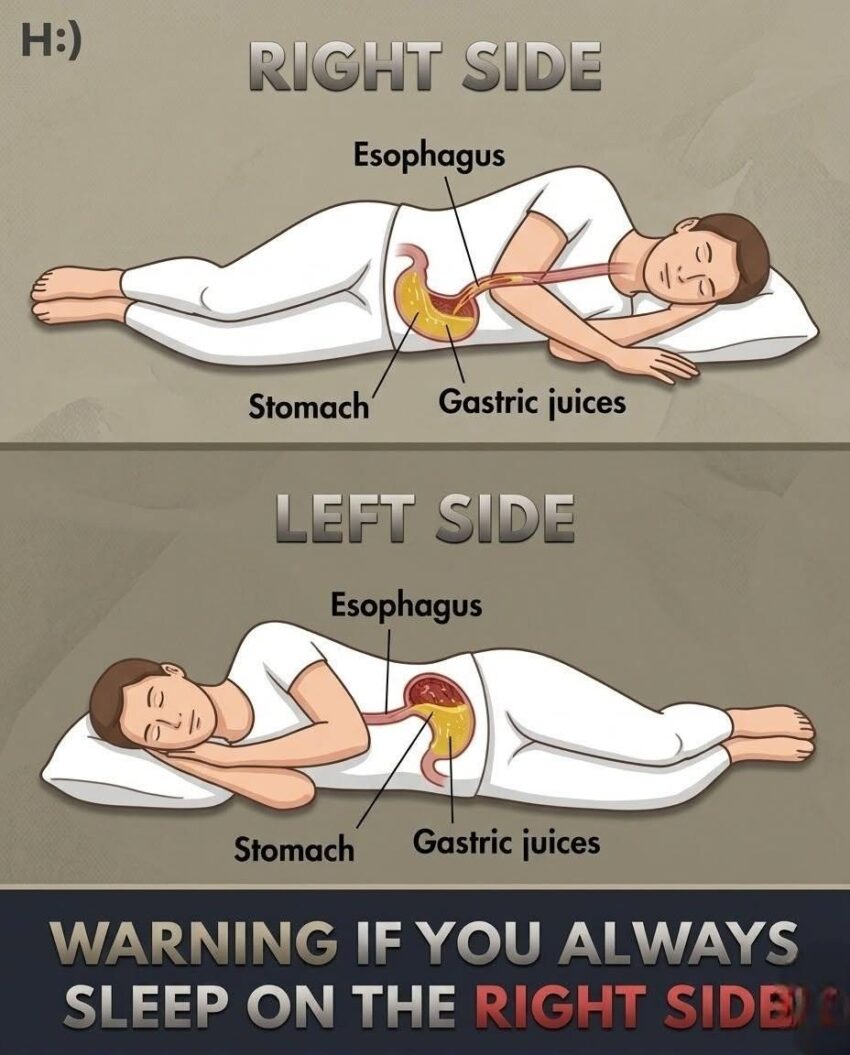
Is sleeping on your right side bad for your health? Learn the possible effects on acid reflux, digestion, breathing, pregnancy, heart health, and sleep quality—and when you should consider changing your sleeping position. Sleeping position is one of those everyday habits that rarely gets much attention—until you wake up with a stiff shoulder, burning in your chest, or an aching neck. One popular claim suggests that sleeping on your right side may be dangerous for your heart or other organs. But the reality is much less dramatic. For most healthy adults, sleeping on the right side is generally safe. There is no good evidence that simply sleeping on your right side damages your heart or causes serious disease. However, your sleeping position can influence certain conditions, particularly acid reflux, pregnancy-related discomfort, sleep apnea, and musculoskeletal pain.
Here’s what you should actually know.
1. Acid Reflux May Be Worse on Your Right Side
This is one of the clearest reasons some people may want to avoid sleeping on their right side.
When you lie on your right side, the position of the stomach relative to the esophagus can make it easier for stomach contents to move upward in some people.
Research has found that left-side sleeping tends to reduce nighttime acid exposure and clear reflux more quickly than right-side sleeping. This is why people with gastroesophageal reflux disease (GERD) are often advised to try sleeping on their left side.
If you regularly experience:
- Heartburn at night
- Sour or bitter taste in your mouth
- Regurgitation
- Burning chest discomfort after lying down
- Coughing or throat irritation at night
try sleeping on your left side and see whether your symptoms improve.
2. It Doesn’t Usually Harm Your Heart
You may have seen claims that sleeping on the right side “puts pressure on the heart.”
For most people, this is an exaggeration.
The heart sits inside the chest and is protected by the rib cage. Changing from your left side to your right side does not normally cause dangerous compression of the heart.
In fact, people with certain heart conditions may find right-side sleeping more comfortable than left-side sleeping.
Some people with heart failure experience more discomfort or shortness of breath in particular positions, but this varies considerably from person to person.
Therefore, there is no universal rule saying:
“Never sleep on your right side because it is bad for your heart.”
That claim is not supported by good evidence.
3. Pregnancy Is a Special Situation
Pregnancy changes the recommendations around sleeping position.
As pregnancy progresses, particularly later in pregnancy, lying completely flat on the back for prolonged periods can become uncomfortable and may affect blood flow.
Side sleeping is generally encouraged.
You may hear that pregnant women must sleep exclusively on their left side, but that is too simplistic. Both sides can be used, and comfort matters.
Research and clinical guidance generally emphasize side sleeping later in pregnancy rather than treating the right side as inherently dangerous.
If you are pregnant and have concerns about your sleeping position, discuss your individual circumstances with your obstetrician or midwife.
4. Right-Side Sleeping May Affect People With Reflux More Than Others
Not everyone reacts to sleeping position in the same way.
Some people can sleep on their right side without any problem, while others notice significantly more nighttime reflux.
If you have GERD, you can experiment with:
- Sleeping on your left side
- Raising the head of your bed
- Avoiding large meals close to bedtime
- Limiting foods that trigger your symptoms
- Maintaining a healthy weight if appropriate
Changing sleeping position can be a surprisingly simple way to reduce nighttime symptoms.
5. Shoulder and Neck Pain Can Develop
The problem may not be your internal organs at all.
If you sleep on one side for many hours, your shoulder, neck, and upper back can remain in a relatively fixed position.
A pillow that is too high or too low can also push your neck out of alignment.
This may contribute to:
- Shoulder pain
- Neck stiffness
- Upper-back discomfort
- Arm numbness or tingling
- Morning headaches in some people
If right-side sleeping consistently causes pain, try adjusting your pillow height or alternating sides.
Your sleeping position should allow your head, neck, and spine to remain relatively neutral.
6. What About Breathing and Sleep Apnea?
Side sleeping is generally considered preferable to sleeping on your back for many people with obstructive sleep apnea because sleeping on the back can allow the tongue and other tissues to fall backward and narrow the airway.
Importantly, this does not mean that the right side is dangerous.
Both side positions can be useful.
If you snore loudly, wake up gasping, experience witnessed pauses in breathing, or feel excessively sleepy during the day, talk with a healthcare professional about possible sleep apnea.
Changing sides may help some people, but it is not a substitute for proper diagnosis and treatment.
7. Does Right-Side Sleeping Affect Digestion?
The relationship between sleeping position and digestion is more complicated than social-media posts often suggest.
The strongest practical concern is reflux, rather than the idea that sleeping on the right side somehow “compresses” your digestive organs.
Your stomach and intestines are designed to function while your body changes position.
For most healthy people, sleeping on the right side does not stop digestion or cause food to become “stuck.”
If you notice digestive discomfort at night, however, experimenting with your position can be worthwhile.
8. Does It Affect Blood Circulation?
For a healthy person, sleeping on your right side does not normally cut off circulation to your body.
Temporary numbness or tingling can occur if you place prolonged pressure on an arm or shoulder. Usually, simply changing position resolves it.
Persistent numbness, weakness, swelling, or pain is different and should be medically evaluated.
9. Is the Left Side Always Better?
No.
This is another common misconception.
The left side may be particularly helpful for people with acid reflux, but that does not mean everyone should sleep exclusively on the left.
Your best sleeping position is often the one that:
- Lets you sleep comfortably
- Keeps your spine supported
- Doesn’t worsen reflux
- Doesn’t cause shoulder or hip pain
- Allows you to breathe comfortably
- Helps you stay asleep
Sleep quality matters enormously.
If you sleep deeply and comfortably on your right side without symptoms, there is usually no medical reason to force yourself onto your left side.
Right Side vs. Left Side: Which Is Better?
| Concern | Right Side | Left Side |
|---|---|---|
| General healthy adults | Generally safe | Generally safe |
| Acid reflux | May worsen symptoms | Often better |
| Pregnancy | Usually acceptable for side sleeping | Often comfortable/preferred by some |
| Sleep apnea | Side sleeping may help | Side sleeping may help |
| Shoulder pain | Depends on which shoulder is underneath | Depends on which shoulder is underneath |
| Heart health | Not inherently dangerous | Not automatically healthier |
The “best” side depends on your individual health and comfort.
When Should You Consider Changing Your Sleeping Position?
Consider experimenting with another position if sleeping on your right side consistently causes:
- Nighttime heartburn
- Regurgitation
- Shoulder pain
- Neck pain
- Arm numbness
- Breathing difficulties
- Frequent nighttime awakenings
You don’t necessarily need to stop sleeping on your right side permanently.
Sometimes a better pillow, mattress, body pillow, or slight change in position can solve the problem.
A Simple Experiment You Can Try Tonight
If you frequently experience nighttime reflux, try sleeping on your left side for several nights.
You can also:
- Avoid eating a large meal shortly before bed.
- Give yourself several hours between dinner and lying down.
- Elevate the upper portion of your bed if recommended for your reflux.
- Use a pillow that keeps your neck aligned.
- Notice whether your symptoms improve.
Keep in mind that persistent or severe reflux should be discussed with a healthcare professional.
The Bottom Line
For most healthy people, sleeping on your right side is not dangerous.
The biggest evidence-based concern is that right-side sleeping can worsen nighttime acid reflux in some people, whereas left-side sleeping often reduces reflux.
Right-side sleeping does not automatically damage your heart, stop digestion, or dangerously reduce circulation.
If you sleep comfortably on your right side and wake up feeling well, there is generally no reason to panic about your sleeping position.
However, if you have GERD, pregnancy-related concerns, sleep apnea, heart disease, or persistent pain or breathing problems at night, your ideal sleeping position may be different.
Ultimately, the healthiest sleeping position is the one that supports good-quality sleep while avoiding symptoms and allowing your body to remain comfortable and well supported.
Medical disclaimer: This article is for general educational purposes and does not replace professional medical advice. If you experience persistent chest pain, significant breathing difficulty, fainting, or other serious symptoms, seek appropriate medical care promptly.