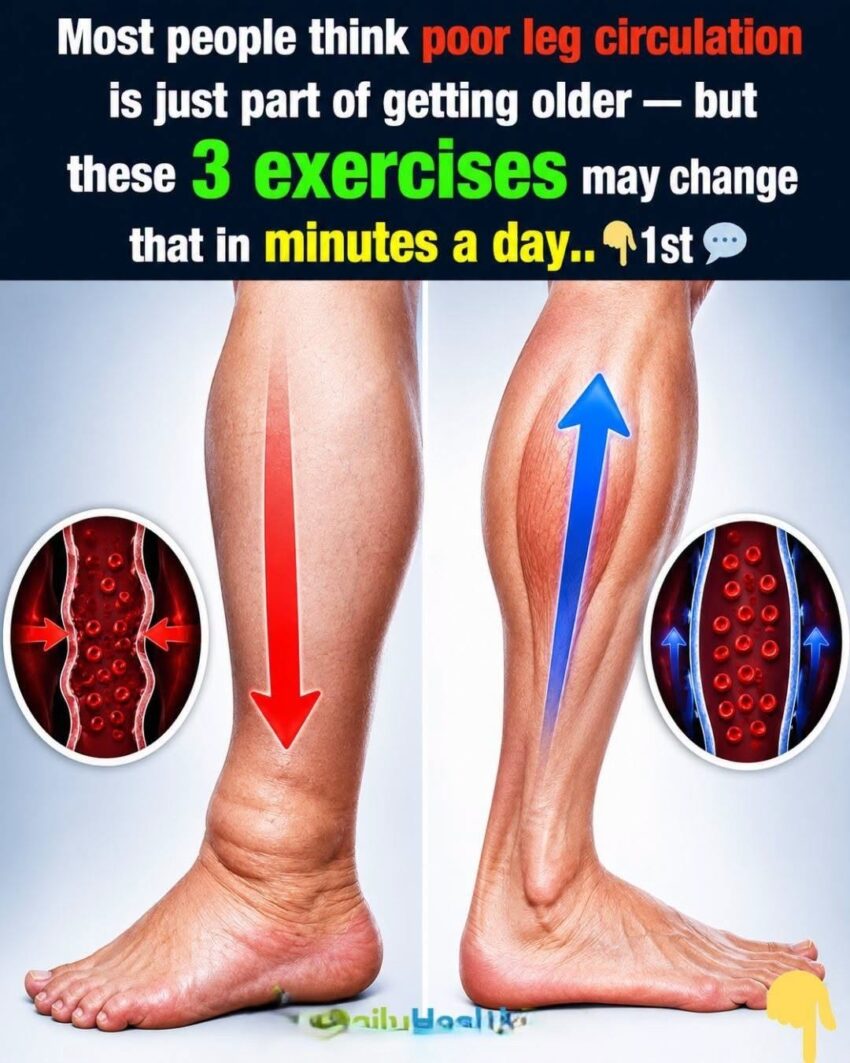
Discover 3 simple exercises that can help improve leg circulation, strengthen your calf muscles, reduce stiffness, and keep blood moving through your legs. Good circulation is important for keeping your legs healthy and comfortable. When you spend long periods sitting or standing, your legs can sometimes feel heavy, stiff, or tired. Regular movement helps your muscles contract and encourages blood to move back toward the heart.
You don’t necessarily need complicated workouts or expensive equipment. Three simple exercises—walking, calf raises, and ankle pumps—can provide an easy starting point for supporting healthy circulation in your legs.
1. Walking
Walking is one of the simplest ways to get your leg muscles working. Each step activates the muscles in your calves, thighs, and feet. These muscle contractions help support the normal movement of blood through the veins.
You don’t need to walk for hours to benefit. A short walk several times throughout the day can be a practical way to break up long periods of sitting.
How to do it
- Start with 5–10 minutes at a comfortable pace.
- Gradually increase the duration as your fitness improves.
- Keep your posture upright and take comfortable, natural steps.
- If possible, break up long periods of sitting by walking for a few minutes every hour.
Why it helps
Walking works several large muscle groups in the legs while keeping the body moving. Regular physical activity can also support cardiovascular fitness, which is important for overall circulation.
2. Calf Raises
Your calf muscles play an important role in helping blood return from the lower legs toward the heart. Calf raises strengthen these muscles while providing repeated contractions that encourage movement in the lower legs.
This exercise is especially convenient because you can perform it at home without equipment.
How to do it
- Stand behind a sturdy chair or near a countertop for balance.
- Place your feet approximately hip-width apart.
- Slowly raise your heels until you are standing on your toes.
- Hold the position for about 1–2 seconds.
- Slowly lower your heels back to the floor.
- Repeat 10–15 times.
- Rest and gradually work toward 2–3 sets.
Keep the movement controlled rather than bouncing up and down.
Why it helps
Calf raises strengthen the lower-leg muscles and repeatedly contract the calf muscles. This can help support normal venous blood flow, particularly when combined with regular walking and other physical activity.
3. Ankle Pumps
Ankle pumps are particularly useful when you’re sitting or lying down for extended periods. They require very little space and can be performed while sitting at a desk, traveling, or resting at home.
How to do it
- Sit comfortably or lie down.
- Extend your legs if comfortable.
- Point your toes away from your body.
- Then pull your toes back toward your body.
- Continue moving your ankles slowly and comfortably.
- Perform 10–20 repetitions with each foot.
You can repeat ankle pumps several times throughout the day.
Why it helps
Moving the ankles activates muscles in the feet and lower legs and helps maintain movement in the lower limbs. It’s an easy way to avoid staying completely still for long periods.
A Simple Daily Routine
You can combine all three exercises into a short routine:
Morning:
Take a 10-minute walk.
During the day:
Perform 10–20 ankle pumps whenever you’ve been sitting for a prolonged period.
Evening:
Do 2 sets of 10–15 calf raises while holding a sturdy chair for balance.
As your fitness improves, you can gradually increase your walking time and the number of repetitions.
Why Movement Matters for Leg Circulation
Your heart pumps blood throughout your body, but returning blood from the legs to the heart requires help from the muscles and valves in the veins. When you contract your leg muscles, particularly during activities such as walking, the muscles can help push venous blood upward.
This is one reason prolonged inactivity can leave some people feeling stiff or heavy in the legs. Regular movement keeps the leg muscles active and supports overall cardiovascular health.
Can These Exercises Treat Poor Circulation?
These exercises can support healthy circulation and mobility, but they are not a cure for peripheral artery disease, blood clots, chronic venous insufficiency, or other medical conditions.
If you regularly experience leg pain when walking, persistent swelling, numbness, skin color changes, cold feet, or wounds that don’t heal normally, talk to a healthcare professional. The underlying cause needs to be identified before choosing an exercise program.
When You Should Not Exercise and Seek Medical Attention
Don’t assume that every episode of leg swelling or pain is simply “poor circulation.”
Seek urgent medical attention if you develop sudden swelling, pain, warmth, or redness in one leg, particularly if the symptoms appear without an obvious reason. Sudden chest pain or difficulty breathing along with leg symptoms can be an emergency.
If you already have a diagnosed circulation problem, ask your healthcare professional which exercises are appropriate for you.
Final Thoughts
Improving leg circulation doesn’t have to involve a complicated workout. Walking, calf raises, and ankle pumps are three accessible movements that can keep your legs active and support normal blood flow.
The most important habit is consistency. Instead of remaining seated for hours at a time, make regular movement part of your day. Start gently, increase activity gradually, and listen to your body.
Remember: These exercises support general leg health, but persistent or sudden circulation symptoms should be evaluated by a healthcare professional rather than treated with exercise alone.