A dramatic image of a severely damaged knee is often paired with claims about sleeping positions. Learn what the image actually shows, whether sleeping with your knees bent or in a certain position can damage your joints, and what really contributes to knee arthritis.
ATTENTION: These Are the Consequences of Sleeping With Your Knees Bent
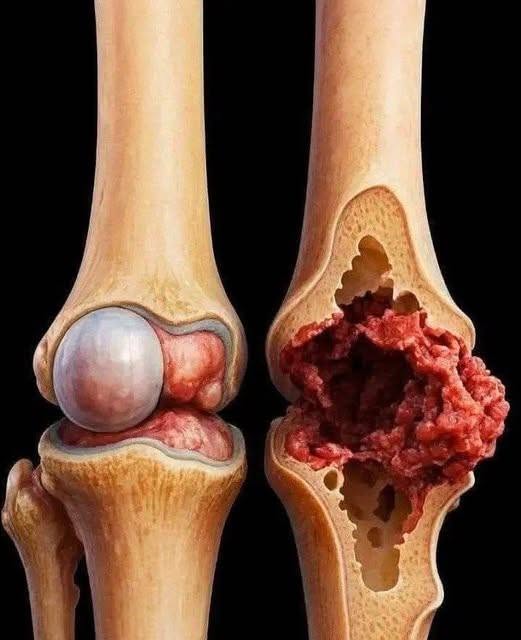
A disturbing image showing two knee joints—one appearing relatively normal and the other severely damaged—has been circulating online alongside warnings about sleeping positions.
The picture can certainly be alarming. But there is an important distinction between what the image shows and what causes the condition.
A sleeping position by itself does not normally cause the kind of severe joint destruction shown in the image.
What Does the Image Show?
The image appears to be a medical-style illustration comparing a normal knee with a severely diseased or damaged knee.
The affected joint shows extensive changes involving the bone and surrounding joint structures. Such changes can occur with serious joint disease, including advanced arthritis or other destructive conditions.
It should not automatically be interpreted as proof that a particular sleeping position caused the damage.
Can Sleeping Position Hurt Your Knees?
Yes, an uncomfortable sleeping position can sometimes cause temporary problems.
For example, keeping a joint in one position for a long time may contribute to:
- Morning stiffness
- Temporary discomfort
- Pressure around the knees
- Muscle tightness
- Increased pain in someone who already has arthritis
But this is very different from saying that sleeping in a particular position destroys the knee.
What Really Contributes to Knee Arthritis?
Knee osteoarthritis and other joint diseases have multiple risk factors. These can include:
Age: The risk of osteoarthritis generally increases as people get older.
Previous injuries: Injuries involving the knee can increase the likelihood of developing arthritis later.
Excess body weight: Additional mechanical load on the knees can contribute to joint problems.
Genetics: Some people are more genetically predisposed to osteoarthritis.
Repetitive stress: Certain occupations and activities can place substantial repeated stress on the knee.
Inflammatory joint diseases: Conditions such as rheumatoid arthritis can damage joints through inflammation.
What If Your Knees Hurt When You Wake Up?
Morning knee pain doesn’t necessarily mean your sleeping position is damaging your joints.
If discomfort improves after you begin moving, it may be related to stiffness. However, persistent swelling, significant pain, warmth, instability or difficulty walking deserves medical evaluation.
A healthcare professional can determine whether the symptoms are related to osteoarthritis, an inflammatory condition, an injury or another problem.
A More Comfortable Sleeping Position
If your knees hurt at night, comfort is the priority.
Some people find it helpful to sleep on their side with a pillow between their knees. Others prefer sleeping on their back with a pillow supporting the knees.
There isn’t one universally “dangerous” sleeping position for everyone.
The best position is generally one that allows you to sleep comfortably without putting excessive pressure on a painful joint.
Don’t Be Frightened by Viral Images
Medical images can be powerful, but they can also be paired with misleading captions.
A photograph or illustration showing severe joint damage doesn’t prove that the condition was caused by sleeping in a particular position.
If you regularly experience knee pain, swelling or stiffness, the more useful question isn’t “Which sleeping position caused this?”—it’s “Why is my knee hurting, and should it be evaluated?”
The Bottom Line
Sleeping with your knees bent, straight or in another comfortable position does not ordinarily cause the severe joint destruction depicted in this image.
However, an uncomfortable position can aggravate existing pain or stiffness.
Protecting your knees is much more about maintaining healthy body weight, staying physically active, strengthening the muscles around the joint, preventing injuries and addressing persistent symptoms early than worrying about one specific sleeping position.