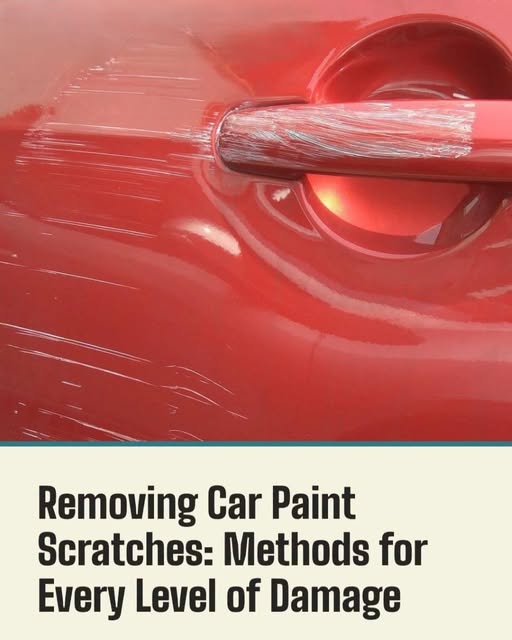
Learn how to remove minor car paint scratches safely at home using cleaning, polishing, scratch remover, and touch-up techniques—and when professional repair is necessary.
A scratch on your car can be frustrating, especially when it appears on an otherwise clean and polished vehicle. The good news is that many light scratches can be improved at home without repainting the entire panel.
However, not every scratch is the same. The right method depends on how deep the damage is.
First, Check How Deep the Scratch Is
Before reaching for a product, wash and dry the damaged area and examine the scratch carefully.
1. Clear-Coat Scratch
If the scratch only affects the clear protective layer, it may look white or dull but the underlying paint color remains intact.
These are usually the easiest scratches to improve.
2. Paint-Deep Scratch
If the scratch has gone through the clear coat and into the colored paint, polishing alone may not completely remove it.
A suitable automotive touch-up product may be needed.
3. Deep Scratch Exposing Metal
If you can see bare metal, the damage is deeper and should be addressed promptly. Exposed metal can eventually develop corrosion.
For significant damage, professional repair is usually the safest option.
Method 1: Wash the Area Thoroughly
Never polish a dirty scratch.
Wash the affected area with automotive car shampoo and clean water. Use a soft microfiber wash mitt and rinse thoroughly.
Dry the area with a clean microfiber towel.
This removes dirt and grit that could otherwise create additional scratches during polishing.
Method 2: Try a Dedicated Scratch Remover
For light clear-coat scratches, an automotive scratch-removal or polishing compound can sometimes make the damage much less noticeable.
You will need:
- Automotive scratch remover or fine polishing compound
- Clean microfiber towels
- Optional polishing pad
How to use it:
- Make sure the surface is clean and dry.
- Apply a small amount of product according to its label.
- Work on a small section at a time.
- Use gentle pressure.
- Wipe the residue away with a clean microfiber towel.
- Inspect the area before repeating.
Don’t aggressively rub the same spot repeatedly. Excessive polishing can remove too much clear coat.
Method 3: Use a Fine Polish
If the scratch has left the paint looking dull or hazy, a fine automotive polish may help restore some of the gloss.
Apply a small amount to a clean polishing pad or microfiber applicator and work gently over the affected area.
Afterward, remove the residue and inspect the finish under good lighting.
A machine polisher can produce stronger results, but beginners should be cautious because excessive heat or aggressive polishing can damage the paint.
Method 4: Use Automotive Touch-Up Paint
If the scratch has penetrated through the colored paint, polishing won’t replace the missing paint.
In that situation, a vehicle-specific touch-up paint matched to your car’s paint code can be used.
The general process is:
- Clean the damaged area.
- Allow it to dry completely.
- Apply a very small amount of matching touch-up paint.
- Allow it to cure according to the manufacturer’s instructions.
- Apply additional layers only if recommended.
- Finish with the appropriate clear coat if the product requires one.
The goal is to fill the damaged area rather than spread a large amount of paint over the surrounding panel.
What About Toothpaste?
You may have heard that toothpaste can remove car scratches.
This is a popular DIY tip because some toothpastes contain mild abrasives. However, toothpaste isn’t designed for automotive clear coat, and results can be inconsistent.
For valuable or newer vehicles, a proper automotive polishing compound is a better choice.
What About Baking Soda?
Baking soda is also sometimes recommended online as a homemade scratch remover.
It’s better not to experiment with abrasive household powders on your car’s clear coat. Automotive products are specifically formulated for painted surfaces and give you much better control over the amount of abrasion.
Don’t Use Sandpaper Unless You Know What You’re Doing
Wet sanding can sometimes be part of professional scratch repair, but it removes material from the clear coat.
Using the wrong grit, applying too much pressure, or sanding too deeply can make the damage considerably worse.
For a valuable vehicle or a deep scratch, professional repair is safer.
Finish With Wax or Paint Protection
After correcting a light scratch, you can apply a suitable automotive wax or paint sealant according to its instructions.
This can improve gloss and provide additional surface protection.
Remember that wax doesn’t repair missing paint; it mainly protects and enhances the finish.
When You Should See a Professional
Consider professional repair if:
- Bare metal is visible.
- The scratch is very deep.
- The panel is dented.
- Paint is peeling.
- There is rust around the damaged area.
- A large area has been scratched.
- You aren’t sure whether the damage has reached the metal.
Final Tip
The key is to identify the depth of the scratch before trying to remove it. Light clear-coat scratches can often be improved with careful cleaning and automotive polishing, while deeper damage requires touch-up paint or professional refinishing.
And avoid viral DIY hacks that use harsh abrasives or household chemicals—what looks like a cheap repair can sometimes create a much more expensive paint problem.