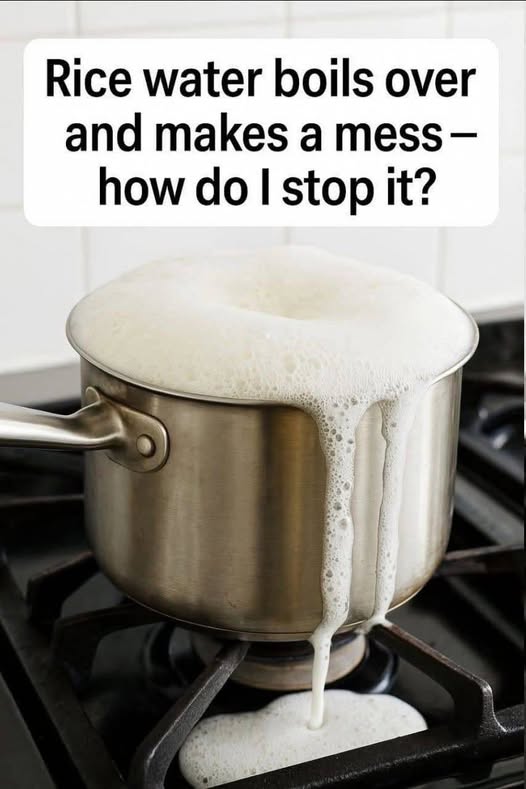
Tired of rice water boiling over and making a mess on your stovetop? Learn simple, practical tricks to prevent rice from foaming over and keep your kitchen cleaner.
Cooking rice seems simple until the pot suddenly starts bubbling, foaming, and spilling starchy water all over the stovetop. This happens because rice releases starch into the cooking water, and the starch helps stabilize the bubbles created as the water boils.
The good news is that you can reduce boil-overs with a few easy adjustments.
1. Rinse the Rice Before Cooking
One of the simplest solutions is to rinse rice thoroughly before putting it in the pot.
Place the rice in a bowl or fine-mesh strainer and rinse it several times with cool water until the water becomes less cloudy.
This removes some loose surface starch, which can reduce excessive foaming.
2. Don’t Fill the Pot Too High
A pot that is too small is more likely to boil over.
Rice expands as it cooks, and the cooking water needs enough room for the foam to rise without reaching the rim.
Choose a saucepan that gives the rice and water plenty of space.
3. Lower the Heat After It Starts Boiling
This is one of the most important tricks.
Once the water reaches a boil, reduce the heat to a gentle simmer and cover the pot according to your recipe.
You don’t need a vigorous boil to cook rice. Excessively high heat can make the water foam rapidly and spill over.
4. Leave the Lid Slightly Open
If your rice keeps boiling over even at a gentle simmer, try leaving the lid slightly ajar.
The small opening allows steam to escape and can reduce the pressure and bubbling inside the pot.
Just make sure the heat remains low enough that the rice still cooks properly.
5. Use a Wooden Spoon Trick
A popular kitchen trick is to place a wooden spoon horizontally across the top of the pot.
When foam rises toward the spoon, it can disrupt the bubbles and sometimes help prevent them from overflowing.
However, this isn’t foolproof. Don’t rely on it as a substitute for reducing the heat or using a sufficiently large pot.
6. Don’t Stir Rice Constantly
For many types of rice, excessive stirring can release additional starch into the cooking water and make the mixture more foamy.
Follow the cooking instructions for the particular rice you’re using and avoid unnecessary stirring.
7. Watch the Pot During the First Few Minutes
The biggest boil-over often happens shortly after the water reaches a strong boil.
Stay nearby during this stage. As soon as you see the foam climbing rapidly, lower the heat immediately.
This simple habit can save you from cleaning a sticky stovetop later.
What If It Already Boiled Over?
Don’t immediately wipe a hot stovetop with a wet cloth.
Turn off or reduce the heat first and allow the surface to cool enough to clean safely. Once it is safe, wipe away the starchy residue before it dries and becomes harder to remove.
The easiest combination
For most rice, try this:
Rinse the rice → use a larger pot → bring it to a boil → reduce to a gentle simmer → avoid unnecessary stirring.
You don’t need a complicated gadget or expensive product. A little less starch on the surface and better heat control can make a big difference.
And the best part? Your stovetop stays much cleaner while your rice cooks normally.