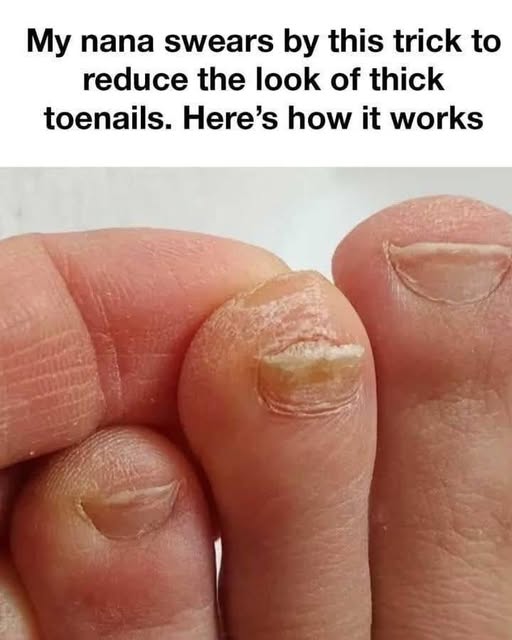
Thick toenails can be caused by fungus, repeated injury, aging, or other conditions. Learn safe ways to soften and improve their appearance and when thick nails need medical attention.
Thick, yellowish, rough toenails are surprisingly common, especially as people get older. They can become difficult to trim, uncomfortable inside shoes, and sometimes embarrassing.
You may have seen home remedies claiming that a simple household ingredient can make thick toenails look normal again. While some at-home steps can soften the nail and improve its appearance, there is an important point to remember: thick toenails are a symptom, not a diagnosis.
The underlying cause needs to be considered before choosing a treatment.
Why Do Toenails Become Thick?
Several different conditions can make toenails appear thick, hard, yellow, or distorted.
1. Toenail Fungus
A fungal nail infection, called onychomycosis, is one of the common causes of thickened toenails.
The nail may become:
- Yellow, white, or brown
- Thick and difficult to cut
- Brittle or crumbly
- Distorted in shape
- Separated slightly from the nail bed
Sometimes there is also an unpleasant odor.
2. Repeated Pressure or Injury
Tight shoes, repetitive walking or running, or an old injury can damage the nail and cause it to grow abnormally.
A toenail may remain thick or misshapen long after the original injury has healed.
3. Aging
Toenails can naturally become thicker, harder, and slower-growing with age. This can make routine nail care more difficult.
4. Skin Conditions
Conditions such as psoriasis can affect the nails and cause thickening, ridges, discoloration, or separation from the nail bed.
Because several conditions can look similar, it isn’t always possible to determine the cause simply by looking at the nail.
A Safe Way to Make Thick Nails Easier to Manage
If the goal is simply to soften a thick nail before trimming, soaking the feet in comfortably warm water for about 10–20 minutes can make the nails easier to cut.
After soaking:
- Dry the feet thoroughly.
- Use clean, appropriate nail clippers.
- Trim the nail gradually rather than trying to cut through the entire thickness at once.
- Cut mostly straight across.
- Gently file rough edges.
- Avoid cutting deeply into the corners or surrounding skin.
Don’t force thick nails with ordinary scissors or try to rip pieces off. This can cause injury and create an opening for infection.
What About Vinegar or Other “Grandma Remedies”?
Vinegar and other household ingredients are frequently promoted online as cures for fungal toenails.
Although vinegar is acidic and laboratory studies have examined its antifungal properties, there isn’t strong clinical evidence that a simple vinegar soak reliably cures established toenail fungus.
Similarly, bleach, hydrogen peroxide, essential oils, or harsh cleaning products should not be used on the skin or nails as DIY antifungal treatments. They can cause irritation or chemical burns.
If a fungal infection is responsible for thickening, proven antifungal treatments are generally more appropriate.
Keep Your Feet Dry
If fungus is suspected, keeping the feet dry is particularly important.
Change socks regularly, allow shoes to dry completely between uses, and avoid remaining in damp footwear for long periods.
It’s also helpful to wear breathable footwear and avoid sharing nail clippers, socks, or shoes with other people.
Don’t Ignore a Thick Toenail That Keeps Getting Worse
A thick toenail isn’t necessarily dangerous, but certain changes deserve professional evaluation.
See a healthcare professional or podiatrist if:
- The nail is becoming increasingly thick or painful.
- Several nails are affected.
- The nail is changing color significantly.
- The surrounding skin is red, swollen, or draining.
- The nail repeatedly separates from the nail bed.
- You have diabetes or poor circulation.
- You have difficulty safely cutting the nail yourself.
- An unexplained dark streak appears under the nail.
A dark or changing streak should not automatically be assumed to be fungus. Rarely, nail melanoma can produce pigmentation under a nail, so unexplained or changing dark discoloration should be assessed.
The Most Important Lesson
That “nana trick” may help soften a thick toenail temporarily, but it shouldn’t be presented as a guaranteed cure.
If the thickening is caused by fungus, trauma, psoriasis, or another condition, treating the underlying cause is what matters.
For a simple cosmetic improvement, warm-water soaking followed by careful trimming and filing is a much safer approach than experimenting with harsh household chemicals.
And if the nail is persistently thick, discolored, painful, or changing, getting the cause checked is more useful than repeatedly trying viral home remedies.