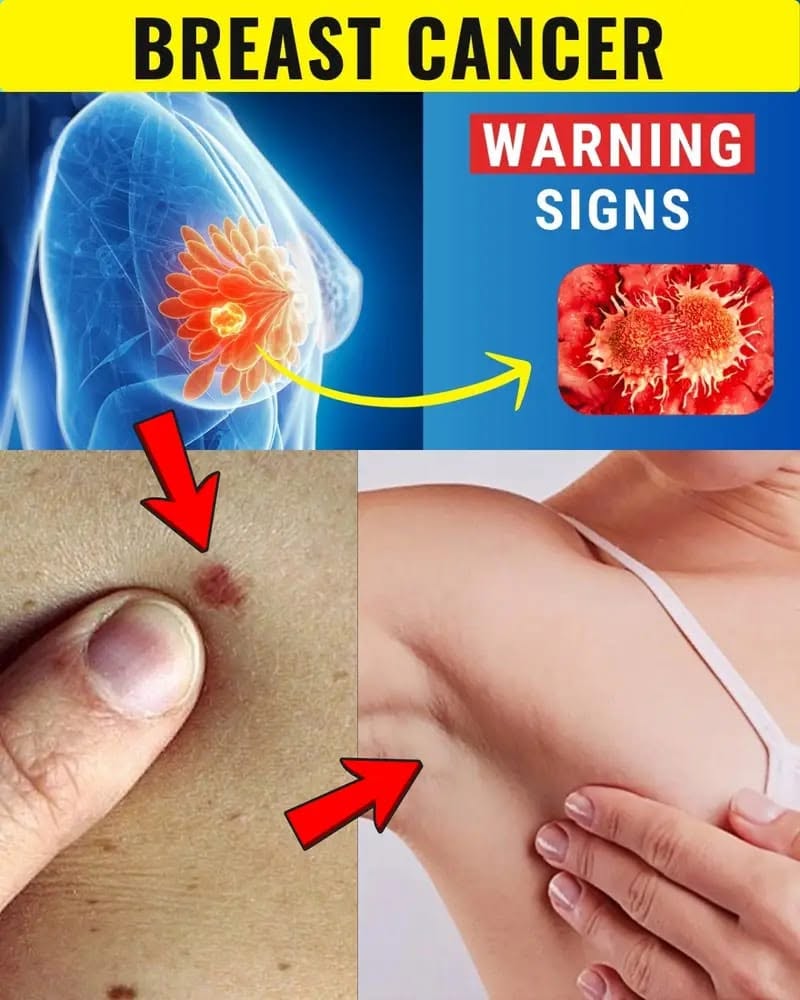
Learn 10 important warning signs of breast cancer, including breast lumps, skin changes, nipple discharge, and changes in breast shape. Know when to seek medical evaluation and why screening matters.
Breast cancer can sometimes develop without obvious symptoms, which is why knowing the potential warning signs—and keeping up with recommended screening—is so important.
A breast change does not automatically mean cancer. Many breast lumps and other changes are caused by benign conditions such as cysts, hormonal changes, or infections. However, a new or unusual change should not be ignored.
1. A New Lump or Mass
A new lump in the breast or underarm is one of the most recognized warning signs.
Cancerous lumps are often hard, irregular, and painless, but they can have different characteristics. A painless lump should not be dismissed simply because it doesn’t hurt.
If you discover a new lump, have it evaluated by a healthcare professional.
2. A Change in Breast Size or Shape
Noticeable changes in the size, contour, or shape of one breast can sometimes be a warning sign.
Pay attention to changes that are new and persistent, particularly when they occur without an obvious explanation.
3. Skin Dimpling or an “Orange Peel” Appearance
Breast skin that becomes dimpled, puckered, thickened, or develops a texture resembling an orange peel—sometimes called peau d’orange—should be medically assessed.
This can occur when changes beneath the skin affect the normal appearance of the breast.
4. Nipple Discharge
Unexpected discharge from the nipple, particularly discharge that occurs without squeezing the nipple, deserves evaluation.
Bloody or clear discharge from one nipple can be especially important to discuss with a healthcare professional.
Nipple discharge can have many causes besides cancer, so testing may be needed to determine the cause.
5. A Nipple That Suddenly Turns Inward
A newly inverted nipple can sometimes indicate an underlying breast problem.
Some people naturally have inverted nipples, but a new change in nipple position or appearance should be checked.
6. Changes Around the Nipple or Areola
Look for persistent changes such as:
- Scaling
- Crusting
- Redness
- Thickening
- Persistent irritation
- Unusual skin changes
Certain rare forms of breast cancer can cause changes involving the nipple and areola.
7. Persistent Breast Swelling
Swelling affecting part or all of the breast—even when you cannot feel a distinct lump—can warrant medical evaluation, particularly when the swelling is new and unexplained.
Inflammatory breast cancer, for example, can cause rapid breast swelling, redness, warmth, and skin thickening.
8. Persistent Breast or Nipple Pain
Breast cancer is not usually associated with pain, but persistent or unusual breast pain should still be discussed with a healthcare professional.
Pain is much more commonly caused by non-cancerous conditions, including hormonal changes, injury, infection, or certain medications.
Don’t use the absence of pain as reassurance that a lump or other change is harmless.
9. Swollen Lymph Nodes Under the Arm or Near the Collarbone
Lymph nodes under the arm or around the collarbone can become enlarged for many reasons, including infections.
However, a new, persistent, or unexplained swelling in these areas can sometimes be associated with breast cancer and should be evaluated.
10. Unexplained Changes That Don’t Go Away
Sometimes there isn’t one obvious symptom.
You may simply notice that one breast looks or feels different from usual.
If a change persists or continues to progress, don’t ignore it simply because you cannot identify a specific problem.
What Should You Do If You Notice a Warning Sign?
Don’t panic—but don’t ignore it either.
Make an appointment with a healthcare professional and explain exactly what you noticed and when it began.
Depending on your age, symptoms, and personal risk factors, your clinician may recommend a clinical breast examination, diagnostic mammogram, ultrasound, or other testing.
Early Detection Matters
Breast cancer outcomes are generally better when cancer is detected before it has spread to distant parts of the body.
That’s why it’s important to understand both screening recommendations and your own normal breast appearance and feel.
Breast self-awareness doesn’t mean repeatedly checking yourself or trying to diagnose cancer at home. Instead, it means knowing what is normal for you and reporting new or unusual changes promptly.
Important Reminder
These warning signs do not mean that you have breast cancer. Most breast changes are not cancerous.
But if you notice a new lump, persistent skin or nipple change, unusual discharge, unexplained swelling, or a change in the breast’s size or shape, it’s better to have it checked than to ignore it.
Early detection can make a real difference—so know your breasts, follow appropriate screening recommendations, and speak with a healthcare professional about anything unusual.