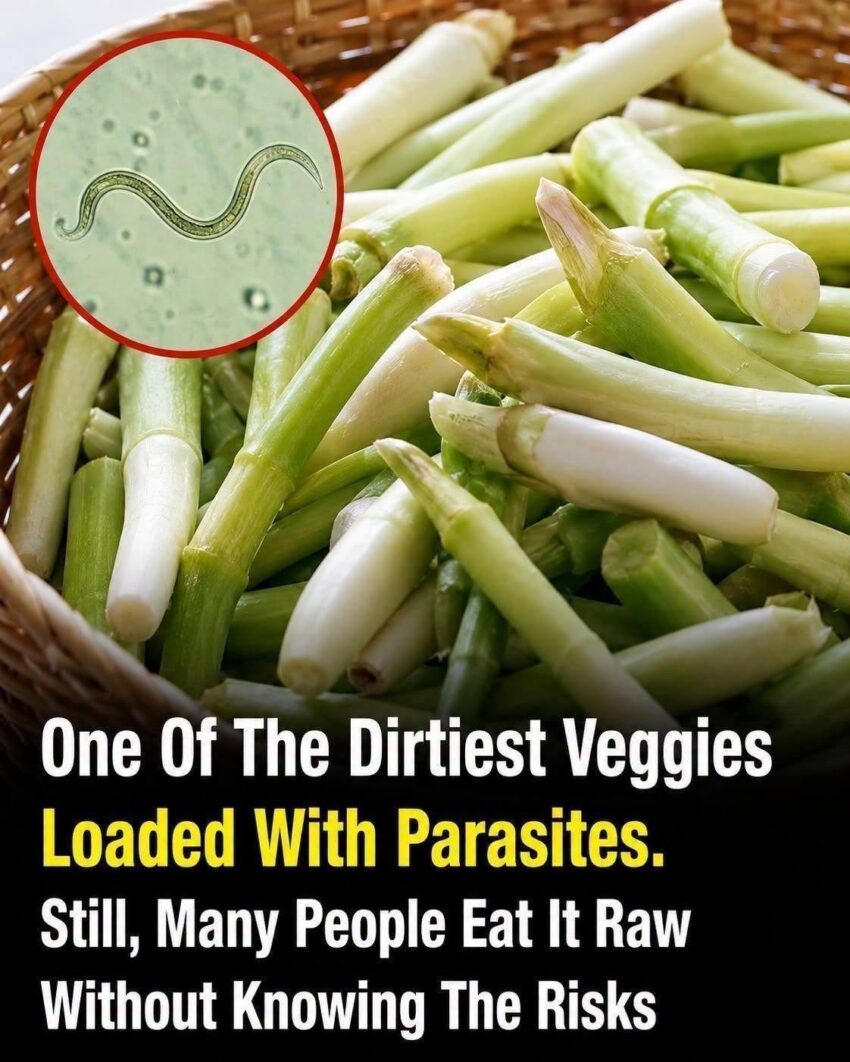
Some vegetables can become contaminated with parasites, bacteria, or other pathogens when grown in contaminated soil or exposed to unsafe water. Learn which raw vegetable is often discussed, how contamination happens, and the safest way to prepare fresh produce.
The Vegetable Most Likely to Carry Parasites Is Also One Many People Love Eating Raw
You may have heard claims that one particular vegetable is “the most likely to carry parasites.” These headlines are attention-grabbing, but the reality is more nuanced.
No single vegetable can accurately be called the vegetable “most likely” to contain parasites in every country or situation. The risk depends on where the produce was grown, the quality of irrigation water, soil contamination, handling, and food-safety practices.
However, leafy vegetables and produce eaten raw can deserve extra attention because they don’t receive a cooking step that would normally kill many pathogens.
🥬 Leafy Greens Deserve Special Attention
Vegetables such as lettuce, spinach, kale, and other leafy greens can become contaminated if they are exposed to contaminated water, soil, manure, animals, or unsafe handling.
Because these foods are often eaten raw, any contamination can remain on the produce until it is properly washed or otherwise treated.
This doesn’t mean leafy greens are unsafe.
It means proper handling matters.
How Can Parasites Get Onto Vegetables?
Contamination can happen at several points between the farm and your kitchen.
1. Contaminated Water
Produce may be exposed to water containing microorganisms or parasite eggs.
This can be especially important when untreated water is used for irrigation.
2. Contaminated Soil
Certain parasites can persist in soil and potentially contaminate vegetables growing close to or in the ground.
3. Animal Contact
Domestic or wild animals can contaminate agricultural environments.
4. Manure and Fertilizer
Improperly treated manure can introduce pathogens into growing areas.
5. Handling After Harvest
Even clean produce can become contaminated during harvesting, transportation, processing, or preparation.
That’s why food safety doesn’t end at the farm.
Why Eating Vegetables Raw Can Increase the Risk
Cooking is one of the most effective ways to reduce many foodborne pathogens.
When you eat vegetables raw, you don’t get that additional safety step.
This is particularly relevant for:
- Salads
- Raw leafy greens
- Fresh herbs
- Raw vegetables used in sandwiches
- Uncooked garnishes
The solution isn’t to stop eating vegetables.
It’s to handle them properly.
How to Wash Vegetables Safely
Follow these simple steps:
1. Wash your hands first
Use soap and clean running water before preparing fresh produce.
2. Rinse produce under running water
Wash vegetables thoroughly under clean running water.
For leafy greens, separate the leaves when practical so water can reach more surfaces.
3. Remove damaged areas
Discard leaves or portions that are visibly damaged, bruised, or spoiled.
4. Don’t use soap
Don’t wash vegetables with dish soap or household cleaning products.
They aren’t designed to be eaten and can leave harmful residues.
5. Keep produce away from raw meat
Use clean cutting boards and utensils, and prevent raw meat juices from contacting vegetables.
6. Refrigerate appropriately
Store perishable fresh produce according to food-safety recommendations and avoid leaving it at room temperature unnecessarily.
Does Washing Remove Every Parasite?
No.
Washing can reduce dirt and some microorganisms, but it cannot guarantee complete removal of all pathogens.
That’s one reason cooking is generally safer when appropriate.
For high-risk individuals—such as people with weakened immune systems, older adults, pregnant people, and young children—extra care with raw produce may be particularly important.
What About Vinegar, Salt, or Lemon Juice?
A common internet claim is that soaking vegetables in vinegar, salt water, or lemon juice will “kill all parasites.”
That’s too simplistic.
These methods aren’t a guaranteed substitute for proper food-safety practices.
Clean running water, preventing cross-contamination, refrigeration, and appropriate cooking remain the fundamentals.
Don’t rely on a homemade soaking solution as a guarantee that produce is pathogen-free.
Don’t Stop Eating Vegetables
This is perhaps the most important message.
Vegetables provide:
- Fiber
- Vitamins
- Minerals
- Antioxidants
- Plant compounds associated with good health
The possibility of contamination doesn’t mean vegetables are unhealthy.
It means they should be grown, handled, washed, stored, and prepared safely.
The Bottom Line
There isn’t reliable evidence that one vegetable is universally “the most likely to carry parasites.”
However, raw leafy greens and other produce eaten without cooking can be exposed to foodborne pathogens, particularly when agricultural water, soil, handling, or sanitation is inadequate.
Instead of fearing one particular vegetable, focus on the habits that actually reduce risk:
Wash your hands. Rinse produce under clean running water. Prevent cross-contamination. Refrigerate appropriately. And cook vegetables when appropriate—especially for people at higher risk of severe foodborne illness.
Eating vegetables is still one of the healthiest habits you can have.