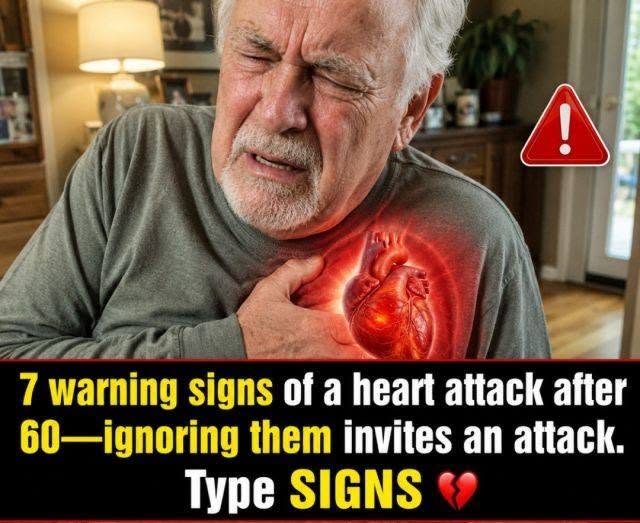
Learn 7 important heart attack warning signs that adults over 60 should never ignore, including unusual fatigue, chest discomfort, shortness of breath, sweating, nausea, and pain in the jaw, back, or arms.
7 Heart Attack Warning Signs After 60 Your Body May Give Before It Becomes an Emergency
As we get older, it becomes increasingly important to pay attention to changes in the body that might otherwise seem harmless. After age 60, heart-related problems can sometimes develop with symptoms that are less obvious than the classic “crushing chest pain” many people associate with a heart attack.
A heart attack happens when blood flow to part of the heart muscle becomes blocked. Without enough oxygen, heart tissue can become damaged. Recognizing warning signs quickly and getting emergency medical help can be lifesaving.
Here are seven symptoms older adults should take seriously.
1. Chest Pressure, Tightness, or Discomfort
Chest discomfort is one of the most recognized signs of a heart attack. It may feel like pressure, squeezing, heaviness, fullness, burning, or uncomfortable tightness rather than sharp pain.
The sensation may last several minutes, disappear, and then return. Some people describe it as feeling as though something heavy is sitting on their chest.
Do not assume that mild discomfort is harmless, especially if it occurs with other symptoms.
2. Unusual Shortness of Breath
Suddenly becoming unusually short of breath can be an important warning sign.
You might notice difficulty breathing while walking, climbing stairs, or performing an activity that normally does not leave you breathless. In some cases, shortness of breath may occur even without noticeable chest pain.
If breathing difficulty appears suddenly or is severe, it requires urgent medical attention.
3. Unexplained Extreme Fatigue
Feeling tired after a poor night’s sleep or a busy day is normal. But unusual or sudden exhaustion can be different.
Some people, particularly older adults, may experience significant fatigue before or during a heart attack. You might feel unusually weak, drained, or unable to perform ordinary activities.
Because fatigue has many possible causes, it is easy to overlook—but sudden, unexplained fatigue combined with other warning signs should not be ignored.
4. Pain or Discomfort in the Arm, Shoulder, Back, Neck, or Jaw
Heart-related discomfort isn’t always located directly in the chest.
Pain or pressure can sometimes spread into one or both arms, the shoulder, upper back, neck, or jaw. It may be accompanied by chest discomfort, sweating, nausea, or shortness of breath.
A new, unexplained combination of these symptoms deserves immediate attention.
5. Nausea, Vomiting, or Indigestion-Like Discomfort
Heart attack symptoms can sometimes resemble an ordinary stomach problem.
Nausea, vomiting, indigestion, heartburn-like discomfort, or an unusual feeling of fullness may occur. This can make it particularly difficult to recognize what is happening.
If these symptoms are sudden, unusual for you, or occur alongside chest discomfort, sweating, weakness, or breathing problems, don’t simply assume it’s something you ate.
6. Cold Sweating or Clammy Skin
Breaking into a cold sweat without an obvious reason can be another warning sign.
This is different from sweating after exercise, being outside in hot weather, or experiencing a fever. Unexpected cold, clammy sweating—particularly when combined with chest discomfort, nausea, dizziness, or shortness of breath—should be taken seriously.
7. Dizziness, Lightheadedness, or a Feeling That Something Is Very Wrong
A sudden feeling of weakness, dizziness, lightheadedness, or near-fainting may occur when the heart is struggling to maintain adequate blood circulation.
Some people describe a sudden feeling that something is seriously wrong even before they can identify a specific symptom.
If dizziness occurs with chest pressure, difficulty breathing, sweating, fainting, or severe weakness, seek emergency medical care immediately.
Why Symptoms Can Be Different After 60
Heart attack symptoms vary considerably from person to person. Older adults may not always experience dramatic chest pain. Some may have more subtle symptoms such as fatigue, weakness, breathlessness, nausea, or confusion.
That is why it is dangerous to wait for a “classic” heart attack symptom before taking action.
Risk factors also become increasingly important with age, including high blood pressure, high cholesterol, diabetes, smoking, obesity, physical inactivity, and a personal or family history of cardiovascular disease.
When You Should Get Emergency Help
If you or someone around you develops new or severe chest discomfort, significant difficulty breathing, fainting, or a combination of possible heart attack symptoms, treat it as a medical emergency.
Do not drive yourself to the hospital if emergency medical services are available. Follow the instructions of the emergency dispatcher while waiting for help.
Most importantly, don’t wait to see whether the symptoms disappear when a heart attack is possible. Early medical treatment can reduce heart damage and improve the chances of recovery.
Final Thought
After 60, paying attention to your body’s unusual signals can make a major difference. Chest pressure, unexplained breathlessness, extreme fatigue, spreading pain, nausea, cold sweating, and sudden dizziness may have many causes—but when they appear suddenly or occur together, they should never be casually dismissed.
When in doubt, seek urgent medical evaluation rather than waiting for symptoms to become severe.